
Are you curious about what sets semi-automatic rifles apart from automatic rifles? Understanding the difference can change how you see these powerful tools and help you make smarter choices—whether you’re a shooting enthusiast, a collector, or just someone looking to learn more.
This isn’t just about words; it’s about how each type works, how you control them, and what that means for your safety and experience. Keep reading, and you’ll discover the key facts that can clear up the confusion and give you confidence the next time these terms come up.

Basic Mechanism
The basic mechanism of rifles defines how they fire bullets. It controls the loading, firing, and ejection of cartridges. Understanding this helps to see the key difference between semi-automatic and automatic rifles. Both use gas or recoil to operate but work differently in firing rounds. The mechanism also affects the shooting speed and control.
Each type has a unique way to cycle the action after shooting. This cycling includes ejecting the spent cartridge and loading a new one. The firing mode is what sets them apart clearly.
How Semi-automatic Rifles Work
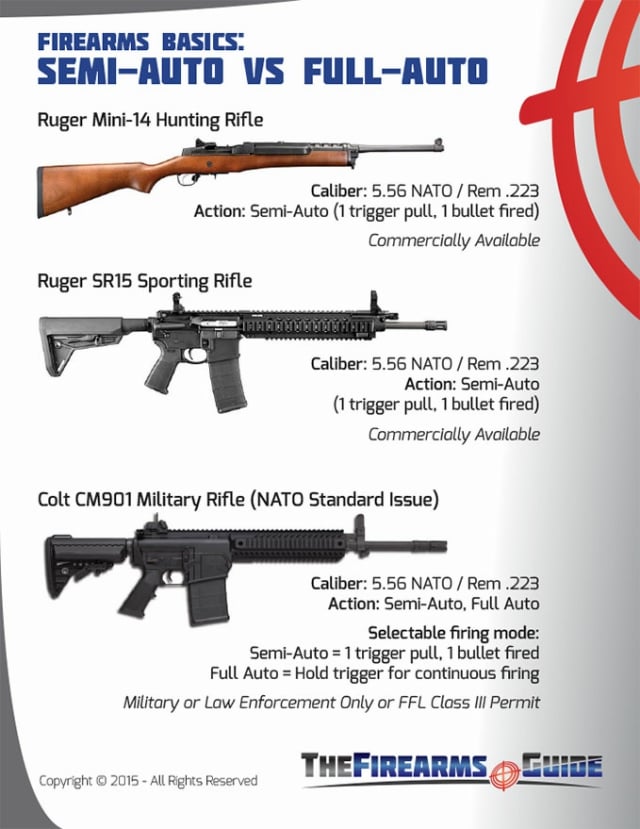
Semi-automatic rifles fire one bullet with each trigger pull. The mechanism uses gas or recoil energy to eject the spent cartridge. Then, it loads a new round into the chamber automatically. The shooter must release and press the trigger again to fire the next bullet. This system allows faster shooting than manual rifles but keeps control over each shot.
How Automatic Rifles Work
Automatic rifles fire continuously while the trigger is held down. The mechanism cycles the action to load and fire rounds repeatedly without releasing the trigger. It uses gas or recoil energy to eject and reload cartridges quickly. This enables rapid fire but requires more skill to control. Automatic rifles can fire many bullets in a short time.
Firing Modes
Firing modes define how a rifle shoots bullets. They control how many shots come out with each trigger pull. Understanding firing modes helps in knowing the difference between semi-automatic and automatic rifles.
Single Shot Per Trigger Pull
Semi-automatic rifles fire one bullet for every trigger pull. You must release and pull the trigger again to fire another shot. This mode offers better control and accuracy. It also reduces the chance of overheating the rifle.
Continuous Fire Capability
Automatic rifles can fire many bullets with one trigger pull. The rifle keeps shooting until you release the trigger or run out of ammo. This mode allows rapid fire but can be harder to control. It is useful for suppressing targets or in close combat.
Rate Of Fire
Rate of fire shows how fast a rifle shoots bullets. Semi-automatic fires one bullet per trigger pull, while automatic keeps firing as long as the trigger is held. This difference affects how each rifle is used.
Understanding Rate Of Fire
Rate of fire means how fast a rifle can shoot bullets. It is measured by rounds fired per minute. This factor affects how a rifle performs in different situations.
A higher rate of fire can give more shots quickly. But it also uses more ammunition fast. The speed depends on the rifle’s design and mechanism.
Rate Of Fire In Semi-automatic Rifles
Semi-automatic rifles fire one bullet per trigger pull. The shooter must release and press the trigger again. This limits the shooting speed compared to automatic rifles.
The rifle automatically reloads after each shot. It prepares for the next bullet. Still, the shooter controls the shooting pace.
Rate Of Fire In Automatic Rifles
Automatic rifles fire continuously while holding the trigger. This allows many bullets to shoot quickly. The rate can reach hundreds of rounds per minute.
This fast firing can suppress targets effectively. But it uses ammunition very fast. It also causes the rifle to heat up quickly.

Usage And Applications
The usage and applications of semi-automatic and automatic rifles differ greatly. Each type serves specific needs based on its design and functionality. Understanding these uses helps clarify why one is chosen over the other in various settings.
Civilian Use
Semi-automatic rifles are common among civilians. They are often used for hunting, sport shooting, and self-defense. These rifles fire one bullet per trigger pull. This makes them easier to control and safer for non-professional users.
Automatic rifles are rarely found in civilian hands. Laws in many countries restrict automatic weapons. Civilians usually prefer semi-automatic rifles due to legal and safety reasons.
Military And Law Enforcement Use
Automatic rifles are standard in military and law enforcement. They allow for rapid fire, useful in combat and tactical situations. This capability helps suppress threats quickly and efficiently.
Semi-automatic rifles may also be used by law enforcement for precision and control. Officers can engage targets accurately without excessive fire. Both rifle types play important roles depending on mission needs.
Legal Regulations
Legal regulations shape the use and ownership of rifles in many countries. Laws differ based on the type of rifle. Semi-automatic and automatic rifles face distinct rules. Knowing these rules is important for owners and buyers. Governments set these laws to control safety and crime risks.
Restrictions On Semi-automatic Rifles
Semi-automatic rifles are more common and easier to buy. Many places allow ownership with a license or permit. Some regions ban certain models or features like high-capacity magazines. Background checks are often required before purchase. Age limits and waiting periods may apply. In some areas, semi-automatic rifles cannot be used for hunting.
Restrictions On Automatic Rifles
Automatic rifles face stricter laws worldwide. They are often classified as machine guns under the law. Civilian ownership may be banned or limited to special permits. Automatic rifles usually require detailed registration. Transferring or selling these rifles involves more rules. Use of automatic rifles is often restricted to military or law enforcement only.
Maintenance And Durability
Maintenance and durability play a key role in choosing between semi-automatic and automatic rifles. Both types require care but differ in complexity and wear over time. Understanding these differences helps in keeping your rifle reliable and long-lasting.
Maintenance Needs Of Semi-automatic Rifles
Semi-automatic rifles need regular cleaning after use. Their simpler mechanism makes maintenance easier. Users should clean the barrel, bolt, and trigger group. Lubrication helps prevent rust and wear. Checking parts for damage is important. Simple design means fewer breakdowns.
Maintenance Needs Of Automatic Rifles
Automatic rifles have more complex parts. This requires more detailed cleaning and inspection. Small components need frequent checks to avoid malfunctions. Lubricating moving parts is critical. Proper maintenance prevents jams and failures. Skilled care often extends their lifespan.
Durability Comparison
Semi-automatic rifles generally last longer with basic care. Their fewer parts reduce chances of wear. Automatic rifles face more stress from rapid firing. This can cause faster wear on components. High-quality materials improve durability for both types. Regular upkeep increases lifespan regardless of type.
Cost Differences
Semi-automatic rifles usually cost less than automatic rifles due to simpler design and fewer parts. Automatic rifles often require special licenses, adding to their overall price. These factors make a big difference in the total cost.
Initial Purchase Price
Semi-automatic rifles usually cost less than automatic rifles. Their simpler design requires fewer parts. This lowers the manufacturing cost. Automatic rifles have complex mechanisms. This makes them more expensive to produce.
Also, automatic rifles face stricter regulations. This adds legal fees and paperwork costs. These expenses increase the final price.
Maintenance And Repair Costs
Maintenance for automatic rifles often costs more. Their intricate systems need expert care. Parts may wear out faster due to rapid firing. Semi-automatic rifles have simpler mechanisms. This results in lower repair expenses.
Replacement parts for automatic rifles tend to be pricier. Semi-automatic rifle parts are easier to find and buy.
Ammunition Expenses
Automatic rifles use more ammunition quickly. This raises shooting costs significantly. Semi-automatic rifles fire one round per trigger pull. This helps save money on bullets over time.
Ammo prices vary by type and availability. Choosing a rifle affects long-term shooting expenses.
Legal And Licensing Fees
Automatic rifles usually require special permits. These permits can be costly and hard to get. Semi-automatic rifles have fewer legal restrictions. This lowers the cost of ownership.
Legal fees add to the total cost of automatic rifles. Buyers must consider these extra expenses carefully.
Safety Considerations
Safety is very important when handling rifles. Semi-automatic rifles fire one bullet per trigger pull, while automatic rifles fire continuously. Understanding this difference helps prevent accidents and ensures proper use.
Understanding Trigger Control
Semi-automatic and automatic rifles differ in how they fire bullets. Semi-automatic rifles shoot one bullet per trigger pull. Automatic rifles keep firing as long as the trigger is held down. This difference affects trigger control and safety. Semi-automatic rifles require careful, deliberate trigger pulls. Automatic rifles demand extra caution to avoid unintentional bursts.
Risk Of Accidental Discharge
Accidental discharge means the gun fires without intent. Automatic rifles have a higher risk due to continuous firing. Semi-automatic rifles reduce this risk by firing only once per pull. Proper handling and safe storage lower accidental discharge chances in both types. Always treat every rifle as if it is loaded.
Importance Of Safety Mechanisms
Safety switches prevent rifles from firing accidentally. Both rifle types have these safety features. The user must engage the safety switch when not shooting. Check safety mechanisms regularly to ensure they work well. Never rely solely on safety switches; follow all safety rules.
Safe Handling Practices
Keep the muzzle pointed in a safe direction. Keep your finger off the trigger until ready to shoot. Know your target and what is beyond it. Always wear proper eye and ear protection. Training and practice build safe habits for both rifle types.
Frequently Asked Questions
What Defines A Semi-automatic Rifle?
A semi-automatic rifle fires one bullet per trigger pull. It automatically reloads the next round but requires manual trigger action for each shot.
How Does An Automatic Rifle Operate?
An automatic rifle fires continuously while the trigger is held. It loads and fires rounds until the trigger is released or ammo runs out.
Which Rifle Type Is More Common For Civilians?
Semi-automatic rifles are more common for civilians due to legal restrictions on automatic rifles in many regions.
Are Automatic Rifles Legal For Civilian Use?
Automatic rifles are heavily regulated or banned for civilians in many countries due to their rapid-fire capability.
Conclusion
Semi-automatic and automatic rifles serve different purposes. Semi-automatic rifles fire one bullet per trigger pull. Automatic rifles keep firing as long as the trigger is held. This difference affects their use, control, and legality. Knowing these points helps you understand each type better.
Choose based on your needs and local laws. Clear knowledge leads to safer, smarter decisions. Keep learning to stay informed and responsible.

