
Many people buy a gun safe not just to keep firearms secure, but to protect them from disasters like fire. You may wonder, “Will a gun safe last in a fire? ” It’s a critical question—especially if you store valuable guns, important papers, or family heirlooms inside.
The truth is, not all gun safes are equal when it comes to fire. Some offer excellent protection, while others might not survive even a short blaze. Understanding how gun safes respond to fire, what factors matter, and how to choose the right one can make a big difference if disaster strikes.
How Fire Affects Gun Safes
Fire is one of the most destructive forces for any household item. When it comes to gun safes, extreme temperatures are the main threat. During a house fire, temperatures can rise above 1,000°F (537°C) within minutes. Most guns, ammunition, and documents can be damaged or destroyed at much lower temperatures.
Steel, the main material for gun safes, is strong but has limits. Intense heat can warp, weaken, or even melt steel in extreme cases. The safe’s interior can get hot enough to damage wood, plastic, or paper inside—even if the outside looks fine afterward.
But there’s more to fire damage than just heat. Smoke and water (from fire hoses) also threaten what’s inside a safe. Smoke can enter through small gaps, and water can seep in, causing rust or mold if not properly protected.
A key point most beginners miss: Even the best fire-resistant safes are not truly “fireproof.” They are rated to withstand fire for a certain time and temperature, not forever.
Fire Ratings: What They Really Mean
When shopping for a gun safe, you’ll notice many models advertise a fire rating. But what does this mean?
A fire rating shows how long the safe can protect its contents at a specific temperature. For example, a safe rated for “60 minutes at 1400°F” should keep the inside below a critical temperature (usually 350°F or 177°C) for one hour if the outside reaches 1400°F.
Not all fire ratings are equal. Some manufacturers test safes in their own facilities, which may not follow strict standards. Others use independent labs, which is more reliable.
Here’s a quick look at common fire ratings:
| Fire Rating | Test Temperature | Duration | What It Means |
|---|---|---|---|
| 30 minutes | 1200°F (649°C) | 30 min | Basic protection, short fires |
| 60 minutes | 1400°F (760°C) | 1 hour | Good for most home fires |
| 90+ minutes | 1700°F (927°C) | 1.5 hours or more | Best for high risk or valuables |
The UL (Underwriters Laboratories) fire rating is one of the most trusted. UL tests require strict standards, including heating the safe in a special oven and measuring interior temperatures. If a safe passes a UL test, you can be more confident in its real-world performance.
Key Factors That Decide If A Gun Safe Will Survive A Fire
Not all gun safes are built the same way, so their performance in fire varies widely. Here’s what makes the difference:
1. Safe Construction
- Steel Thickness: Thicker steel offers better heat resistance, but it’s not the only factor. A 10-gauge steel body is usually stronger than 14-gauge.
- Seams and Welds: Continuous welds are better than spot welds, which may fail or let heat and smoke inside.
2. Fire Insulation
Most fire-resistant gun safes use special fireboard insulation—similar to drywall—between the steel walls. More layers usually mean better protection. Some high-end safes use concrete or composite materials for insulation.
A common beginner mistake is believing that all safes have the same insulation. In reality, the amount and quality of insulation vary a lot.
3. Door Seals
Look for expandable door seals. These seals swell up when heated, blocking smoke and heat from entering the safe. Without a good seal, fire can quickly ruin what’s inside.
4. Interior Design
The layout inside the safe affects fire protection. Carpet, foam, or wood can help insulate, but if they burn, they produce smoke and heat, which can add damage. Some safes use fire-resistant fabric or special shelving.
5. Placement In Your Home
Where you put your gun safe matters. A safe on a concrete slab floor (like in a basement) has less exposure to fire from below. Placing a safe against an interior wall (not an exterior wall) can also give extra protection because exterior walls burn hotter and faster.
What Happens To Guns And Valuables Inside A Safe During A Fire
Many people think that if the safe survives, everything inside will be fine. Unfortunately, that’s not always the case.
Guns: Wood stocks can warp or crack at 250°F (121°C). Bluing and finishes can be damaged by smoke and high heat. Plastic gun parts may melt. Even if the metal survives, the gun may need expensive repair.
Ammunition: Most ammunition can handle some heat, but at around 400°F (204°C), powder can ignite or cartridges may rupture, creating a safety hazard.
Documents and Electronics: Paper chars at about 451°F (233°C). Hard drives, flash drives, and CDs are even more sensitive. Standard gun safes usually don’t protect these items well in a fire unless they have a separate document box or fire-rated insert.
Other Valuables: Jewelry, cash, and photos can be damaged by high heat and smoke. Even if not burned, smoke odor and water can ruin them.
A non-obvious tip: If you want to protect paper or electronics, consider placing them inside a small fireproof box within the safe.
How Do Gun Safe Fire Ratings Compare To Other Safe Types?
It’s easy to assume a “safe is a safe,” but gun safes, document safes, and commercial safes all have different fire protection levels.
Here’s a quick comparison:
| Safe Type | Typical Fire Rating | Best For | Weaknesses |
|---|---|---|---|
| Gun Safe | 30–120 minutes at 1200–1700°F | Guns, valuables | Not ideal for paper/electronics |
| Document Safe | 30–120 minutes at 1700°F | Papers, cash, media | Not for guns |
| Commercial Safe | Up to 2+ hours, very high temps | High-value business assets | Expensive, heavy |
Most document safes focus on keeping temperatures below 350°F, which protects paper. Gun safes may not provide this level unless specifically designed for it.
Real-world Fire Survival: Case Studies
Statistics show that the average house fire burns for 20–30 minutes at temperatures from 1,100°F to 1,400°F (593–760°C). But fires can last longer, especially if firefighters take time to arrive.
There are many stories of gun safes surviving fires—and some where they failed:
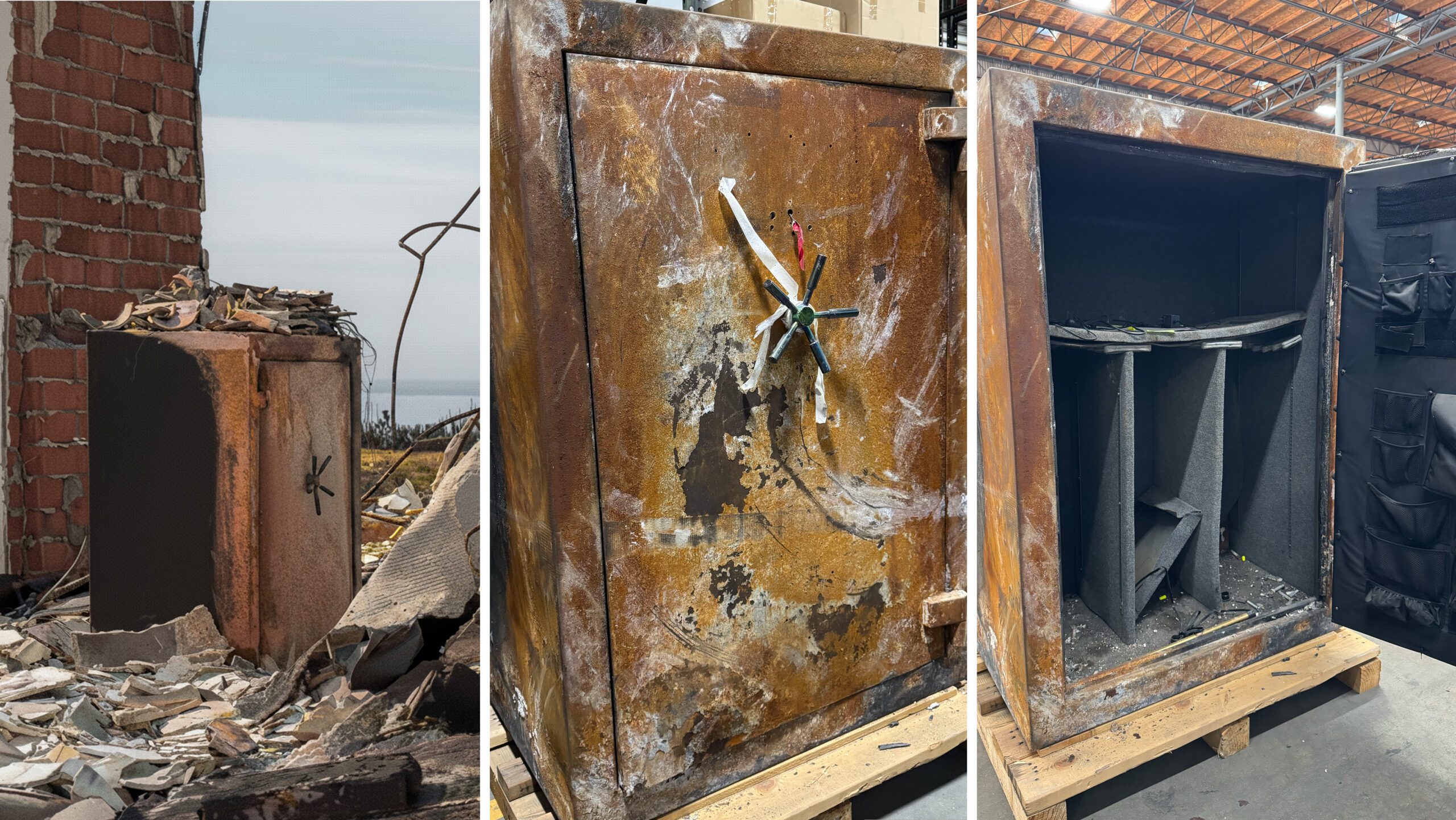
- In a 2018 California wildfire, one homeowner’s 60-minute fire-rated safe preserved his guns, but documents stored inside were badly charred. The safe’s exterior was blackened, but the guns only had minor smoke damage.
- In another case, a 30-minute rated safe was exposed to a fire that lasted over an hour. The outside was badly warped, and the contents were ruined. The fire outlasted the safe’s rating.
- A high-end safe with double-layer insulation and an expanding seal kept both guns and paperwork safe in a house fire. The owner found some smoke odor, but no major heat damage.
A key insight: Fire ratings are only as good as the real fire’s intensity and duration. If a fire is hotter or lasts longer than the rating, the safe—and its contents—may not survive.
Common Myths About Gun Safes And Fire Protection
There are many misunderstandings about gun safes and fire. Let’s clear up the most common myths.
“all Gun Safes Are Fireproof.”
No safe is completely fireproof—only fire-resistant. Every safe has a limit to how much heat and time it can withstand.
“a Higher Price Means Better Fire Protection.”
Costly safes sometimes offer better materials, but always check for real fire ratings and independent testing. Some expensive safes focus more on theft prevention than fire.
“if The Safe Survives, Everything Inside Will Be Fine.”
As discussed earlier, high heat, smoke, and water can all damage what’s inside—even if the safe looks solid from the outside.
“home Insurance Will Cover Everything Anyway.”
Insurance may not cover all types of damage, and some valuables (like rare collectibles or cash) may have coverage limits. Proper storage is always the first line of defense.
Choosing A Fire-resistant Gun Safe: What Really Matters
If you want your safe to survive a fire—and protect what’s inside—here’s what to focus on:
- Fire Rating: Choose a safe with at least a 1-hour fire rating at 1,400°F for most homes. More is better if you live far from fire services or in a high-risk area.
- Independent Testing: Look for safes with a UL or ETL fire rating. Avoid “factory tested” ratings that aren’t verified.
- Multiple Layers of Insulation: More fireboard or composite layers increase protection.
- Expandable Door Seals: Ensure the safe has seals that expand in heat.
- Steel Thickness: Thicker is better, but insulation is equally important.
- Size for Your Needs: Bigger safes hold more but may cost more. Don’t forget to allow space for future items.
- Interior Features: If you need to protect documents or electronics, consider safes with specialized fire-rated compartments.
A common mistake: Many buyers focus only on burglary resistance and ignore fire ratings. Always balance both.
Steps To Boost Your Gun Safe’s Fire Protection
Even if your safe has a good fire rating, you can do more to protect your valuables:
- Install in a Cool, Low-Risk Area: Basements or ground floors are safer than attics or garages.
- Keep Away From Flammable Items: Don’t store near gasoline, paint, or other combustibles.
- Use Additional Fireproof Containers: Place sensitive documents or electronics in a separate fireproof box inside the safe.
- Seal Entry Points: Check for gaps around the door and bolts; use fire-resistant caulking if needed.
- Regular Maintenance: Test door seals yearly. Replace if cracked or dried out.
What To Do After A Fire: Safe Recovery Tips
If your home suffers a fire and your gun safe is exposed, what you do next is critical.
- Let the Safe Cool Down: Don’t open it while hot—rapid cooling can cause more damage.
- Check for Water: If fire hoses were used, water may have entered. Dry out the safe as soon as it’s safe.
- Assess the Contents: Wear gloves and a mask—smoke and soot can be dangerous.
- Professional Cleaning: Guns exposed to smoke or heat should be cleaned and checked by a gunsmith.
- Document Damage: Take photos for insurance. Some safes have warranties—contact the manufacturer if needed.
Many people are surprised to learn that smoke and water damage often ruin contents more than fire itself.
The Limits Of Fire Protection: When A Safe Is Not Enough
While fire-rated gun safes offer real benefits, there are limits. In a severe fire lasting several hours, even the best safe may fail. If you own irreplaceable items—rare guns, original documents, or data—you may want to keep digital backups or store copies in a secure location off-site.
No safe can guarantee total protection. Think of a fire-rated safe as one line of defense, not the only one.
The Cost Of Fire Protection: Is It Worth It?
Fire-rated gun safes cost more than basic models. For example, a standard 16-gun safe may cost $700, while a similar-size fire-rated model may be $1,200–$2,000 or more, depending on rating and features.
Is it worth the price? If you store valuable guns, cash, or paperwork, the extra cost can be a small price for peace of mind. Remember, the average loss from a house fire is over $20,000 in property, and gun collections can be much more.
How To Read And Compare Fire Ratings
Not all fire ratings are created equal. Here’s how to read them:
- Temperature: The test temperature (e.g., 1400°F) should match or exceed likely home fire temps.
- Duration: Look for at least 60 minutes for most homes.
- Testing Agency: UL, ETL, or other third-party agencies are best.
- Interior Temperature: The rating should keep the inside below 350°F for documents.
Here’s a sample comparison:
| Brand | Fire Rating | Test Agency | Steel Thickness | Price Range |
|---|---|---|---|---|
| Liberty Safe | 60 min @ 1200°F | UL | 12-gauge | $1,500–$3,000 |
| Winchester | 75 min @ 1400°F | ETL | 14-gauge | $1,200–$2,200 |
| Stack-On | 30 min @ 1400°F | Factory Test | 14-gauge | $500–$1,000 |
Always ask for details about the fire test, not just the numbers on the label.
Insurance And Fire Damage: What You Need To Know
A good fire-rated gun safe can help with insurance claims, but it doesn’t guarantee coverage. Insurance companies often ask for:
- Proof of ownership (photos, receipts)
- Fire rating information
- List of contents before the fire
If you have rare or very valuable items, consider a special rider or extra coverage.
A useful external resource: For more information on fire safety and insurance, visit the National Fire Protection Association.
Frequently Asked Questions
How Long Will A Gun Safe Last In A Fire?
Most gun safes are rated for 30 to 120 minutes at temperatures from 1200°F to 1700°F. This means they can protect their contents for that time, but only if the fire doesn’t exceed those limits. After the rated time, heat can enter and damage or destroy what’s inside.
Can I Put Documents Or Electronics In My Gun Safe?
Standard gun safes are not always ideal for paper or electronics, as these items can be damaged at lower temperatures than guns. To protect them, use a separate fireproof box inside the safe or choose a safe with a special document/media compartment.
Does The Location Of The Safe In My Home Affect Fire Protection?
Yes. Placing your safe on a concrete floor, away from exterior walls, and not in the garage or attic increases fire protection. These areas heat up more slowly and are less likely to collapse or burn as quickly.
Is Water Damage A Risk For Gun Safes In A Fire?
Absolutely. Water from firefighting can seep into safes that are not water-resistant. This can cause rust, mold, or other damage. After a fire, check for water inside your safe and dry out items as soon as possible.
What’s The Difference Between Fireproof And Fire-resistant?
Fireproof suggests something can’t be damaged by fire, but in reality, all gun safes are fire-resistant—they can withstand fire for a limited time and temperature. Always check the fire rating and don’t assume any safe is “fireproof. ”
Choosing the right gun safe is a decision that can protect your firearms and valuables from theft and fire. While no safe is indestructible, understanding fire ratings, construction, and what really matters in a fire can help you make a smart investment.
Remember, the best protection comes from combining a quality fire-rated gun safe, smart storage practices, and solid insurance. With these steps, you’ll be better prepared—no matter what happens.

