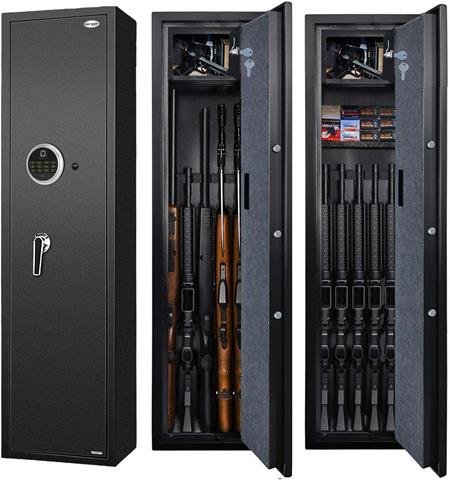
When shopping for a gun safe, one of the biggest decisions you’ll make is choosing between an electronic lock (e-lock) and a traditional mechanical dial lock. Electronic locks have become increasingly popular because they offer fast access, customizable codes, and modern security features. However, some gun owners question whether they are as dependable as mechanical locks, especially during emergencies or power outages.
Exclusive Deals
Limited-time Exclusive Deals. Check current discount on Amazon.
Check Price on Amazon As an Amazon Associate I earn from qualifying purchases.So, are e-locks reliable for your gun safe?
The short answer is yes—high-quality electronic locks are generally very reliable when properly maintained. Most modern electronic locks are built to withstand years of regular use and include security features such as tamper protection, lockout modes, and battery warnings. However, like any electronic device, they have potential failure points that mechanical locks don’t.
This guide explains how electronic gun safe locks work, their advantages and disadvantages, common causes of failure, and how to determine whether an e-lock is the right choice for your firearm storage needs.
What Is an Electronic Gun Safe Lock?
An electronic lock is a digital locking system that allows you to open your gun safe by entering a numeric PIN on a keypad instead of turning a mechanical combination dial.
Exclusive Deals
Limited-time Exclusive Deals. Check current discount on Amazon.
Check Price on Amazon As an Amazon Associate I earn from qualifying purchases.Most electronic gun safe locks include:
- A keypad with numbered buttons
- An internal electronic control board
- A battery-powered locking mechanism
- A motor or solenoid that retracts the locking bolts
- Security software that verifies the correct access code
Unlike mechanical locks, electronic locks don’t require users to memorize a complex dialing sequence. Entering the correct PIN typically unlocks the safe in just a few seconds.
How Reliable Are Electronic Gun Safe Locks?
Modern electronic locks are far more reliable than many people assume. Reputable manufacturers design their locks to handle thousands of locking and unlocking cycles while resisting tampering, vibration, and normal wear.
Under normal conditions, a quality electronic lock can provide many years of dependable service. Reliability largely depends on:
- The quality of the lock itself
- Proper installation
- Routine battery replacement
- Environmental conditions
- Regular maintenance
Problems often attributed to electronic locks are actually caused by neglected batteries, user error, or poor-quality aftermarket lock systems rather than the technology itself.
Exclusive Deals
Limited-time Exclusive Deals. Check current discount on Amazon.
Check Price on Amazon As an Amazon Associate I earn from qualifying purchases.Advantages of Electronic Locks
Electronic locks offer several benefits that make them attractive to many firearm owners.
Faster Access
One of the biggest advantages is speed.
Instead of rotating a dial multiple times, you simply enter your code and turn the handle.
Many electronic locks open within 2 to 5 seconds, making them ideal for:
- Home defense
- Emergency situations
- Frequent access
When every second matters, this quicker entry can be a significant advantage.
Easier to Use
Mechanical dial locks require users to remember a specific turning sequence.
Electronic locks are much simpler.
Most people find it easier to remember a six-digit PIN than a complex combination requiring multiple left and right turns.
This convenience is especially helpful for:
- First-time gun safe owners
- Older adults
- Individuals with limited hand dexterity
Changeable Access Codes
Unlike mechanical combinations, electronic PINs can usually be changed whenever needed.
This is useful if:
- Someone learns your code.
- A family member moves out.
- You sell the safe.
- You simply want improved security.
Many models allow multiple users to have separate access codes.
Security Features
Modern electronic locks often include built-in security features such as:
- Wrong-code lockout timers
- Tamper alerts
- Audible confirmation beeps
- Low battery warnings
- Auto-relock after failed attempts
These features help prevent unauthorized access while making the safe easier to operate.
No Combination Dialing Errors
Mechanical locks require precise dialing.
Missing a number by one digit means starting over.
Electronic locks eliminate this issue because each button press is verified immediately.
This reduces user frustration and speeds up everyday access.
Potential Drawbacks of Electronic Locks
Despite their advantages, electronic locks are not perfect.
Understanding their limitations helps you make an informed decision.
Battery Dependence
The most common concern is battery failure.
Electronic locks require batteries to power the keypad and internal locking mechanism.
Fortunately, most gun safes provide clear warning signs before the batteries become completely depleted.
Replacing batteries once a year greatly reduces the chance of unexpected lockouts.
Electronic Component Failure
Like any electronic device, components can eventually fail.
Possible issues include:
- Failed keypad
- Damaged circuit board
- Worn wiring
- Defective solenoid
- Faulty motor
These failures are uncommon in quality locks but are more likely with inexpensive or poorly manufactured models.
Sensitive to Moisture
High humidity or water exposure can damage electronic components.
If your safe is located in:
- A damp basement
- A detached garage
- A coastal area
Consider using a dehumidifier or desiccant packs inside the safe to reduce moisture buildup.
Power Surge Damage
Although rare, nearby lightning strikes or electrical surges can damage electronic components if the safe is connected to external power for accessories such as lighting or dehumidifiers.
Battery-operated locks themselves are generally isolated from household electrical systems.
Are Electronic Locks More Secure Than Mechanical Locks?
Security depends more on the quality of the lock than on whether it is electronic or mechanical.
A premium electronic lock from a reputable manufacturer is generally more secure than a poorly made mechanical lock, while a high-quality mechanical lock can outperform a cheaply built electronic one.
Both lock types are designed to resist common attacks, including:
- Guessing combinations
- Tampering
- Punching attacks
- Drilling (when paired with hardened steel plates)
- Manipulation attempts
For most homeowners, either type provides excellent security when installed on a well-built gun safe.
Common Reasons Electronic Locks Fail
Most electronic lock failures can be traced to one of the following issues.
Dead Batteries
Weak batteries are responsible for the majority of electronic lock problems.
Symptoms include:
- Dim keypad lights
- Slow response
- Multiple beeps
- Failure to unlock
Replacing the batteries usually resolves the issue.
Incorrect PIN Entry
Entering the wrong code repeatedly can activate the lock’s security timeout.
Many locks temporarily disable input after several incorrect attempts.
Waiting a few minutes before trying again usually solves the problem.
Internal Mechanical Obstruction
Sometimes the electronics function correctly, but the locking bolts cannot retract because:
- The safe is overpacked.
- Items press against the door.
- The handle is under tension.
Relieving pressure on the door often restores normal operation.
Worn Keypad Buttons
Heavy daily use may eventually wear out keypad buttons.
High-end locks are designed for thousands of button presses, but excessive wear can reduce responsiveness over time.
How Long Do Electronic Gun Safe Locks Last?
The lifespan depends on build quality and usage.
A well-maintained electronic lock from a trusted manufacturer can often last 10 to 20 years or more before requiring replacement.
Factors affecting lifespan include:
- Frequency of use
- Battery maintenance
- Humidity levels
- Temperature extremes
- Overall build quality
Routine care significantly extends the life of the lock.
Tips to Improve Electronic Lock Reliability
Proper maintenance goes a long way toward preventing problems.
Replace Batteries Every Year
Don’t wait for low-battery warnings.
Replacing alkaline batteries annually is inexpensive insurance against lockouts.
Use High-Quality Batteries
Cheap batteries may leak or deliver inconsistent voltage.
Choose reputable alkaline brands and avoid mixing old and new batteries.
Keep the Keypad Clean
Dust and grime can affect button responsiveness.
Clean the keypad occasionally with a soft, dry cloth.
Avoid spraying cleaners directly onto the keypad.
Avoid Excessive Moisture
Install your gun safe in a dry, climate-controlled location whenever possible.
If moisture is unavoidable, use:
- Rechargeable dehumidifiers
- Silica gel packs
- GoldenRod-style safe dehumidifiers
Test the Lock Regularly
Even if you rarely access your safe, unlock and relock it every few weeks.
Regular testing helps identify battery or mechanical issues before they become serious.
Who Should Choose an Electronic Lock?
Electronic locks are an excellent choice for:
- Homeowners who prioritize quick access
- People using a gun safe for home defense
- Families who want simple operation
- Users who frequently access their firearms
- Those who prefer changing access codes easily
The convenience and speed often outweigh the minimal maintenance required.
Who Might Prefer a Mechanical Lock?
A traditional dial lock may be better if you:
- Want a lock with no batteries
- Prefer a purely mechanical design
- Store the safe in remote locations
- Rarely access your firearms
- Value long-term simplicity over speed
Mechanical locks can remain functional for decades with little maintenance, though they generally require more time and precision to open.
Frequently Asked Questions
Can electronic gun safe locks fail?
Yes, but failures are relatively uncommon with high-quality locks. Most issues are caused by dead batteries, user error, or lack of maintenance rather than defects in the lock itself.
What happens if the batteries die?
Most electronic gun safes provide low-battery warnings well before the batteries are fully depleted. Replacing them promptly usually prevents lockouts. Some models also include an emergency override key or external battery contacts.
Are electronic locks secure against hacking?
Electronic gun safe locks are not connected to the internet or Wi-Fi, making remote hacking extremely unlikely. Unauthorized access is far more likely to result from stolen PINs, weak combinations, or physical attacks than from cyber threats.
Do electronic locks require regular maintenance?
Yes, but maintenance is minimal. Replace the batteries annually, keep the keypad clean, and periodically test the lock to ensure it operates smoothly.
Which is more reliable: electronic or mechanical locks?
Both can be highly reliable when they are well made and properly maintained. Electronic locks excel in speed and convenience, while mechanical locks offer battery-free operation and a long service life. The better choice depends on your priorities and how you use your gun safe.
Final Thoughts
Electronic locks have earned their place as a dependable option for modern gun safes. They provide fast access, user-friendly operation, and practical features like programmable PINs, lockout protection, and low-battery alerts. For many gun owners—especially those who may need quick access in an emergency—the convenience of an e-lock outweighs the small amount of routine maintenance it requires.
That said, no locking system is perfect. Electronic locks rely on batteries and internal electronics, while mechanical locks depend on precision components that can also wear over time. The key to long-term reliability is choosing a high-quality gun safe from a reputable manufacturer, following the maintenance recommendations, and replacing the batteries before they become a problem.
Ultimately, the most reliable gun safe is one that combines a strong steel body, a proven locking mechanism, and responsible ownership. Whether you choose an electronic or mechanical lock, proper care and safe handling will ensure your firearms remain secure and accessible when you need them most.