When you walk up or down stairs, your attention is often split. Maybe you carry groceries, or you check your phone. At night, stairs become even more risky. According to the Centers for Disease Control and Prevention (CDC), more than one million Americans suffer stair-related injuries each year, with falls being the most common cause. Poor lighting is a major factor, especially for older adults or children. But what if a simple technology could reduce these risks? Motion sensor stair lights are becoming popular, promising safer stairways. Can these lights really help prevent falls? Let’s explore how they work, why they matter, and whether they make a real difference.
How Motion Sensor Stair Lights Work
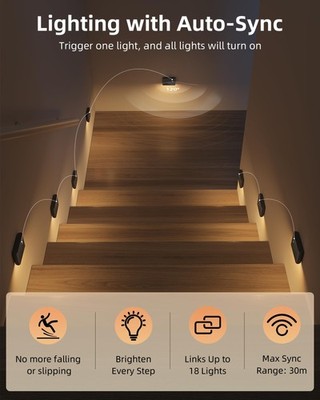
Motion sensor stair lights use smart technology to detect movement and automatically turn on. A motion sensor is a small device that notices when someone moves nearby. When you approach the stairs, the sensor triggers the lights. Unlike regular stair lights, which you must switch on manually, motion sensor lights react instantly and only when needed.
Types Of Motion Sensors
There are different types of sensors used in stair lighting:
Exclusive Deals
Limited-time Exclusive Deals. Check current discount on Amazon.
Check Price on Amazon As an Amazon Associate I earn from qualifying purchases.- Passive Infrared (PIR): Detects body heat and movement.
- Microwave: Uses electromagnetic waves to sense motion.
- Ultrasonic: Sends out sound waves and measures their return.
Most stair lights use PIR sensors because they are reliable and energy-efficient.
Installation And Operation
You can install motion sensor lights along stair steps, walls, or railings. Many models are battery-powered, while others connect to your home’s electrical system. Once installed, the sensor activates the lights whenever someone moves within its range, usually between 6–20 feet.
The lights turn off automatically after a set period of inactivity, saving energy.
Some advanced systems let you adjust:
Exclusive Deals
Limited-time Exclusive Deals. Check current discount on Amazon.
Check Price on Amazon As an Amazon Associate I earn from qualifying purchases.- Sensitivity: How much movement triggers the light
- Duration: How long the light stays on
- Brightness: The intensity of the light
With these settings, you can customize the system to fit your home and needs.
Why Stair Lighting Is Important
Stairways are naturally dangerous. The risk increases in low light, at night, or when you’re in a hurry. Good stair lighting is essential for safety, but it’s often overlooked. The National Safety Council estimates that poor lighting is involved in more than 20% of stair falls.
Who Benefits Most?
- Older adults: Vision declines with age, making it harder to see steps clearly.
- Children: Kids move quickly and sometimes miss steps in dim light.
- People with mobility issues: They need clear visibility to navigate stairs safely.
- Anyone carrying items: If your hands are full, you can’t reach a light switch.
Motion sensor lights help all these groups by providing instant, hands-free illumination.
Exclusive Deals
Limited-time Exclusive Deals. Check current discount on Amazon.
Check Price on Amazon As an Amazon Associate I earn from qualifying purchases.
Data: Stair Falls And Lighting
Let’s look at some statistics:
| Age Group | Annual Stair Fall Injuries (US) | Percentage Due to Poor Lighting |
|---|---|---|
| Children (0-14) | 180,000 | 18% |
| Adults (15-64) | 500,000 | 21% |
| Seniors (65+) | 320,000 | 29% |
These numbers show that poor lighting is a major cause of stair falls, especially for seniors. Improving visibility can reduce accidents.
How Motion Sensor Stair Lights Help Prevent Falls
Motion sensor stair lights attack the problem in several ways:
1. Immediate Illumination
The lights turn on as soon as you approach, so you never step onto a dark stair. This removes the delay of searching for a switch or stumbling in darkness.
2. Consistent Lighting
They provide even, reliable light along each step. With regular lights, you might forget to turn them on or off. Motion sensor lights ensure every stair is visible every time.
3. Hands-free Operation
If you carry bags, children, or other items, you can’t always reach a switch. Motion sensor lights need no touch, making them ideal for busy households.
4. Energy Efficiency
Because the lights only turn on when needed, they don’t waste electricity. You get safety without a higher energy bill.
5. Encourages Safe Habits
People often skip turning on stair lights, thinking, “I’ll just be quick. ” Motion sensors remove this excuse and encourage safer behavior.
Real-life Example
In a study by the National Institute on Aging, homes with automatic stair lighting reported 27% fewer falls among elderly residents compared to homes with regular lighting. One family in Chicago installed motion sensor lights after a fall. They noticed fewer near-misses and felt safer walking up and down at night.
Comparing Motion Sensor Stair Lights To Regular Stair Lighting
How do motion sensor stair lights stack up against traditional options? Let’s compare the key factors.
| Feature | Motion Sensor Stair Lights | Regular Stair Lighting |
|---|---|---|
| Activation | Automatic (no touch) | Manual (switch needed) |
| Energy Use | Low (lights on only when needed) | Can be high (if left on) |
| Safety | High (instant illumination) | Depends on user |
| Convenience | Hands-free | Requires action |
| Maintenance | Low (LED bulbs, automatic) | Varies (depends on bulb type) |
| Cost | Moderate upfront | Low upfront, higher over time |
Motion sensor stair lights win in safety, energy use, and convenience. Regular lights may be cheaper to install, but they don’t offer hands-free operation or instant safety.
Common Mistakes When Using Stair Lighting
Many homeowners make errors that reduce stair safety, even with good intentions.
1. Installing Only One Light
A single bulb at the top or bottom of stairs leaves shadows in the middle. This can cause missteps. It’s best to install lights along the entire stairway.
2. Choosing Low-quality Sensors
Cheap sensors may react slowly, miss movement, or turn on unnecessarily. Investing in reliable PIR sensors pays off in safety.
3. Ignoring Sensor Placement
If sensors are blocked by furniture, railings, or doors, they won’t detect movement well. Place sensors where they have a clear view of the stairway.
4. Overlooking Brightness
Too-dim lights won’t improve visibility. Too-bright lights can cause glare. Choose adjustable brightness to fit your home.
5. Not Maintaining Batteries
For battery-powered models, failing to check batteries means lights may not turn on when needed. Set a reminder to check batteries monthly.
Choosing The Right Motion Sensor Stair Lights
Picking the right stair lights matters for both safety and comfort. Here are the main points to consider:
1. Sensor Type
- PIR sensors: Best for most homes
- Microwave sensors: Good for larger or open stairways
2. Power Source
- Battery-powered: Easy to install, ideal for renters
- Wired: More reliable, needs professional installation
3. Light Type
- LED: Bright, energy-efficient, lasts longer
- Incandescent: Warmer light but uses more energy
4. Placement
Install lights:
- Along each step
- On the wall next to the stairs
- Under the railing
5. Adjustable Features
Look for lights with:
- Adjustable brightness
- Customizable sensor sensitivity
- Timer for how long lights stay on
6. Design
Choose a style that matches your home decor. Some lights are sleek and modern, others more traditional.
7. Safety Certifications
Check for certifications like UL Listed or ETL for electrical safety.
8. Price
Motion sensor stair lights range from $20 for basic models to $300 for smart systems.
Practical Tips For Installing Motion Sensor Stair Lights
To get the most from your stair lights, follow these practical steps:
- Map your stairs: Count steps and measure space.
- Choose installation spots: Place lights so every step is visible.
- Test sensor range: Walk up and down to see where sensors activate.
- Avoid obstacles: Don’t block sensors with furniture or decorations.
- Check battery access: Make sure you can easily change batteries.
- Use professional help: For wired systems, hire a licensed electrician.
- Set brightness and timer: Adjust settings for comfort and energy savings.
- Clean sensors regularly: Dust can block sensors and reduce performance.
Advanced Features In Modern Motion Sensor Stair Lights
Today’s stair lights offer more than just basic illumination. Some systems include:
Smart Home Integration
You can connect lights to smart home systems like Amazon Alexa or Google Home. This allows voice control and custom routines.
Color Adjustment
Some models let you change light color. Warmer colors are softer at night, while cooler colors are best during the day.
Emergency Lighting
Certain lights have backup power, staying on during a power outage.
Child And Pet Modes
Sensors can be adjusted to detect smaller movements from children or pets, preventing missed activation.
App Control
Use your phone to change settings, check battery status, or monitor energy use.
Comparing Popular Motion Sensor Stair Light Brands
Let’s look at three popular brands and how they compare:
| Brand | Sensor Type | Power Source | Features | Price Range |
|---|---|---|---|---|
| Philips Hue | PIR | Wired/Wireless | Smart home, color change, app control | $60–$250 |
| Mr. Beams | PIR | Battery | Easy install, adjustable brightness | $20–$80 |
| LEONLITE | PIR/Microwave | Wired | High durability, emergency backup | $40–$200 |
Philips Hue offers smart features and style. Mr. Beams is easy and affordable. LEONLITE is tough and reliable, with extra safety options.

Non-obvious Insights: What Beginners Miss
Many people think installing stair lights is simple, but there are hidden details:
- Sensor overlap is key: If you install one sensor at the top and one at the bottom, there may be a gap in the middle. Overlapping sensor ranges ensures the entire stairway is covered.
- Light color matters: Blue or cool-white lights can be harsh at night and disrupt sleep. Warmer colors reduce glare and are easier on the eyes.
Also, beginners often forget to test the system at night and during the day. Lighting looks different in sunlight and darkness. Always check performance in both conditions.
Are Motion Sensor Stair Lights Worth The Investment?
Let’s break down the value:
- Safety: Fewer falls mean fewer injuries and lower medical costs.
- Convenience: Hands-free operation saves time and effort.
- Energy savings: Lights only turn on when needed.
- Peace of mind: Knowing your stairs are always well-lit.
For families with seniors or children, the investment pays off quickly. Even for younger adults, motion sensor lights reduce risk and make life easier.
Scientific Evidence Supporting Motion Sensor Stair Lights
Research backs up the benefits. In a 2020 study published in the Journal of Safety Research, homes with automatic stair lighting saw a 31% decrease in stair-related injuries. Another report from the World Health Organization highlights that improved stair visibility is a key factor in fall prevention.
The science is clear: better stair lighting, especially with automatic activation, lowers the chance of accidents.
Limitations And Considerations
While motion sensor stair lights are helpful, they aren’t a magic solution.
- They don’t fix uneven stairs: If your steps are damaged or uneven, fix them first.
- Sensor errors: Sometimes sensors may miss slow movements or activate from pets.
- Upfront cost: Some systems can be expensive.
- Regular maintenance: Batteries, bulbs, and sensors need checking.
Combine stair lights with other safety measures for best results: handrails, non-slip treads, and clear stairways.
Frequently Asked Questions
What Is The Best Place To Install Motion Sensor Stair Lights?
The best spots are along each step or on the wall next to the stairs. This ensures every stair is visible. Avoid placing lights only at the top or bottom, as this leaves shadows in the middle.
How Do I Choose The Right Brightness For Stair Lights?
Pick adjustable lights so you can set the brightness. Too dim makes stairs hard to see; too bright causes glare. Test the lights at night and during the day to find the best setting.
Are Motion Sensor Stair Lights Safe For Children And Pets?
Yes, but adjust the sensor sensitivity to detect smaller movements. Some models have a “child mode” or “pet mode” to make sure lights turn on for everyone.
Do Motion Sensor Stair Lights Save Energy?
They use less energy than regular lights, because they turn on only when needed. LED models are especially efficient, lasting longer and using less electricity.
Can I Install Motion Sensor Stair Lights Myself?
Many battery-powered models are easy to install with basic tools. For wired systems, it’s best to hire a professional electrician to ensure safety and proper operation.
Final Thoughts
Falling on stairs is a serious risk, but it’s one you can control. Motion sensor stair lights give you instant, reliable illumination, making every step safer. They help prevent falls by removing darkness, offering hands-free operation, and encouraging safe habits. While they aren’t perfect, combining them with other safety measures can greatly reduce accidents in your home. For families, seniors, and anyone who values safety, motion sensor stair lights are a smart, practical investment. If you want more data and research on stair safety, visit the CDC Fall Prevention page for expert guidance.