Do Motion Sensor Stair Lights Work During Power Outages?
When you walk up or down a staircase at night, motion sensor stair lights can make your path both safer and more stylish. But many people wonder: what happens if the power goes out? Will these lights still work when you need them most? If you live in an area that experiences frequent outages, or if you’re considering stair lighting for safety, this is a serious question. Let’s dive deep and discover how motion sensor stair lights respond during a power outage, what options exist, and how you can keep your stairs illuminated no matter what.
How Motion Sensor Stair Lights Work
To understand if stair lights will function without electricity, you need to know how they operate under normal conditions.
Most motion sensor stair lights are part of your home’s electrical system. They use a sensor—often infrared—to detect movement. When someone approaches, the sensor sends a signal to turn on the light. After a set time, the light turns off automatically if no motion is detected.
Exclusive Deals
Limited-time Exclusive Deals. Check current discount on Amazon.
Check Price on Amazon As an Amazon Associate I earn from qualifying purchases.There are two main types:
- Hardwired lights connect directly to your house’s electrical wiring.
- Battery-powered or solar lights run independently.
Here’s a simple breakdown of the core differences:
| Type | Power Source | Installation | Common Use |
|---|---|---|---|
| Hardwired | Home electricity | Professional (often needed) | Long-term, indoor |
| Battery-powered | Batteries (AA/AAA or rechargeable) | DIY-friendly | Temporary, rental, stairs without wiring |
| Solar-powered | Sunlight (with backup battery) | DIY or pro | Outdoor, energy-saving |
Most hardwired lights stop working if the power fails, while battery or solar options may continue.
What Happens To Hardwired Stair Lights During Power Outages
If your stair lights are hardwired and there’s a power outage, the answer is simple: they will not work. When the home’s electricity is cut, any lights that rely on it—including those with motion sensors—cannot turn on. This is a major safety concern, especially on stairs, where even a moment of darkness can lead to dangerous falls.
Exclusive Deals
Limited-time Exclusive Deals. Check current discount on Amazon.
Check Price on Amazon As an Amazon Associate I earn from qualifying purchases.Some modern homes have emergency backup systems or generators, but unless your stair lights are connected to these, they won’t receive power. Standard wiring does not include backup by default.
Why Hardwired Lights Fail During Outages
- No power supply: The circuit is dead, so both the sensor and light are inactive.
- Sensor dependency: Sensors need electricity to detect motion.
- No battery backup: Most hardwired systems lack a built-in battery.
If you live somewhere with frequent storms, grid failures, or old infrastructure, relying only on hardwired lights can be risky.
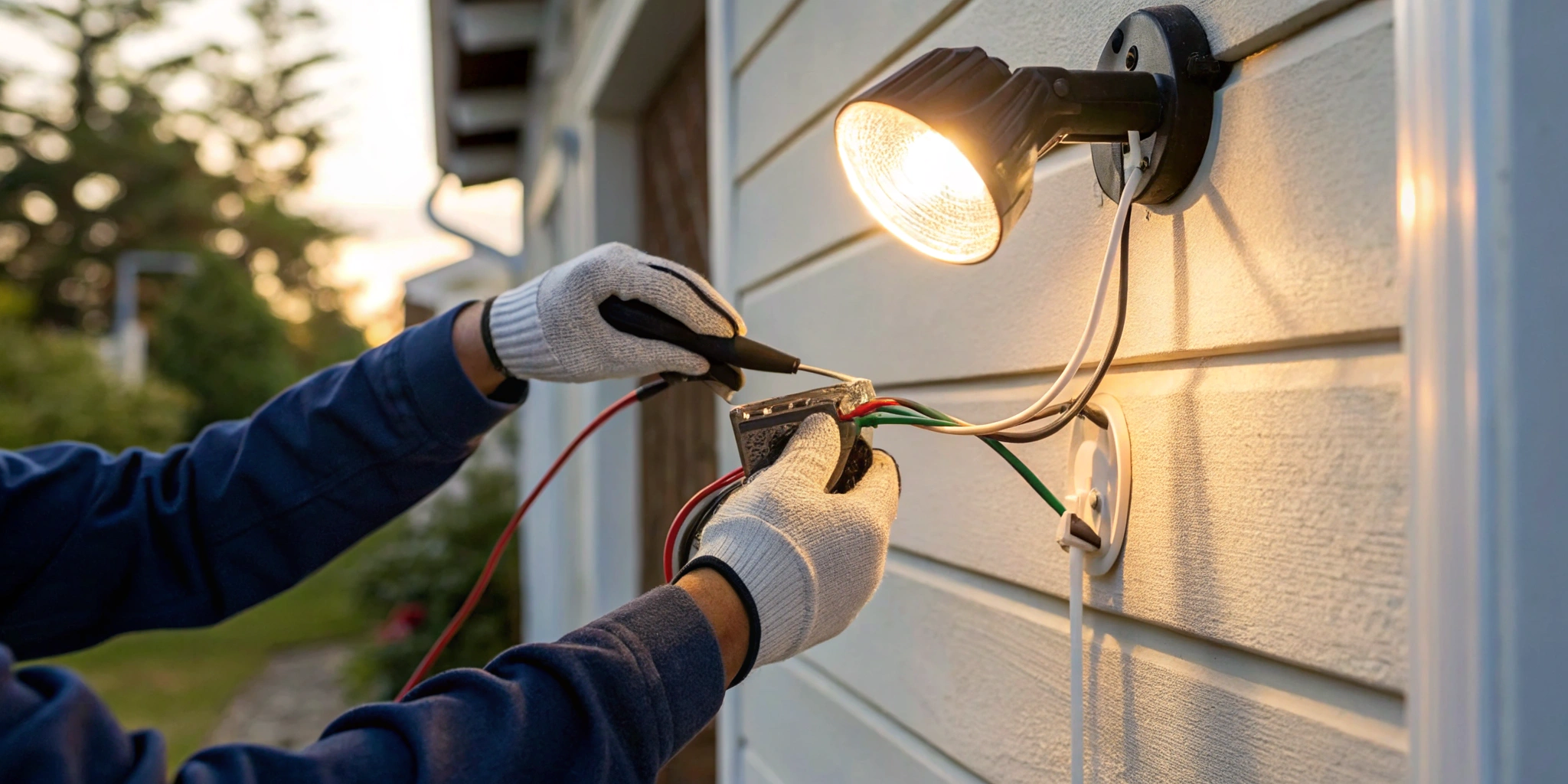
Battery-powered Motion Sensor Stair Lights: A Reliable Alternative
If you want lights that work during outages, battery-powered motion sensor lights are the most direct solution. These devices have their own power supply, so they don’t depend on your home’s electrical grid.
Exclusive Deals
Limited-time Exclusive Deals. Check current discount on Amazon.
Check Price on Amazon As an Amazon Associate I earn from qualifying purchases.Key Features Of Battery-powered Models
- Independent operation: Each light runs on disposable or rechargeable batteries (AA, AAA, or lithium).
- Easy installation: Most can be mounted with screws, adhesive, or magnets—no wiring required.
- Automatic activation: When the sensor detects movement, the light turns on for a set period.
- Safe during outages: They keep working during blackouts, as long as the batteries are charged.
Let’s compare hardwired and battery-powered options for outages:
| Feature | Hardwired | Battery-Powered |
|---|---|---|
| Works during outage | No | Yes |
| Installation | Often needs electrician | DIY-friendly |
| Maintenance | Minimal (except bulb replacement) | Battery changes needed |
| Brightness options | Usually brighter | Often dimmer (but enough for safety) |
Battery Life And Practical Tips
Most battery-powered motion lights last between 6 months and 2 years on a set of batteries, depending on usage. To avoid getting caught in the dark:
- Check batteries every few months, especially before storm season.
- Use rechargeable batteries to save money and reduce waste.
- Choose lights with a low-power LED, which extends battery life.
Some advanced models even have indicators to show when batteries are low.
Solar-powered Motion Sensor Stair Lights: Do They Work In Outages?
Solar-powered stair lights are popular for outdoor steps and decks. They use a small solar panel to charge a battery during the day. When it’s dark and motion is detected, the light turns on.
How Solar Lights Handle Power Outages
Solar lights don’t connect to your home’s grid. Their ability to work during a utility power failure depends on:
- Battery charge: If the battery is charged from sunlight, the light will work at night—no matter what happens to the grid.
- Weather: Extended cloudy or rainy weather may reduce performance, as the battery may not charge fully.
- Battery lifespan: Over time, the built-in battery may lose its ability to hold a charge.
For outdoor stairs, solar-powered motion sensor lights are often the best all-around solution for blackout safety—as long as you get enough sunlight.
Integrated Backup Systems For Hardwired Stair Lights
Some high-end stair lighting systems come with integrated backup batteries. This means that, even if the main power goes out, the backup battery kicks in to keep the lights working temporarily.
How Backup Systems Work
- The backup battery charges while the power is on.
- During an outage, the battery provides electricity to the lights for a few hours.
- Once the main power returns, the system switches back.
These systems are common in commercial buildings or luxury homes, but less so in standard houses due to higher costs.
Limitations
- Run time is limited: Most backup batteries only last a few hours.
- Maintenance required: Backup batteries need to be replaced every few years.
- Installation cost: Adding battery backup to an existing system can be expensive.
If maximum safety is critical—such as in a home with elderly residents—this is a good option to consider.
Emergency Lighting: The Ultimate Backup
A different approach is to install emergency stair lighting. These are lights specifically designed to turn on only during a power outage. They use their own battery and often include a motion sensor for energy savings.
Emergency Light Features
- Automatic activation: When power fails, the light comes on.
- Rechargeable battery: Charges from normal power, ready when needed.
- Regulatory compliance: In many countries, emergency stair lighting is required in commercial spaces.
Pros And Cons
- Pro: Always ready during an outage.
- Con: May cost more upfront.
- Pro: Maintenance is usually simple—just test the battery every 6 months.
For homes, you can find small plug-in emergency lights that double as night lights when the power is on, and switch to battery mode when it’s off.

Common Mistakes When Choosing Stair Lights For Outage Protection
Many people buy stair lights without thinking about blackout situations. Here are some common mistakes:
- Choosing only hardwired lights: They look great, but leave you in the dark during a blackout.
- Not checking battery levels: Even the best battery-powered lights won’t work if the battery is dead.
- Ignoring sunlight needs for solar: If your stairs are indoors or shaded, solar lights won’t charge.
- Not testing emergency backup: Batteries degrade over time—test your system every 6 months.
- Forgetting about light brightness: Some battery models are too dim for safe stair navigation.
It’s easy to focus on design and forget about reliability. Make sure to consider power outages as part of your decision.
How To Choose The Best Motion Sensor Stair Lights For Power Outages
Picking the right stair lighting means thinking about your home, your habits, and your local weather. Here’s a step-by-step approach:
- Assess your risks: Do you live in an area with frequent outages? Is stair safety a major concern?
- Location matters: For outdoor stairs, solar-powered lights may be ideal. For indoor, battery-powered is often best.
- Brightness: Look for models that offer at least 30–50 lumens per step for safe navigation.
- Sensor range: Some sensors only detect motion from 3–5 feet. Wider range means greater convenience.
- Battery type and life: Rechargeable lithium batteries last longer but may cost more upfront.
- Installation style: DIY stick-on models are easy but may not last as long as screwed-in options.
- Backup features: If you want hardwired lights, look for models with built-in battery backup.
Comparison: Power Sources And Outage Performance
Here’s a quick summary table for the main types:
| Type | Works During Outage? | Best For | Weakness |
|---|---|---|---|
| Hardwired (no backup) | No | Permanent, bright lighting | Fails in outage |
| Battery-powered | Yes | Retrofit, renters, safety | Needs battery changes |
| Solar-powered | Yes (if charged) | Outdoor, eco-friendly | Needs sunlight |
| Hardwired with backup | Yes (limited time) | Critical safety | Higher cost, maintenance |
| Emergency-only | Yes (during outage) | Stair safety in blackouts | Not for daily use |

Real-world Examples: How People Handle Stair Lighting During Outages
Let’s look at how different homeowners tackle stair lighting:
- Family with kids: They use battery-powered motion lights on each step. Even during a blackout, their children can safely go up or down the stairs at night.
- Older adults: A couple installs emergency plug-in lights that turn on when power fails. They test the lights twice a year and replace batteries as needed.
- Outdoor deck owners: They mount solar-powered motion lights. On sunny days, the battery charges enough for multiple nights, but after a week of rain, they keep a flashlight handy as backup.
- Tech-savvy homeowner: Installs a smart hardwired system with battery backup. The lights stay on for 4 hours during an outage, giving them peace of mind.
These examples show there’s no one-size-fits-all answer—but planning is key.
Non-obvious Insights Most People Miss
- Sensor type matters: Some motion sensors use infrared, others use microwave or ultrasonic. Infrared is most common and battery-friendly, but may be less sensitive in cold environments. If your stairs are in a chilly spot (like a basement), choose a model rated for low temperatures.
- Emergency lights can double as flashlights: Some plug-in emergency stair lights can be removed from the outlet and carried like a flashlight. This adds extra flexibility during a long power outage.
- Not all battery-powered models are equal: Some cheap models drain batteries quickly, while better designs use energy-saving chips and LEDs. Look for lights with good reviews for battery life.
- Mixing light types increases safety: Using both hardwired and battery-powered or emergency lights means you’re covered for both normal and blackout situations.
Safety And Building Codes: What To Know
In the US, many building codes require emergency lighting on stairways in commercial and multi-family buildings. For private homes, there’s usually no legal requirement, but insurance companies may recommend it—especially in homes with elderly or disabled residents.
- Tip: If you’re installing new stairs or renovating, check local codes. You may need to include certain types of stair lighting for compliance.
For more information on building codes, the NFPA (National Fire Protection Association) offers detailed guidelines.
Maintenance Tips For Outage-ready Stair Lights
No lighting system is “set and forget.” To ensure your stair lights work when you need them:
- Test monthly: Trigger the sensor and make sure lights turn on.
- Replace batteries regularly: Mark your calendar for battery changes, especially if you use the stairs daily.
- Clean sensors: Dust or spider webs can block motion sensors and reduce reliability.
- Check solar panels: Wipe off dirt to keep charging efficient.
- Test backup systems: If you have a backup battery or emergency system, test it at least twice a year.
A few minutes of maintenance can prevent an accident during a blackout.
Frequently Asked Questions
Do Motion Sensor Stair Lights Always Work During Power Outages?
No, only battery-powered, solar-powered, or emergency lights work during outages. Standard hardwired lights stop working when the power goes out unless they have a built-in backup battery.
How Long Do Battery-powered Stair Lights Last During An Outage?
Most battery-powered motion sensor lights last from 6 months to 2 years on one set of batteries, depending on usage and brightness. During a blackout, they continue to function as long as the batteries have charge.
Are Solar-powered Stair Lights Reliable During Blackouts?
Yes, solar-powered lights work during blackouts if their battery is charged. However, their reliability depends on getting enough sunlight to recharge. After several cloudy days, the light may be dim or stop working until sunny weather returns.
Can I Add Battery Backup To My Existing Hardwired Stair Lights?
In some cases, you can retrofit battery backup units to hardwired systems, but it often requires professional installation. Not all models support this feature, and it may be more cost-effective to add separate battery-powered or emergency lights.
How Can I Make Sure My Stair Lights Work During A Sudden Power Outage?
Use a combination of battery-powered or emergency plug-in lights for indoor stairs and solar-powered lights for outdoor stairs. Test and maintain batteries regularly to ensure reliability during unexpected blackouts.
Motion sensor stair lights are a smart way to improve safety and convenience, but their performance during power outages depends on how they’re powered. By choosing the right type for your home, and keeping up with simple maintenance, you can keep your stairs safe in any situation.