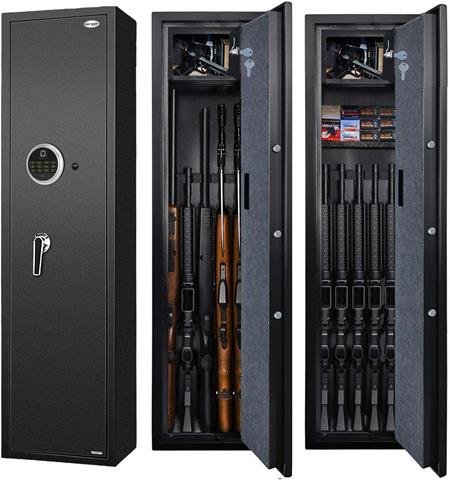
When people buy a fireproof safe, they expect it to guard valuable items from the destructive power of fire. But how hot does it really get inside a fireproof safe during a fire? Many imagine that the inside stays cool and untouched, but the truth is more complex.
Exclusive Deals
Limited-time Exclusive Deals. Check current discount on Amazon.
Check Price on Amazon As an Amazon Associate I earn from qualifying purchases.Understanding the temperatures inside a fireproof safe can help you protect your documents, cash, digital media, and other irreplaceable possessions better.
This article explores how fireproof safes work, what temperatures you can expect inside them, and how different factors affect the heat exposure. You will also discover why not all safes offer the same protection, what happens to contents during a fire, and how to choose the right safe for your needs.
Exclusive Deals
Limited-time Exclusive Deals. Check current discount on Amazon.
Check Price on Amazon As an Amazon Associate I earn from qualifying purchases.If you want to keep your most important items truly safe, this is essential knowledge.
How Fireproof Safes Protect Your Valuables
Exclusive Deals
Limited-time Exclusive Deals. Check current discount on Amazon.
Check Price on Amazon As an Amazon Associate I earn from qualifying purchases.Fireproof safes are not magic boxes that keep everything inside at room temperature. They are engineered to slow down the transfer of heat from a fire outside to the contents inside. The basic principle is insulation: thick walls, special fire-resistant materials, and tight seals work together to create a barrier.
Most fireproof safes use a combination of steel and a fire-resistant insulating material, such as gypsum or concrete composite. When the outside of the safe is exposed to fire, these materials absorb and slow down the heat, giving the inside a chance to stay cooler, at least for a while.
The goal is not to keep the contents completely cool, but to keep them below certain critical temperatures for a specified period. This period is known as the fire rating of the safe, usually measured in minutes or hours (for example, 1 hour at 1700°F).
What Happens During A Fire?
Imagine a house fire where the temperature outside the safe can reach between 1,000°F and 1,800°F (about 538°C to 982°C). Flames, hot gases, and radiant heat surround the safe. If the safe is properly rated and undamaged, its insulation starts to do its job.
But the temperature inside the safe does not stay at normal room levels. It rises, though much more slowly and to a lower peak compared to the outside. The rate of heat rise depends on factors such as the safe’s build quality, thickness, rating, and the duration and intensity of the fire.
Many people are surprised to learn that the inside of a fireproof safe can still get very hot—hot enough to damage some sensitive items if you’re not careful.

Understanding Fire Ratings And Interior Temperatures
A safe’s fire rating tells you how long it can keep its inside below a certain temperature when exposed to a specific external temperature. The three most common internal temperature standards are:
- 350°F (177°C) – For paper documents
- 150°F (66°C) – For digital media like CDs and DVDs
- 125°F (52°C) – For magnetic data (tapes, hard drives)
The reason these numbers matter is that different materials are damaged at different temperatures. For example, paper chars at around 400°F (204°C), while plastic melts at much lower temperatures.
Here’s a comparison of typical fire ratings and their meaning:
| Fire Rating | Max Internal Temp | Duration | Protection Type |
|---|---|---|---|
| 1 hour at 1700°F | 350°F | 60 minutes | Papers |
| 1 hour at 1550°F | 150°F | 60 minutes | Digital Media |
| 2 hours at 1850°F | 350°F | 120 minutes | Papers |
| 30 minutes at 1200°F | 350°F | 30 minutes | Papers |
So, if you buy a safe rated for “1 hour at 1700°F (927°C)” with a maximum internal temperature of 350°F, it means that if exposed to flames at 1700°F, the inside will not go above 350°F for at least one hour.
After that, or if the fire is hotter or lasts longer, the temperature inside can go higher.
How Hot Does It Get Inside A Fireproof Safe?
The internal temperature of a fireproof safe during a fire depends on its rating, the type of fire, and its contents. But here are some clear facts:
- Paper-rated safes: The temperature inside can reach up to 350°F (177°C) during a fire, but should not exceed this for the rated time.
- Data-rated safes: These are built to keep the inside below 150°F (66°C) or even 125°F (52°C) for the protection of digital or magnetic media.
It is a common misconception that the interior stays cool. In reality, the inside gets hot enough to make plastic items soft, melt wax seals, or even warp some low-temperature items.
Why Not All Safes Are Equal
Not all fireproof safes are tested to the same standards. Some cheap safes might claim “fire resistance” but have no reliable rating. Only safes tested by recognized labs (like UL or ETL) offer true, certified protection. Always check for a clear rating before you trust a safe with irreplaceable items.
What Influences Internal Safe Temperatures?
Several factors change how hot it gets inside a fireproof safe during a fire:
1. Fire Intensity And Duration
A brief fire might not heat the safe’s interior as much as a long, intense blaze. If a fire burns at high temperature for hours, even the best safe may eventually let the inside get dangerously hot.
2. Safe Wall Thickness And Material
Thicker walls and high-quality insulation slow heat transfer better. Cheaper safes with thin walls or poor insulation will heat up faster and reach higher internal temperatures more quickly.
3. Location Of The Safe
If your safe is on a wooden floor, in a basement, or inside a closet, the fire’s heat may reach it differently. A safe surrounded by burning materials may get hotter faster than one isolated from flames.
4. How Full The Safe Is
A safe packed with items will absorb heat differently than an empty one. More contents can sometimes help slow the air temperature rise, but it also means more items are at risk if the temperature does climb.
5. Door Seals And Construction Quality
A high-quality fireproof safe has intumescent seals that expand in heat and block smoke and flames. Weak or damaged seals let heat in much faster.
What Items Are Safe—and What Are Not?
Knowing how hot it gets inside a fireproof safe helps you understand what you should (and should not) store in it.
Paper Documents
Paper is the most common thing people want to protect. Most fireproof safes are designed to keep internal temperatures below 350°F so that paper does not char or ignite. However, the edges of documents can still become brown, and ink may fade if the exposure is long.
Digital Media
CDs, DVDs, and USB drives are more sensitive. They can warp or melt at temperatures above 150°F. For these, you need a data-rated safe, not just a regular fireproof safe. Many people make the mistake of keeping hard drives or flash drives in a paper-rated safe, not realizing that they may still be ruined.
Cash
Banknotes are made from cotton and linen fibers and can begin to degrade around 400°F. In a properly rated paper safe, cash usually survives, but it can become brittle or discolored if the safe is pushed to its limit.
Photographs And Film
Photos and negatives are even more sensitive, especially to heat and humidity. They may be damaged at temperatures well below 350°F, so special care is required.
Jewelry And Metal Items
Gold, silver, and platinum jewelry are safe from fire damage unless the fire is extremely intense. The melting point of gold is 1,948°F, far higher than inside a fireproof safe. However, delicate pieces with glue, resin, or plastic parts may not survive.
Watches And Small Electronics
Plastic and rubber parts can melt or deform at temperatures as low as 200°F. Again, a data or media-rated safe is needed.
How Fireproof Safes Are Tested
True fireproof safes are tested by placing them in a furnace and exposing them to high temperatures for a set period, while internal sensors measure the inside temperature. The safe must keep the interior below the standard limit for the entire test.
Some safes are also dropped from a height after heating to simulate a building collapse.
The main testing organizations include Underwriters Laboratories (UL) and Intertek (ETL). The most common and trusted rating is the UL Class 350 1-hour rating, which means internal temperatures do not exceed 350°F for one hour at 1700°F.
Some safes are tested to even tougher standards, such as 2 or 4 hours at extreme temperatures. Always look for a label showing the safe’s fire test rating.
Here’s a comparison of UL fire ratings:
| UL Rating | Max Internal Temp | Test Duration | Best For |
|---|---|---|---|
| Class 350 | 350°F | 1-4 hours | Paper |
| Class 150 | 150°F | 1-2 hours | Media |
| Class 125 | 125°F | 1-2 hours | Magnetic Tapes |
Real-life Examples: What Survives And What Doesn’t
Many stories show both the strengths and limits of fireproof safes.
- In a house fire, a family opened their safe and found birth certificates and passports intact, but their USB drive had melted.
- A business lost backup tapes stored in a paper-rated safe, but paper records survived.
- Some people find their cash is singed around the edges, but still usable.
One non-obvious insight is that humidity can also rise inside a safe during a fire, sometimes causing water damage or mold later. This is especially true if the safe is not well sealed or if it is cooled suddenly (for example, by firefighters using water).
Common Misunderstandings About Fireproof Safes
Many buyers believe that a fireproof safe will protect absolutely anything. This is not true.
- Not all safes protect against burglary—fireproof safes can have weaker locks.
- Fireproof safes have limits: If a fire burns longer than the rating, or is hotter than the test, the interior will eventually heat up beyond safe levels.
- Digital media and photos need special safes with lower internal temperature ratings.
Another point beginners often miss is that not all safes are water-resistant. After a fire, water used to fight the flames can enter the safe and damage contents. Consider a safe with both fire and water resistance for the best protection.
How To Choose The Right Fireproof Safe
Choosing the right safe means understanding what you need to protect.
- Identify your valuables: Are you storing paper, cash, digital media, jewelry, or something else?
- Check the fire rating: Match the safe’s internal temperature rating with the sensitivity of your items.
- Pick the right duration: Choose a safe with a longer fire rating if you live far from a fire station or have a large house.
- Look for certified ratings: Only trust safes with UL, ETL, or similar certifications.
- Consider size and weight: Larger, heavier safes offer better protection but are harder to move.
- Look for water resistance: Especially if you live in an area with fire hydrants or sprinkler systems.
Here’s a side-by-side comparison of common safe types:
| Safe Type | Internal Temp Limit | Fire Duration | Protects | Drawback |
|---|---|---|---|---|
| Paper-rated | 350°F | 30 min – 4 hr | Documents, cash | No media protection |
| Media-rated | 150°F or 125°F | 30 min – 2 hr | Digital media | More expensive |
| Burglar-fire | 350°F | 1-2 hr | Papers & valuables | Heavier, pricier |

Practical Tips To Maximize Safe Protection
- Store digital media and photos in safes rated for lower internal temperatures.
- For extra protection, place sensitive items in a secondary fireproof pouch inside your safe.
- Keep your safe in a cool, low-risk area—a basement or concrete floor is better than an attic.
- Avoid overfilling your safe; air circulation helps slow heat transfer.
- Regularly check the safe’s seals and hinges for damage.
- Register your safe with the manufacturer for warranty and replacement support.
When Is A Fireproof Safe Not Enough?
Even the best safe cannot guarantee total survival in every fire. If a fire burns for many hours or the safe is exposed to extreme temperatures, eventually the inside will get too hot. For truly irreplaceable items, consider additional protection:
- Keep digital backups of documents on cloud storage.
- Store copies of important items in a second location, such as a safe deposit box.
- For very valuable items, use a combination of a fireproof safe and off-site backups.
New Technology In Fireproof Safes
Manufacturers are always looking for ways to improve fireproof safes. Some new models use advanced insulation, vacuum-sealed layers, or even phase-change materials that absorb heat more efficiently. There are also models with built-in humidity control for sensitive media.
Smart safes now offer temperature and humidity sensors that send alerts to your phone if the interior environment becomes unsafe. These features can help you react more quickly and save what matters most.
Why Professional Installation Matters
A fireproof safe offers the best protection when installed correctly. Bolting the safe down prevents thieves from carrying it away. Placing it in a spot with less heat exposure, such as a concrete slab, also helps. If you have a large or expensive safe, consider professional installation for maximum safety.
The Real Meaning Of “fireproof”
No safe is truly fireproof—all are fire-resistant to a degree. The rating tells you how long and how much heat the safe can resist, but not forever. Understanding this helps you set realistic expectations and make smart decisions about what to store, where, and how.
Frequently Asked Questions
How Hot Does It Get Inside A 1-hour Fireproof Safe?
The inside of a 1-hour fireproof safe will not exceed 350°F (177°C) if it is paper-rated, or 150°F (66°C) if it is rated for media, for up to 1 hour during a fire at the rated temperature. After this period, or if the fire is hotter or longer, the temperature may rise above these limits.
Will My Usb Drives Survive In A Regular Fireproof Safe?
Most USB drives will not survive in a paper-rated safe, as they can be damaged at temperatures above 150°F (66°C). To protect digital media, you need a safe rated specifically for data or media.
Are Fireproof Safes Also Waterproof?
Not all fireproof safes are waterproof. Some models offer both fire and water resistance, but you should check the specifications. Water from firefighting efforts can enter safes that are not sealed against moisture.
How Do I Know If My Safe Is Truly Fireproof?
Look for certified ratings from organizations like UL or ETL. The rating label should show the maximum internal temperature, the duration, and the outside temperature for the test. Avoid safes that only say “fire resistant” without a certification.
Where Is The Best Place To Install A Fireproof Safe?
The best place is on a concrete floor, such as a basement, away from flammable materials. Avoid installing it in an attic or garage, where fires can burn hottest and longest. Bolting the safe down adds security against theft.
For more technical details on fireproof safe standards and ratings, you can visit the Wikipedia page on safes.
Fireproof safes are powerful tools for protecting what matters most, but they are not invincible. By understanding how hot it gets inside, you can make smarter choices about what to store and how to keep your valuables safe from both fire and heat.