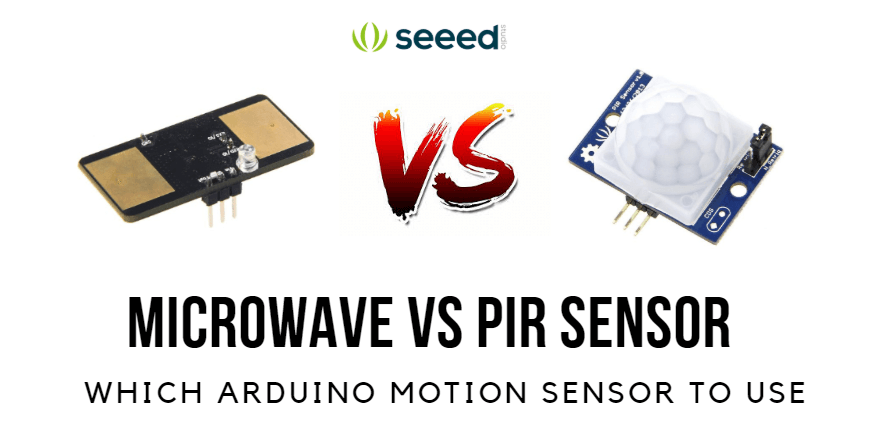
The world around us is filled with invisible signals. When you walk into a room and the lights turn on automatically, or when a security alarm triggers as someone enters a restricted area, you are seeing the results of motion sensors at work. Two of the most popular types are PIR (Passive Infrared) sensors and microwave motion sensors. Both are used in security, lighting, and automation, but each works in a unique way. Understanding their differences helps you choose the right sensor for your needs, avoid mistakes, and make your environment more efficient and safe.
Exclusive Deals
Limited-time Exclusive Deals. Check current discount on Amazon.
Check Price on Amazon As an Amazon Associate I earn from qualifying purchases.This article explains how PIR and microwave motion sensors work, compares their features, and shows real-world examples. If you’re planning to use motion sensors in your home, office, or outdoor area, this guide will help you make a confident decision.
How Pir Motion Sensors Work
PIR sensors are common in homes, offices, and public places. They are called “passive” because they do not send out any signals. Instead, they detect infrared radiation (heat) from objects in their view.
Basic Principle
Every living thing emits some level of infrared energy. The PIR sensor has a small window made of a special material that allows infrared rays to pass through. Inside, there are two sensors. When a warm body (like a person or animal) moves across the sensor’s field, the amount of infrared energy changes quickly.
The sensor detects this change and triggers an action—like turning on a light or sounding an alarm.
Exclusive Deals
Limited-time Exclusive Deals. Check current discount on Amazon.
Check Price on Amazon As an Amazon Associate I earn from qualifying purchases.Key Features
- Passive detection: It does not actively scan the area, so it uses very little power.
- Simple design: Usually small and easy to install.
- Low cost: PIR sensors are affordable, making them ideal for large-scale use.
Typical Applications
- Indoor lighting control
- Security alarms
- Automatic doors
- Bathroom or corridor occupancy sensors
Sensitivity And Range
Most PIR sensors detect motion within a range of 5 to 12 meters (16 to 40 feet). The coverage angle is usually 90° to 180°. Some advanced models can reach up to 20 meters.
Example
Imagine you walk into a dark hallway. The PIR sensor on the ceiling detects your body heat and turns on the lights instantly. When you leave, the lights turn off after a short delay.
How Microwave Motion Sensors Work
Microwave sensors use a very different method. They send out microwave signals (electromagnetic waves) and detect how these waves bounce back.
Basic Principle
A microwave sensor emits continuous or pulsed microwave signals. When these waves hit an object, they reflect back to the sensor. If a person or object moves, the reflected signal changes (this is called the Doppler effect). The sensor detects this change and triggers the connected system.
Key Features
- Active detection: Sends and receives signals, so it consumes more power than PIR.
- High sensitivity: Can detect even small movements, like a hand waving.
- Penetration ability: Microwaves can pass through non-metallic objects (like glass, plastic, or thin walls).
Typical Applications
- Outdoor security systems
- Automatic doors
- Industrial automation
- Vehicle detection
Sensitivity And Range
Microwave sensors typically cover 20 to 30 meters (65 to 100 feet). The detection angle can be 360° with some models. They can sense motion through walls, making them useful for certain applications.
Exclusive Deals
Limited-time Exclusive Deals. Check current discount on Amazon.
Check Price on Amazon As an Amazon Associate I earn from qualifying purchases.Example
In a parking lot, a microwave sensor detects a car approaching even if there’s fog or glass blocking the view. The sensor opens the gate automatically.
Pir Vs Microwave: Core Differences
Both sensors detect motion, but their methods and features are very different. Here’s a clear comparison:
| Feature | PIR Sensor | Microwave Sensor |
|---|---|---|
| Detection Method | Infrared (heat) | Microwave (waves) |
| Power Use | Low | Medium to high |
| Penetration | Cannot see through walls/glass | Can see through most non-metal objects |
| Sensitivity | Detects body heat, less sensitive to small movements | Detects any movement, even small gestures |
| False Alarms | Can be triggered by sunlight, heaters | Can be triggered by moving fans, trees, even outside movement |
| Cost | Lower | Higher |
| Best Use | Indoor, areas with clear line of sight | Outdoor, areas with obstacles |
Real-world Examples And Use Cases
Choosing the right sensor depends on your environment and needs. Here are some practical examples:
Home Security
A house often uses PIR sensors for room-by-room detection because they are cheap and reliable. For outdoor areas or entrances, microwave sensors are better because they can sense movement even through glass or thin walls.
Commercial Buildings
Large offices or shopping malls may use microwave sensors in main entrances and corridors. These sensors can detect people through glass doors, making them ideal for automatic sliding doors.
Industrial Automation
Factories often use microwave sensors for machine safety. If a worker approaches dangerous equipment, the sensor detects the movement and stops the machine.
Public Spaces
In parks or public toilets, PIR sensors turn on lights only when people are present. This saves energy and reduces costs.
Parking Lots
Microwave sensors can sense cars approaching gates or barriers, even in poor visibility. This improves security and convenience.

Technology Behind Pir And Microwave Sensors
Understanding the core technology helps you see why each sensor works best in certain situations.
Pir Sensor Details
- Pyroelectric material: Inside the sensor, there is a crystal that creates a small electric charge when it gets warm.
- Fresnel lens: A special lens focuses infrared rays onto the sensor, improving accuracy.
- Dual sensors: Most PIR sensors have two elements to compare changes and filter out background noise.
Microwave Sensor Details
- Doppler radar principle: The sensor uses the same method as police speed radars.
- Continuous wave or pulsed wave: Some sensors emit constant microwaves, others use pulses to save energy.
- Detection circuit: Advanced circuits compare incoming and outgoing waves to spot movement.
Advantages And Limitations
Here’s another comparison to help you choose:
| Aspect | PIR Sensor | Microwave Sensor |
|---|---|---|
| Interference | Sunlight, heaters can cause false alarms | Movement outside detection area can cause false triggers |
| Durability | Lasts long indoors | Suitable for harsh environments |
| Installation | Easy, requires clear view | Flexible, can be hidden behind surfaces |
| Safety | Safe, no emissions | Safe, but emits low-level microwaves |
| Response Time | Fast | Very fast |
Sensor Selection: What Really Matters
When choosing between PIR and microwave sensors, several factors matter. Here’s a breakdown:
- Environment
- PIR sensors work best indoors, in areas with stable temperature and little interference.
- Microwave sensors are ideal for outdoor or industrial settings, or where obstacles block the view.
- Sensitivity Needs
- If you need to detect tiny movements (like waving a hand), microwave sensors are better.
- For simple motion (walking, entering a room), PIR is enough.
- Energy Consumption
- PIR sensors use less energy, good for battery-powered devices.
- Microwave sensors need more power, often used with mains electricity.
- Budget
- PIR sensors are cheaper, so you can install many for the same price as one microwave sensor.
- Microwave sensors cost more but offer wider and more flexible coverage.
- False Alarm Risk
- PIR can trigger falsely from sunlight or heat sources.
- Microwave can trigger from moving objects outside the area, or even from vibration.
Common Mistakes When Installing Motion Sensors
Many beginners make mistakes that lead to poor performance or false alarms. Here are the most common:
- Wrong Placement
- PIR sensors need a clear line of sight. If blocked by furniture, walls, or curtains, they won’t work well.
- Microwave sensors can see through thin walls, but may trigger from movement outside the intended area.
- Ignoring Environmental Factors
- Installing PIR sensors near heaters, windows, or direct sunlight causes false alarms.
- Microwave sensors near fans, trees, or heavy traffic can trigger unnecessarily.
- Overlapping Coverage
- Using both sensors in the same area can cause confusion or double alarms.
- Poor Wiring
- Weak connections or poor power supply will affect sensor reliability.
- Not Adjusting Sensitivity
- Many sensors have adjustable sensitivity. Setting it too high or low leads to missed detections or false alarms.
Hybrid Sensors: Combining Pir And Microwave
For critical security or automation, some devices combine both PIR and microwave sensors. These are called dual technology or hybrid sensors.
How Hybrid Sensors Work
A hybrid sensor uses both infrared and microwave methods. It triggers only when both sensors detect movement, reducing false alarms.
Advantages
- Higher accuracy
- Lower false alarm rate
- Better for unstable environments
Example
High-security areas, like bank vaults or data centers, use hybrid sensors to ensure only real intruders trigger the alarm.
Key Insight
Many beginners think using two sensors always doubles coverage. In reality, it’s about reducing false triggers and improving reliability, not extending range.
Safety And Health Concerns
Both sensor types are safe for everyday use, but there are some points to consider.
Pir Sensors
They do not emit any signals, so they are safe for humans and animals. Even in sensitive places like hospitals or schools, PIR sensors are widely used.
Microwave Sensors
These sensors emit low-level microwaves, similar to Wi-Fi or cell phones. Studies show that the levels are far below dangerous limits. Still, some people prefer not to use them in bedrooms or areas with prolonged exposure.
Regulatory Standards
Both sensor types must meet standards for electromagnetic emissions and safety. Check that your sensor is UL listed or CE certified before buying.
Energy Efficiency And Sustainability
Motion sensors help save energy, but their own power use matters too.
Pir Sensors
With low power consumption, PIR sensors are ideal for battery-powered devices and solar-powered systems.
Microwave Sensors
They use more energy but are better for large areas where single sensors can cover more ground. For outdoor lighting or security, the slightly higher energy use is often acceptable.
Tip For Beginners
Always check the power rating and standby consumption before buying. Some cheap sensors use more energy than you expect.

Installation Tips For Beginners
Installing motion sensors is not hard, but careful planning improves performance.
- Read the manual before starting.
- Test the sensor before mounting, to find the best spot.
- For PIR, avoid direct sunlight and heat sources.
- For microwave, watch for unwanted movement outside the area.
- Adjust sensitivity and time delay after installation.
Maintenance And Troubleshooting
Motion sensors rarely need much maintenance, but regular checks help avoid problems.
Pir Sensors
- Clean the lens every few months.
- Test detection with a walk-through.
- Replace batteries as needed.
Microwave Sensors
- Check for new obstacles or changes in layout.
- Test detection range regularly.
- Inspect wiring and connections.
Non-obvious Insight
Many beginners overlook the impact of pets. For PIR sensors, small pets may not trigger, but large dogs can cause alarms. Some sensors have “pet immunity”—look for this feature if you have animals.
Data And Market Trends
Motion sensors are in high demand worldwide. According to MarketsandMarkets, the global motion sensor market was valued at $5.7 billion in 2021 and is expected to reach $8.9 billion by 2026. PIR sensors are most common in residential settings, while microwave sensors are growing in commercial and industrial sectors.
Non-obvious Insight
Smart home systems increasingly use sensors with wireless connectivity. Compatibility with Wi-Fi or Zigbee is becoming important for modern installations.
Comparison Table: Pir Vs Microwave Vs Hybrid Sensors
To help you decide, here’s a summary table with three sensor types:
| Type | Detection | Power Use | False Alarm Rate | Typical Cost | Best Application |
|---|---|---|---|---|---|
| PIR | Infrared (heat) | Low | Medium | $10-$25 | Indoor rooms |
| Microwave | Electromagnetic waves | Medium | High | $30-$50 | Outdoor areas |
| Hybrid | Infrared + microwave | Medium | Low | $50-$100 | High-security zones |
Frequently Asked Questions
What Is The Main Difference Between Pir And Microwave Motion Sensors?
PIR sensors detect changes in infrared heat, while microwave sensors detect motion using electromagnetic waves. PIR is passive and uses less power, microwave is active and can sense movement through non-metal objects.
Can Microwave Motion Sensors See Through Walls?
Yes, microwave sensors can detect motion through most non-metallic objects, like glass or thin walls. However, metal blocks microwaves, so the sensor cannot see through metal barriers.
Are Motion Sensors Safe For Humans And Pets?
Both PIR and microwave sensors are considered safe. PIR does not emit any signals, while microwave sensors use low-level waves similar to Wi-Fi. Most sensors meet safety standards.
Which Sensor Is Better For Outdoor Use?
Microwave sensors are better for outdoor use because they are less affected by temperature changes, sunlight, or obstacles. PIR sensors may trigger falsely outdoors due to environmental factors.
How Do Hybrid Sensors Reduce False Alarms?
Hybrid sensors use both PIR and microwave technology. They trigger only when both sensors detect movement at the same time, which filters out most false alarms caused by environmental changes or small objects.
Motion sensors play a key role in modern automation, safety, and energy savings. Choosing the right sensor—PIR, microwave, or hybrid—depends on your environment, budget, and sensitivity needs. By understanding their differences, you can avoid common mistakes and create a smarter, more secure space. For more technical details, you can visit the Wikipedia Motion Detector page.
Smart decisions start with clear information. Now you know how PIR and microwave sensors work, their unique strengths, and how to use them for best results.