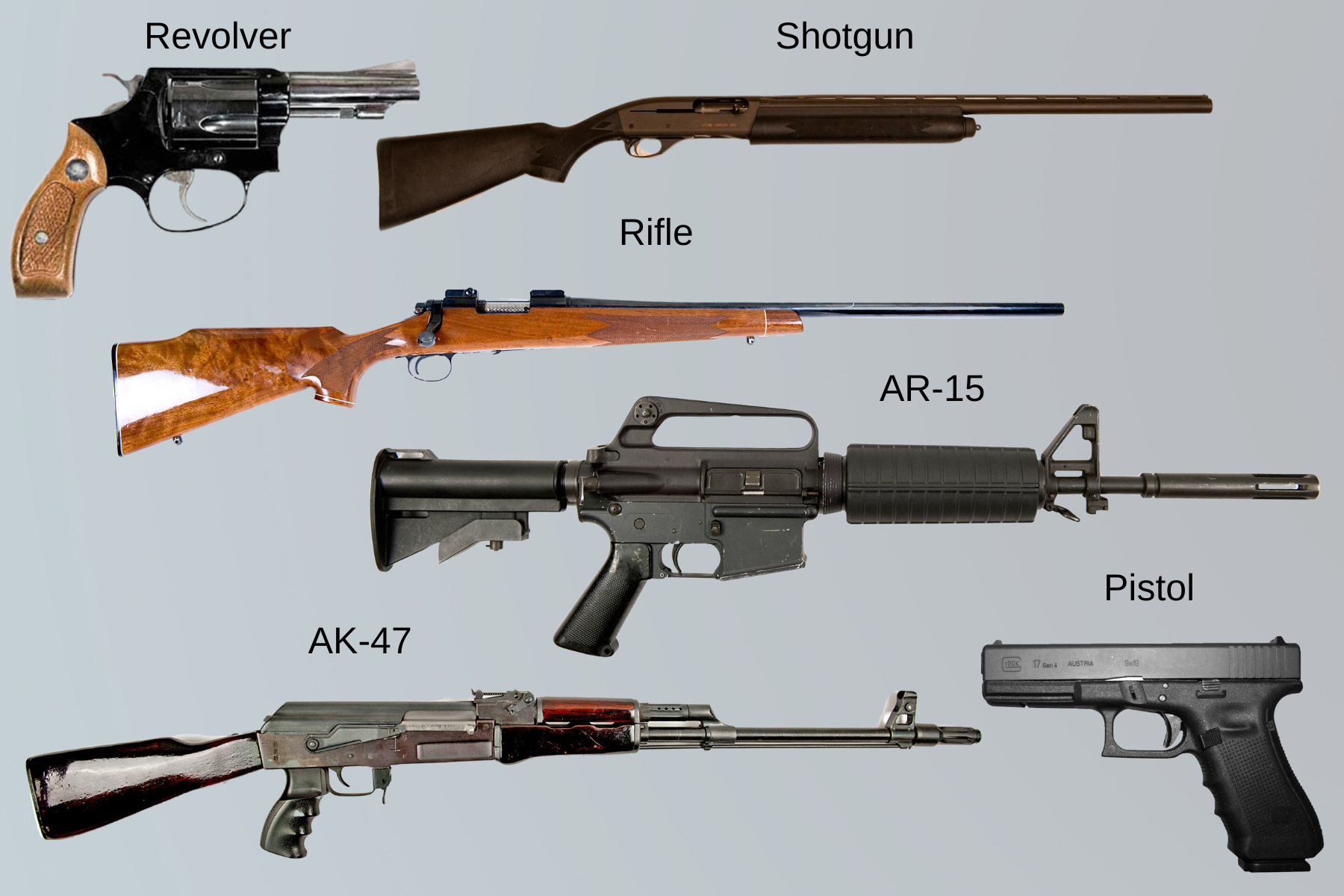
Guns fall into handguns, rifles, shotguns, and specialty categories defined by design and intended use.
Understanding the types of guns starts with more than naming parts. Each category has different features, legal rules, safety concerns, and common uses. This guide explains the main types of guns in clear language, separates common myths from facts, and offers practical advice for responsible ownership and informed study.
What Defines a Type of Gun?
A gun is usually classified by its design, action, size, barrel, and ammunition. These traits affect how the gun functions and how people commonly use it.
Exclusive Deals
Limited-time Exclusive Deals. Check current discount on Amazon.
Check Price on Amazon As an Amazon Associate I earn from qualifying purchases.The main types of guns include:
• Handguns, which are designed to be held and operated with one or both hands
• Rifles, which have a rifled barrel and are designed to fire from the shoulder
• Shotguns, which usually fire shells containing shot or a single slug
Exclusive Deals
Limited-time Exclusive Deals. Check current discount on Amazon.
Check Price on Amazon As an Amazon Associate I earn from qualifying purchases.• Specialty firearms, which include historical, sporting, and military-pattern designs
Terms can vary by law, industry, and region. For example, federal law may define a firearm differently from a state statute or a manufacturer’s catalog. Always check current federal, state, and local rules before buying, transporting, or storing any gun.
Handguns
Handguns are compact firearms designed to be carried and fired while held in the hands. The two main types of handguns are pistols and revolvers.
Exclusive Deals
Limited-time Exclusive Deals. Check current discount on Amazon.
Check Price on Amazon As an Amazon Associate I earn from qualifying purchases.Handguns are often discussed in the context of sport shooting, personal protection, law enforcement, collecting, and training. Their small size can make storage easier, but it also means safe handling and secure storage are especially important.
Pistols
A pistol typically has one chamber aligned with the barrel. Many modern pistols use a detachable magazine that holds ammunition.
Common pistol features include:
• A slide that moves during the firing cycle
• A magazine that stores cartridges
• Sights that help the user align the firearm
• A manual or passive safety system on some models
Pistols vary widely in size. A full-size pistol may offer a longer grip and sight radius, while a compact model may be easier to store or carry where lawful. Smaller does not always mean easier to control or learn.
Revolvers
A revolver uses a rotating cylinder with multiple chambers. Each chamber moves into position behind the barrel.
Revolvers are known for a simple operating concept and long history. They may be used for sport, collecting, training, or lawful defensive purposes. However, every revolver has its own controls, loading process, and safety considerations.
Benefits and limits of handguns
Handguns are portable and widely available in the United States. They also require careful training because their short barrels and compact frames can make sight alignment and recoil management more demanding.
Important considerations include:
• Safe storage away from children and unauthorized users
• Learning the exact controls of the model
• Using eye and ear protection at a lawful range
• Following all local transport and possession laws
• Practicing under qualified supervision
Source: wpln.org
Rifles
A rifle is a firearm designed to be fired from the shoulder and equipped with a rifled barrel. Rifling consists of spiral grooves inside the barrel that help stabilize a projectile in flight.
Rifles are used for target shooting, hunting, competition, historical collecting, and some professional roles. Their longer barrels and shoulder stocks can support steadier aiming than many handguns, but rifles are larger and require more space for safe storage.
Bolt-action rifles
A bolt-action rifle uses a manually operated bolt to load and remove cartridges. These rifles are common in hunting, target shooting, and precision sports.
Their simple design can help users understand the basic cycle of a firearm. Still, a bolt-action rifle is not automatically safer than another type of gun. Safe direction, unloaded storage, and trigger discipline remain essential.
Semi-automatic rifles
A semi-automatic rifle fires one round each time the trigger is pressed and then uses part of the firing cycle to prepare the next round. It does not continuously fire while the trigger is held.
Semi-automatic rifles come in many forms. Some are designed for hunting or sport, while others use military-inspired features. Appearance alone does not determine how a firearm functions.
Lever-action rifles
Lever-action rifles use a lever mechanism to cycle cartridges. They have a long history in American sporting and cultural life.
Many lever-action rifles are used for recreational shooting, hunting, and collecting. Their operation differs from both bolt-action and semi-automatic designs, so users should learn the specific model from its manual and a qualified instructor.
Single-shot and other rifles
Single-shot rifles hold one cartridge at a time. They are often used in training, hunting, competition, or historical shooting.
Other rifle categories include:
• Break-action rifles
• Pump-action rifles
• Straight-pull rifles
• Muzzleloading rifles
Each design has unique handling needs. The safest approach is to treat every rifle as loaded until personally verified otherwise, while keeping the muzzle pointed in a safe direction.
Shotguns
A shotgun is usually designed to fire shells. A shell may contain multiple pellets, called shot, or one projectile, called a slug.
Shotguns are used in hunting, clay target sports, collecting, and some professional settings. They come in many sizes and action types, and their performance depends on the shell, barrel, choke, and intended activity.
Pump-action shotguns
A pump-action shotgun uses a sliding fore-end to cycle the action. Pump shotguns are common in sporting and hunting settings.
Their controls can differ by model. A person who has used one pump shotgun should not assume every other model works in the same way.
Semi-automatic shotguns
A semi-automatic shotgun loads the next shell after firing, using energy from the firing cycle. The shooter still presses the trigger once for each shot.
These shotguns can be popular in hunting and sport shooting. They may have more complex parts than some manually operated designs, which makes careful cleaning and maintenance important.
Break-action shotguns
A break-action shotgun opens at a hinge to expose the chamber or chambers. Common examples include single-barrel, side-by-side, and over-under designs.
Break-action shotguns are widely associated with hunting, clay sports, and traditional gun culture. Their open action can make the firearm’s status easier to see, but users must still confirm that it is unloaded.
Shotgun ammunition
Shotgun shells differ in length, payload, and purpose. Birdshot, buckshot, and slugs are not interchangeable in every shotgun.
Always use only ammunition listed by the manufacturer. If a shell does not match the firearm’s markings or manual, do not use it.
Source: youtube.com
Common Action Types
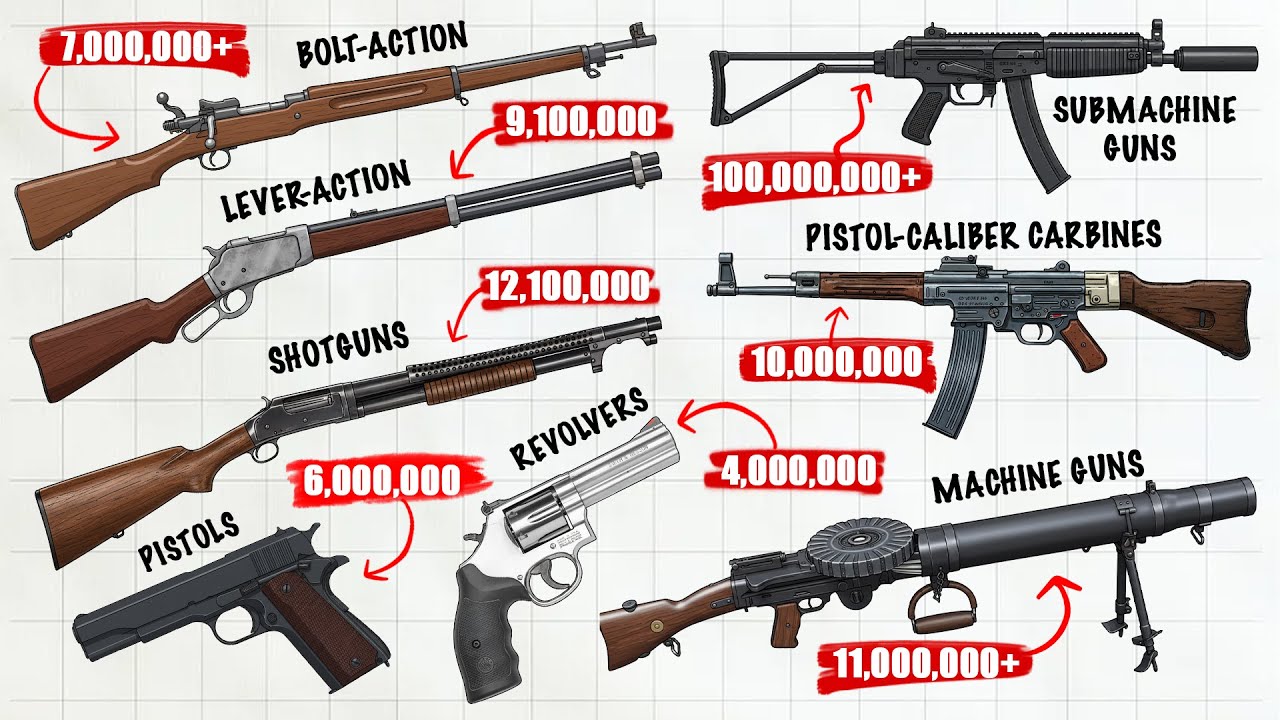
The action is the mechanism that loads, fires, extracts, and ejects ammunition. Understanding action types is one of the best ways to compare different types of guns.
Manual actions
Manual-action firearms require the user to operate a mechanism between shots. Examples include:
• Bolt action
• Lever action
• Pump action
• Break action
• Single shot
These designs can offer a slower firing cycle and a clear learning structure. They still require training and careful attention.
Semi-automatic actions
A semi-automatic firearm fires one round per trigger press and cycles the next round automatically. This term applies to some pistols, rifles, and shotguns.
A semi-automatic firearm is different from a fully automatic firearm. Confusing these terms can lead to serious misunderstandings about both function and law.
Fully automatic firearms
A fully automatic firearm can continue firing while the trigger remains pressed, subject to ammunition and mechanical limits. In the United States, machine guns made after May 19, 1986, are generally prohibited for civilian possession under federal law, with narrow exceptions.
Rules for older registered machine guns and other regulated items are complex. The Bureau of Alcohol, Tobacco, Firearms and Explosives provides federal guidance, but state and local rules may add restrictions.

Source: conditionzerotactical.com
Specialty and Historical Firearms
Some types of guns do not fit neatly into everyday categories. They may be built for a special sport, designed as historical reproductions, or regulated under a separate legal framework.
Examples include:
• Muzzleloaders
• Black-powder firearms
• Target pistols
• Competition rifles
• Flare guns
• Collectible historical firearms
• Less-lethal launchers
A firearm’s appearance does not always reveal its legal status. For instance, an antique or replica may have different rules from a modern firearm, but those rules depend on the exact design, date, and jurisdiction.
Collectors should preserve documentation and confirm classifications before purchasing. A dealer, qualified attorney, or relevant government agency can help with uncertain cases.

Source: vocabineer.com
Firearm Calibers and Gauges
Caliber usually describes the internal diameter of a rifle or handgun barrel or the size of the cartridge associated with it. Shotguns are commonly described by gauge, such as 12 gauge or 20 gauge.
Caliber and gauge are not simple measures of power. Performance depends on the complete ammunition design, barrel length, firearm type, and other factors.
Important terms include:
• Cartridge: A complete unit of ammunition for a rifle or handgun
• Shell: A complete unit of shotgun ammunition
• Bullet: The projectile that leaves a rifle or handgun cartridge
• Shot: Small pellets fired from some shotgun shells
• Slug: A single projectile fired from a shotgun shell
Never rely only on appearance when identifying ammunition. Read the firearm markings and manufacturer’s instructions. Using the wrong ammunition can damage a gun and cause severe injury.

Source: blackflagarms.com
How to Choose Among Types of Guns Responsibly
There is no single best gun for every person. The right choice depends on lawful purpose, experience, physical ability, storage, budget, and access to training.
Before making a decision, consider:
- Identify the lawful purpose. Decide whether the interest is sport, hunting, collecting, professional work, or another legal activity.
- Learn the local rules. Requirements may cover background checks, permits, waiting periods, transport, storage, and magazine capacity.
- Try before buying. A certified range or instructor may allow supervised use of different types of guns.
- Check fit and comfort. The controls should be reachable, and the firearm should not feel difficult to handle.
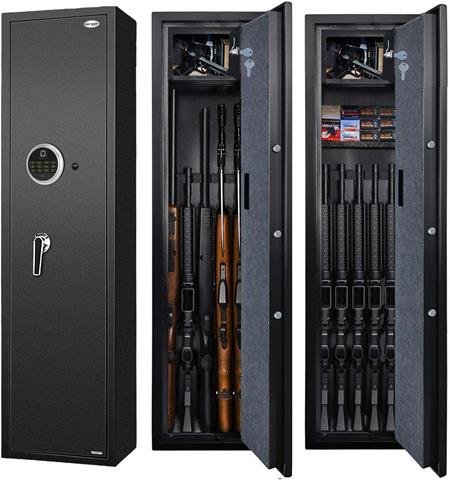
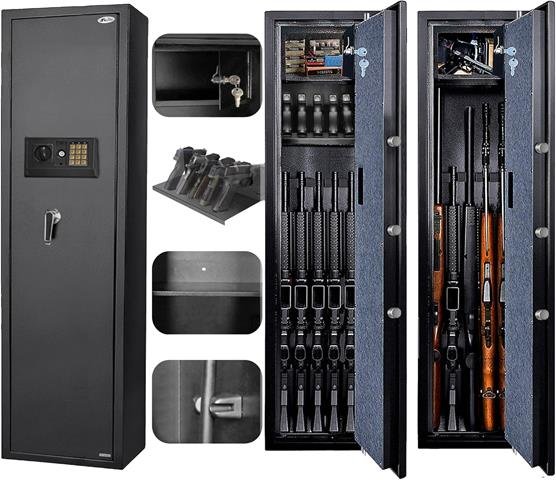
- Plan secure storage. Use a locked safe or locked container that prevents access by children and unauthorized people.
- Budget for training. Include instruction, eye and ear protection, storage equipment, cleaning supplies, and lawful range fees.
- Buy from a reputable source. Ask for clear paperwork and avoid deals that seem rushed or suspicious.
A common mistake is choosing based on appearance or online popularity. A firearm should fit the user’s needs, skill level, and storage plan, not just their personal image of what a gun should be.

Source: shutterstock.com
Firearm Safety Rules
Basic safety rules apply to all types of guns. They are simple, but they must become habits.
• Treat every gun as if it is loaded.
• Keep the muzzle pointed in a safe direction.
• Keep your finger outside the trigger guard until ready to fire at a lawful target.
• Be certain of the target and what lies beyond it.
• Wear eye and ear protection at a shooting range.
• Keep firearms locked when not in use.
• Store ammunition separately when appropriate and required.
• Never handle a gun while impaired, angry, or distracted.
• Follow the owner’s manual and range rules.
Safe storage is especially important in homes with children, guests, or people at risk of self-harm. Research from public health agencies shows that secure firearm storage can reduce unauthorized access and help prevent tragic accidents.
If someone may be at immediate risk of harming themselves or another person, contact emergency services or a local crisis resource. Do not attempt to solve a dangerous situation by handling a firearm yourself.
Cleaning, Maintenance, and Training
A well-maintained firearm is not automatically safe, but poor maintenance can create avoidable problems. Read the manufacturer’s manual before cleaning or inspecting any gun.
General maintenance principles include:
• Confirm that the firearm is unloaded before cleaning.
• Keep ammunition away from the cleaning area.
• Use only products approved for the firearm.
• Inspect for visible damage or unusual wear.
• Stop using a gun if it has a crack, bulge, corrosion, or other serious defect.
• Ask a qualified gunsmith to inspect problems you cannot identify.
Training should cover safe handling, storage, loading and unloading procedures, range rules, and local law. A certified instructor can correct habits that are hard to notice alone.
I cannot claim personal firearms experience or a career using guns. A useful practical lesson from safety education, however, is that confidence should never replace verification. People often make mistakes when they assume a familiar-looking model works exactly like the last one they handled.
Legal and Ethical Considerations in the United States
Firearm law in the United States is a mix of federal, state, and local rules. The law may differ based on the firearm’s design, the owner’s location, the buyer’s eligibility, and the way the firearm is transported or stored.
Federal rules generally address areas such as:
• Transfers through licensed dealers
• Prohibited persons
• Machine guns and other regulated weapons
• Serial numbers and recordkeeping
• Interstate transportation in some circumstances
State and local laws may regulate:
• Permits and licenses
• Concealed or open carry
• Waiting periods
• Safe storage
• Reporting lost or stolen guns
• Magazine capacity
• Certain firearm features
This article is educational and not legal advice. Laws change often, and a person should confirm current rules with official government resources or a licensed attorney before taking action.
Ethical ownership also matters. Responsible owners secure their firearms, respect neighbors and public spaces, avoid careless display, and seek help when stress or conflict could create danger.
Common Myths About Types of Guns
Many firearm debates become confusing because people use technical terms in different ways.
Myth: All semi-automatic guns are machine guns
A semi-automatic gun fires one round per trigger press. A machine gun can fire continuously while the trigger remains pressed, subject to its design and ammunition.
Myth: A larger gun is always more powerful
Size alone does not determine performance. Ammunition, barrel design, operating system, and other factors also matter.
Myth: A safety switch makes a gun safe
A mechanical safety is only one layer of protection. Safe direction, trigger discipline, unloading procedures, and secure storage remain essential.
Myth: An unloaded gun cannot hurt anyone
An unloaded gun can still cause harm if someone mishandles it, points it at a person, or loads it without warning. Always follow the same safety habits.
Myth: One training session is enough
Basic instruction is valuable, but safe handling improves through repeated, supervised practice and continued learning.
Frequently Asked Questions About Types of Guns
What are the main types of guns?
The main types of guns are handguns, rifles, and shotguns. Specialty firearms, historical designs, and regulated firearms form additional categories.
What is the difference between a pistol and a revolver?
A pistol usually has one chamber and often uses a detachable magazine. A revolver uses a rotating cylinder with multiple chambers.
What is the difference between a rifle and a shotgun?
A rifle has a rifled barrel and normally fires a single projectile from a cartridge. A shotgun usually fires shells that may contain shot or a single slug.
What does semi-automatic mean?
Semi-automatic means the firearm fires one round each time the trigger is pressed and cycles the next round automatically. It does not mean the firearm continuously fires while the trigger is held.
What is the safest type of gun?
No type of gun is automatically safe. Safety depends on the user’s training, the firearm’s condition, lawful handling, and secure storage.
Are all types of guns legal everywhere in the United States?
No. Federal, state, and local laws can differ greatly. Always verify current rules for possession, purchase, transport, storage, and use in the exact location involved.
What should a first-time owner learn first?
A first-time owner should learn the four basic safety rules, read the manufacturer’s manual, arrange qualified instruction, and plan locked storage before acquiring a firearm. Legal requirements should also be confirmed in advance.
Conclusion
The main types of guns are handguns, rifles, shotguns, and specialty firearms, with action types adding another useful layer of comparison. Each design has different features, benefits, limits, safety needs, and legal considerations.
The best decision is an informed one. Learn the terminology, seek qualified training, verify current laws, and treat secure storage as part of responsible ownership. Continue exploring trusted safety and legal resources, and share your questions or experiences in the comments.