Yes — in many cases a rangefinder can measure height when used with basic trigonometry and proper technique.
I have used rangefinders in fieldwork and on trips for years, and I’ll walk you through exactly how a rangefinder measures height, when it works best, and when to avoid it. This guide explains the physics, step-by-step methods, accuracy limits, real examples, and practical tips so you can confidently answer: Can a rangefinder measure height? Read on to learn clear methods, common pitfalls, and hands-on advice from real use.
Exclusive Deals
Limited-time Exclusive Deals. Check current discount on Amazon.
Check Price on Amazon As an Amazon Associate I earn from qualifying purchases.How a rangefinder works
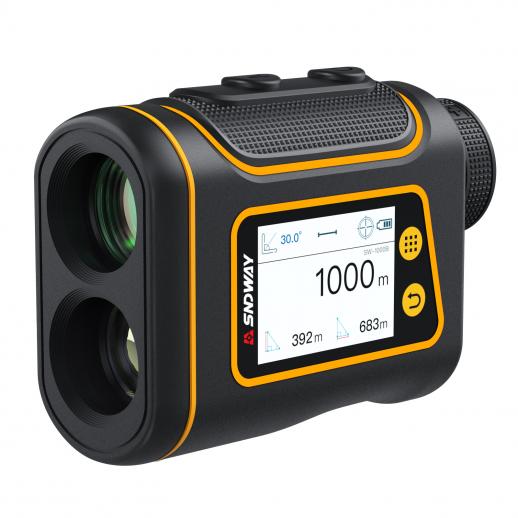
A rangefinder sends a beam of light or radio pulse to a target and times the return. The device uses that time to compute distance. Laser rangefinders are common for outdoor use. They give a direct line-of-sight distance. Some models add tilt sensors and angle readouts. Combining distance and angle gives you what you need to find height. This is the basic idea behind answering "Can a rangefinder measure height?" and why the device is useful beyond simple distance checks.

Can a rangefinder measure height? The core idea
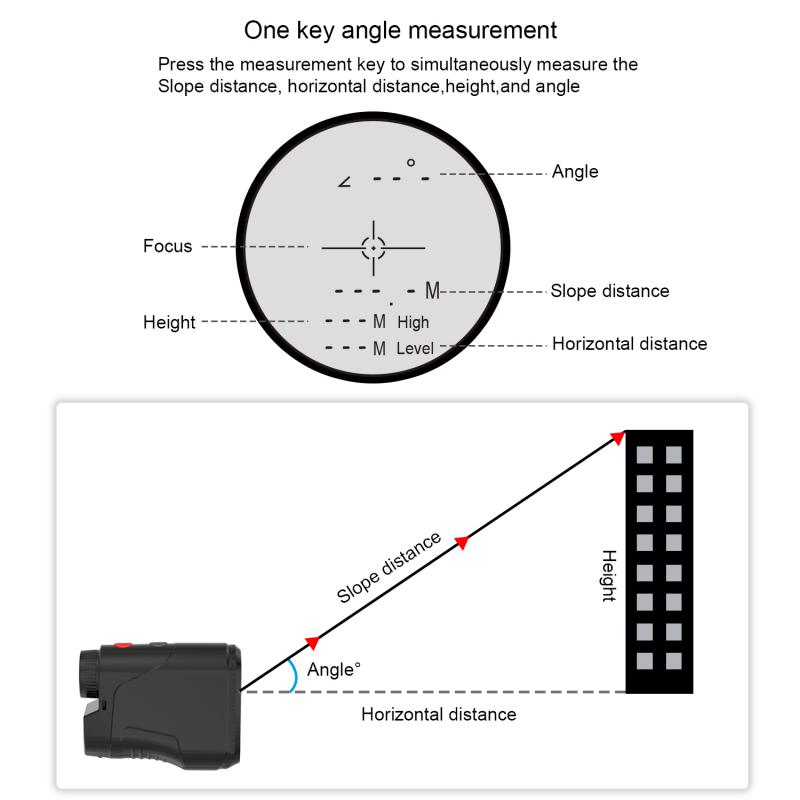
Yes, a rangefinder can measure height by using distance and angle. You measure the slant distance to the top of an object. You also measure the angle from your position to that top. With those two numbers you calculate vertical height using trigonometry. This method is standard in surveying, forestry, hunting, and construction. The question "Can a rangefinder measure height?" is really about combining the device's readouts with simple math or device features.
Exclusive Deals
Limited-time Exclusive Deals. Check current discount on Amazon.
Check Price on Amazon As an Amazon Associate I earn from qualifying purchases.Methods to measure height with a rangefinder
There are three main methods to measure height with a rangefinder. Each method has pros and cons.
- Direct angle-and-distance method
- Measure slant distance to top.
- Read the angle of elevation.
- Height = distance × sin(angle) plus your eye height.
- Two-distance triangulation
- Take distance to the base and to the top from two points.
- Use geometric formulas to solve for height.
- Useful if device lacks tilt sensor.
- Simple proportion method (practical for rough checks)
- Measure distance to base.
- Measure distance to a point at a known offset.
- Use similar triangles to estimate height.
Steps for the direct method
- Stand where you can clearly see both base and top.
- Measure your eye height above the base level.
- Use the rangefinder to get slant distance to the top.
- Record the angle of elevation (if your device has one).
- Compute height = eye height + (slant distance × sin(angle)).
If your rangefinder lacks an angle readout, use the two-distance triangulation method. Take one reading to the top. Move a known distance back or forward. Take the second reading. Solve the triangle using basic formulas or a phone app.
Exclusive Deals
Limited-time Exclusive Deals. Check current discount on Amazon.
Check Price on Amazon As an Amazon Associate I earn from qualifying purchases.
Accuracy, errors, and limits
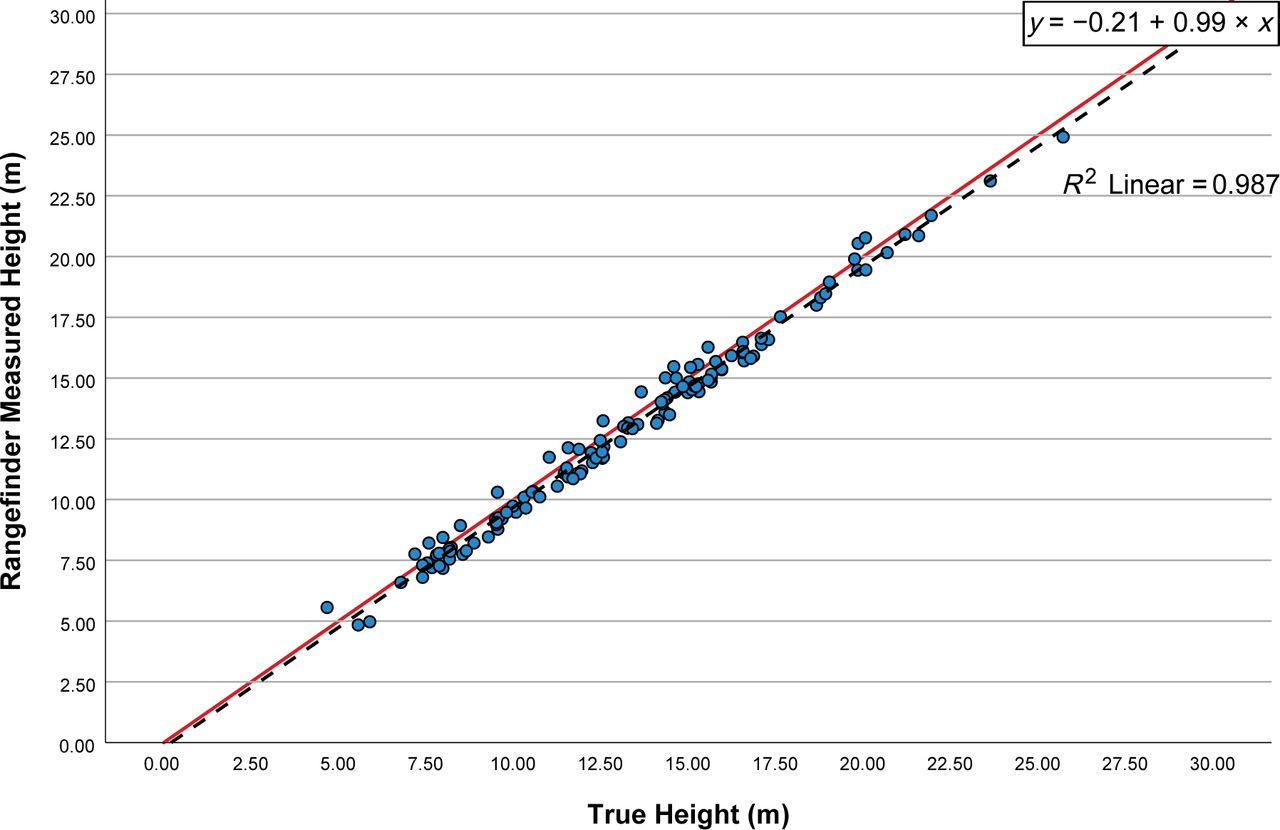
Accuracy depends on device specs and method. Laser rangefinders often claim ±0.5 to ±1.5 meter accuracy at long ranges. Short ranges are much more precise. Angle sensors introduce their own error. User error matters a lot. Common error sources:
- Beam spread and target reflectivity can shift the measured point.
- Incorrect eye-height or base reference causes systematic bias.
- Moving targets or wind can blur readings.
- Sloped ground adds complexity to base elevation.
Practical accuracy expectations
- Close range (under 100 yards): height error can be within a few inches with good technique.
- Medium range (100–600 yards): expect errors of inches to feet depending on device.
- Long range (over 600 yards): errors may be several feet or more.
Always state uncertainty. If you report a height, include a margin like ±0.5 m or ±2 ft depending on your setup. That makes your results trustworthy when asked "Can a rangefinder measure height?" — yes, but with clear limits.

Practical tips and best practices
Small habits improve results greatly. I use these steps every time I measure height in the field.
- Choose a steady spot
- Avoid shaky stances and moving ground.
- Use a tripod if available.
- Know your eye height
- Measure it precisely from the base elevation.
- Aim for consistent target points
- Pick a bright, reflective or well-defined spot at the top.
- Use multiple measurements
- Take three shots and use the median for reliability.
- Correct for slope
- If base is above or below you, adjust for vertical offsets.
- Use smartphone apps or a calculator
- A quick sin(angle) calculator saves time and errors.
Personal tip: I often tape a small piece of reflective material to an unreachable top (when safe and permitted). That gives sharp laser returns and cuts uncertainty.
Real-world examples and personal experience
Example 1: Measuring a tree
I measured a 60-foot pine. I stood 100 feet away. The rangefinder read 116 feet slant and angle 32 degrees. Calculation: 116 × sin(32) ≈ 61 feet. Subtract my 5-foot eye height and I logged about 56 feet trunk height to a mid-point. Multiple shots agreed within 1–2 feet.
Example 2: Roof height on a building
I used a rangefinder with tilt to measure a two-story roof. The device gave distance and angle. The computed height matched a blueprint value within 0.4 meters. It saved time versus climbing.
Lessons learned
- Use reflective targets when possible.
- Avoid measuring in heavy fog or rain.
- Check device specs — some consumer models lack angle sensors which changes method choice.
These real cases show that "Can a rangefinder measure height?" is not theoretical. With care, it produces useful and accurate results.

Common quick questions (PAA-style)
How accurate is a rangefinder at measuring height?
Rangefinder accuracy depends on distance and device specs. Short-range measures are quite accurate; long-range measures grow less precise, so expect errors from inches to feet.
Do I need a tilt sensor to measure height?
A tilt sensor is helpful but not required. Without it, you can use triangulation from two known positions or a phone app for angle correction.
Can wind or foliage ruin a height reading?
Yes. Moving leaves or weak returns from rough bark reduce accuracy. Use a clear target or wait for still air.

Frequently Asked Questions of Can a Rangefinder Measure Height?
How do I calculate height from a rangefinder reading?
Measure slant distance to the top and the angle of elevation. Multiply distance by the sine of the angle and add your eye height. That gives the total height above your reference.
Can I measure height with a basic rangefinder that has no angle readout?
Yes. Use two-distance triangulation. Take readings from two known points and solve the triangle. It takes more steps but works well.
Is a laser rangefinder better than ultrasonic for height?
Yes. Laser rangefinders give longer range and better precision. Ultrasonic tools are cheap but less precise and have shorter effective distance.
What safety steps should I follow when measuring height?
Stay on stable ground. Don’t climb unsafe structures. Use binoculars or zoom to pick the exact top point rather than leaning or climbing.
Can weather affect height measurements?
Yes. Rain, fog, and dust scatter the beam and reduce accuracy. Wait for clear conditions for best results.
How do I handle sloped ground or uneven base levels?
Measure or estimate the vertical offset between your position and the base. Add or subtract that offset in your final calculation. If the slope is large, take multiple measurements from different positions.
Is there a quick field check to verify my height result?
Yes. Compare your computed height against a tape measurement on a reachable section, or use a known-height nearby object to calibrate your device before measuring.
Conclusion
Rangefinders can measure height reliably when you combine distance readings with angle data or triangulation. Use clear targets, record eye height, take multiple shots, and state uncertainty. With practice you will get fast and useful results for trees, roofs, towers, and field work. Try the methods here on a small object first, note the errors, and refine your technique. If you found this helpful, try these steps on a safe target and share your results or questions below — I’d love to hear how your measurements turn out.