
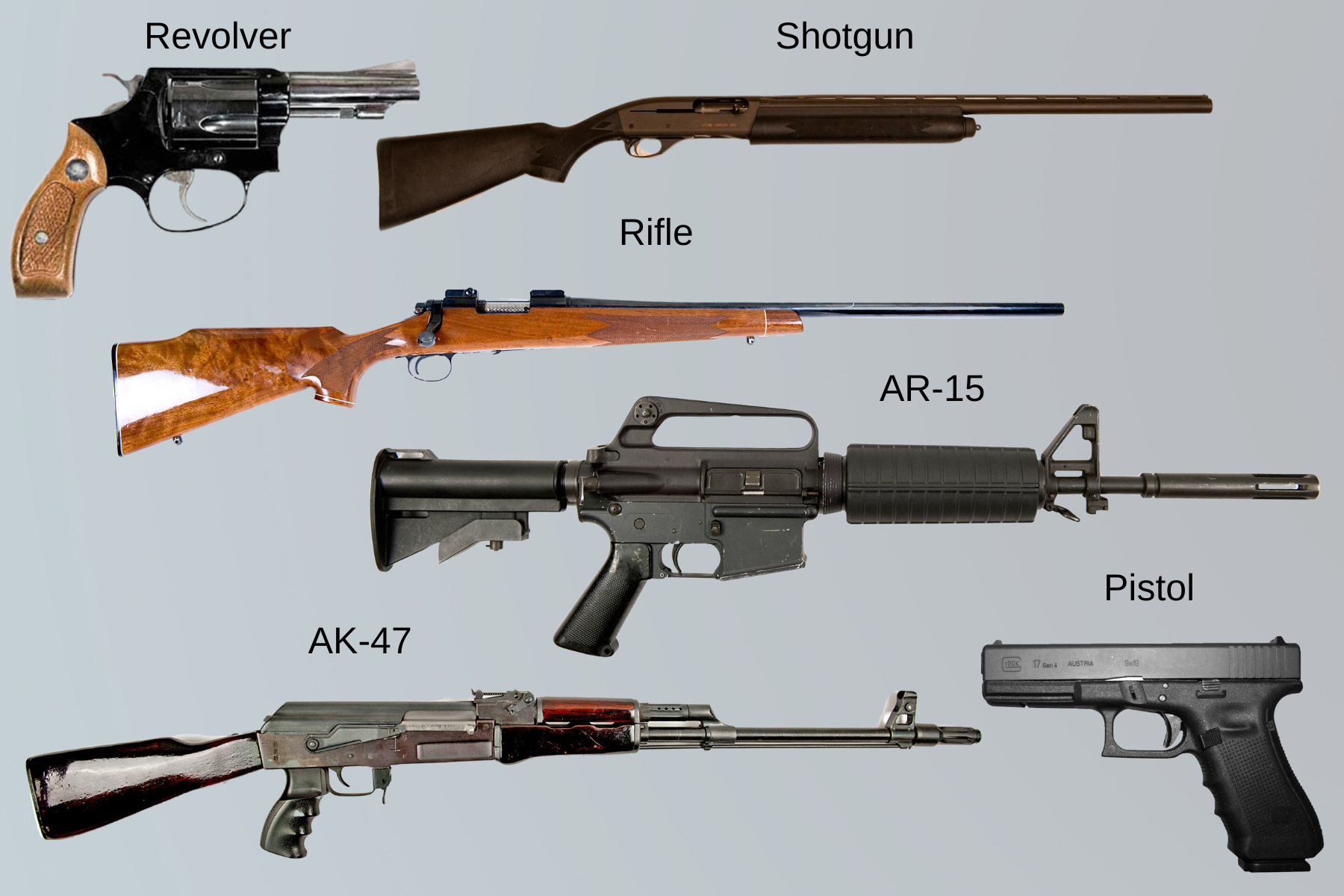
Firearms are commonly grouped as handguns, rifles, shotguns, muzzleloaders, and specialty firearms by design and purpose.
Understanding the types of firearms starts with more than knowing their names. Each firearm has a different action, size, ammunition type, range, and legal status. This guide explains the main types of firearms in clear terms, with practical safety advice and facts to help new owners, students, and enthusiasts make informed choices.
What Is a Firearm?
A firearm is a device that launches a projectile through the force created by burning propellant. Most modern firearms use cartridges, which contain a projectile, propellant, primer, and casing.

Exclusive Deals
Limited-time Exclusive Deals. Check current discount on Amazon.
Check Price on Amazon As an Amazon Associate I earn from qualifying purchases.The term “firearm” covers many designs. A small handgun and a long sporting shotgun may look very different, yet both fit the basic definition.
The main types of firearms are identified by several features:
• Overall design and size
• Method of loading
• Firing action
• Barrel length and shape
• Type of ammunition
• Intended use
• Local and federal legal classification
It is also important to separate common language from legal language. Terms such as “assault weapon” may have a specific meaning under state law, while “assault rifle” is often used loosely in public discussions. Always check current laws in your location.
Exclusive Deals
Limited-time Exclusive Deals. Check current discount on Amazon.
Check Price on Amazon As an Amazon Associate I earn from qualifying purchases.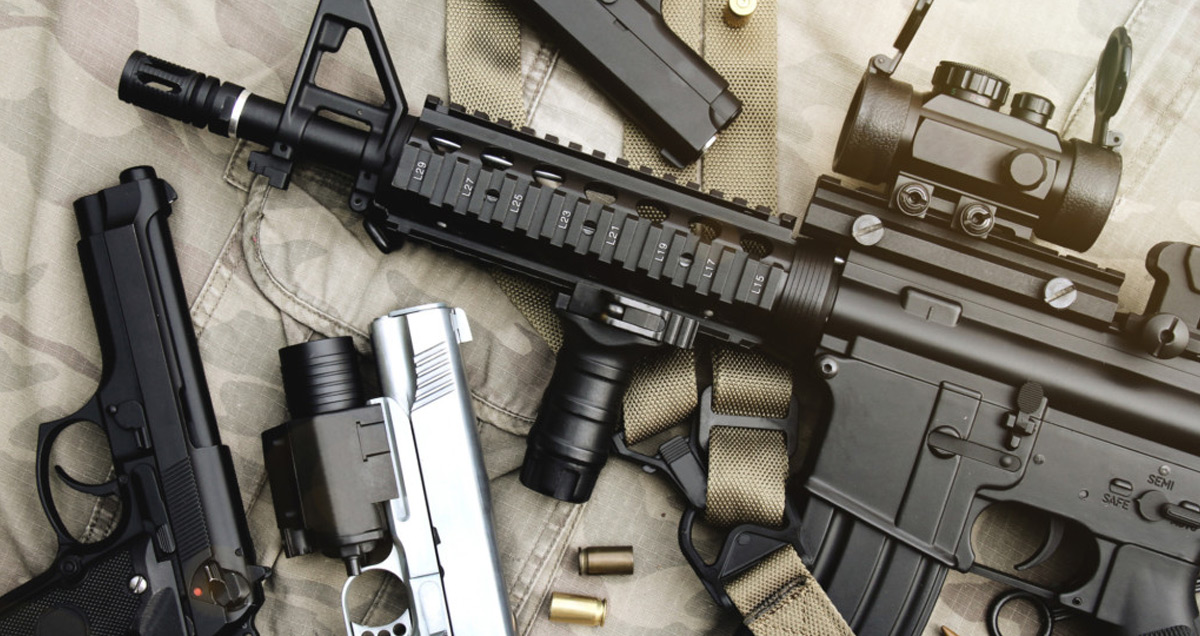
Source: texasgunclub.com
The Main Types of Firearms
The most familiar types of firearms are handguns, rifles, and shotguns. Muzzleloaders and specialty firearms form smaller but important groups.
Handguns
Handguns are firearms designed to be held and fired with one or both hands. Their compact size makes them easier to carry than long guns, but their small size does not make them less dangerous.
Exclusive Deals
Limited-time Exclusive Deals. Check current discount on Amazon.
Check Price on Amazon As an Amazon Associate I earn from qualifying purchases.The two main types of handguns are pistols and revolvers.
Pistols
A pistol usually has one chamber aligned with the barrel. Many modern pistols are semi-automatic. This means the firearm uses energy from one fired cartridge to load the next cartridge, but the shooter must press the trigger for each shot.
Common pistol features include:
• A detachable magazine in many models
• A slide that moves during the firing cycle
• One chamber at a time aligned with the barrel
• Different safety systems and trigger designs
Pistols are often used for lawful personal protection, target shooting, training, and service work. Their small size can make them easier to store, but it can also make safe handling more demanding.
Revolvers
A revolver uses a rotating cylinder with several chambers. Each chamber holds one cartridge. When the trigger is pressed, the cylinder turns and places a loaded chamber behind the barrel.
Revolvers are known for their simple operating design. They do not use a detachable magazine, and many models are easy to inspect visually. However, they can still be difficult to operate, and their triggers may require more practice.
Rifles
A rifle is a firearm designed to be fired from the shoulder. Its barrel has spiral grooves called rifling. These grooves spin the projectile and help it travel with greater stability.
Rifles are used for:
• Sport shooting
• Hunting where legal
• Target competition
• Training and recreation
• Professional applications
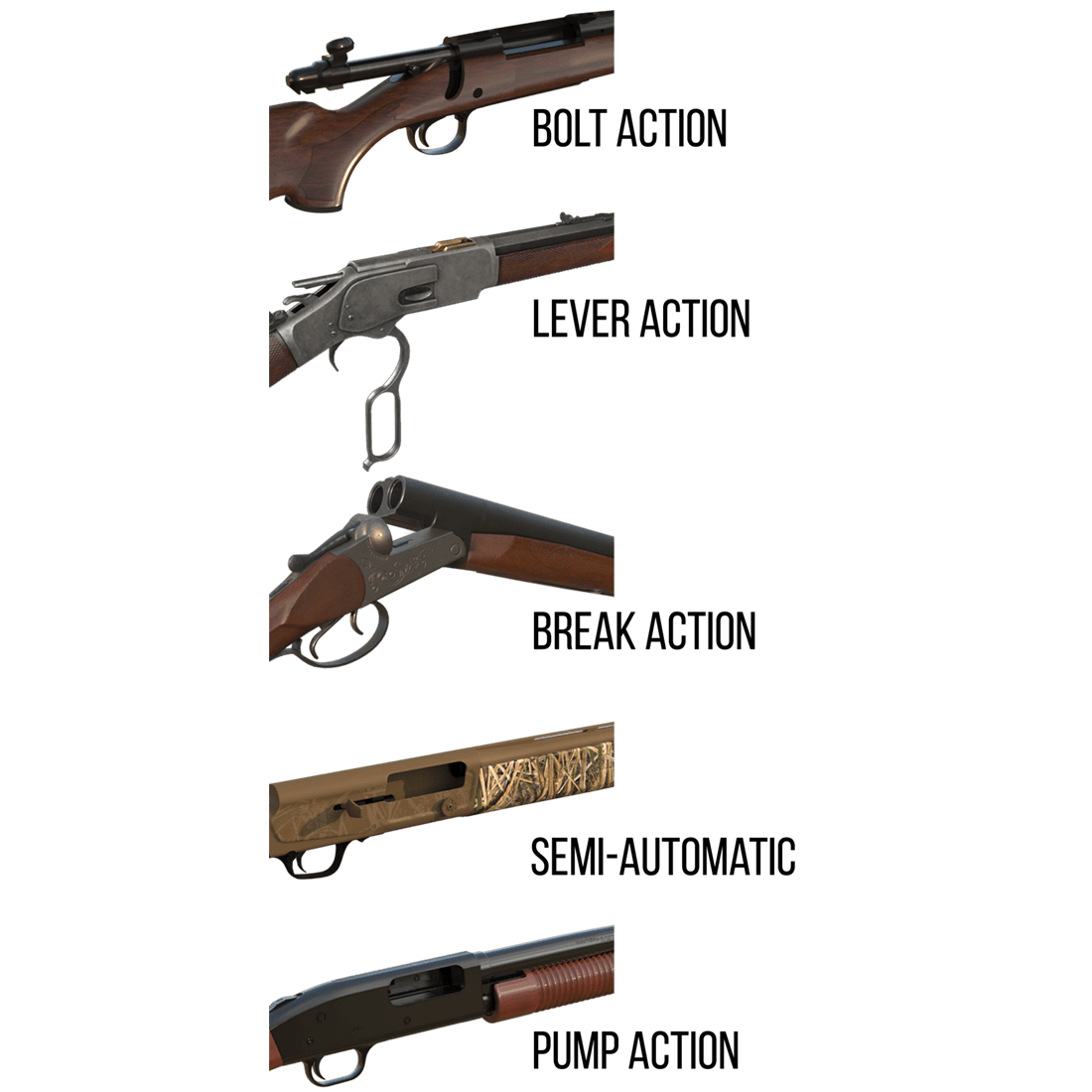
Rifles may be bolt action, lever action, pump action, semi-automatic, or single shot. The action affects how the firearm loads and fires, but it does not remove the need for safe handling.
Rifles often provide greater accuracy at longer distances than handguns. Their longer barrels and shoulder stocks can help with control. At the same time, rifle bullets may travel very far, so a safe backstop and careful target awareness are essential.
Shotguns
A shotgun is a shoulder-fired firearm that usually has a smoothbore barrel. It fires shells rather than traditional rifle or pistol cartridges.
A shotgun shell may contain:
• Multiple small pellets called shot
• A single large projectile called a slug
• A special load designed for training or sporting use
Shotguns are common in hunting, clay sports, and some professional settings. Their performance depends heavily on the shell, barrel, choke, distance, and target.
A widespread myth says that a shotgun does not need careful aiming. That is false. Shot patterns spread over distance, but they do not create a wide, reliable “wall” of projectiles. Safe handling and a clear target remain essential.
Muzzleloaders
Muzzleloaders are firearms loaded through the front of the barrel instead of through a modern cartridge chamber. Some use traditional black powder, while others use modern propellants designed for muzzleloading systems.
These firearms are common in historical recreation and some hunting seasons. They require special storage, cleaning, and loading procedures. A muzzleloader should never be treated like a modern cartridge firearm.
Specialty Firearms
Specialty firearms include designs made for a specific purpose or historical period. Examples include:
• Derringers
• Single shot firearms
• Pistol caliber carbines
• Combination guns
• Historical military firearms
• Sporting firearms with unusual actions
The name “specialty” does not describe one technical class. It simply means the firearm does not fit neatly into the most common groups or serves a narrower role.

Source: conditionzerotactical.com
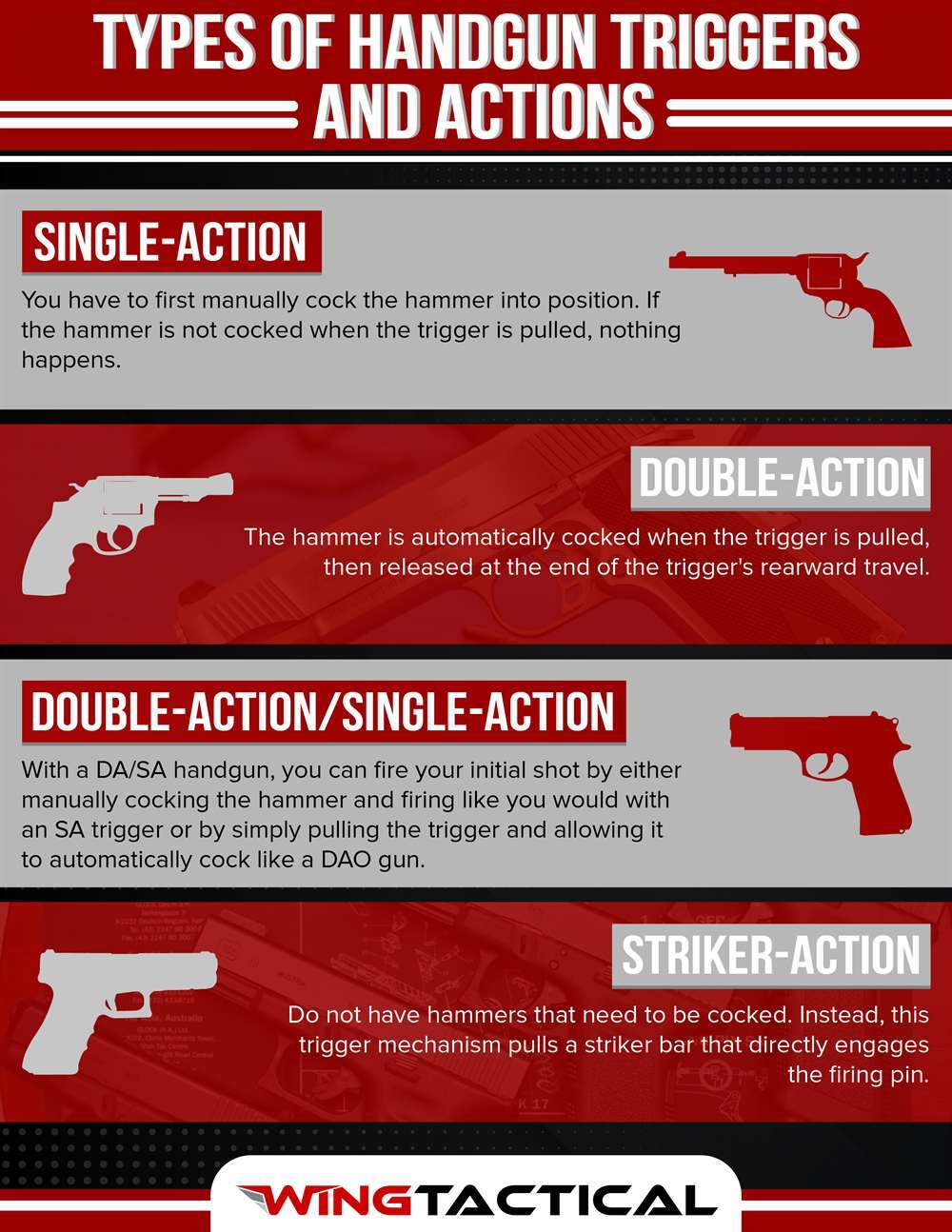
Types of Firearms by Firing Action
The action is the system that loads, locks, fires, extracts, and ejects ammunition. Learning the basic types of firearm actions makes it easier to compare models.
Single Shot
A single shot firearm holds one cartridge at a time. The user must manually load another cartridge after firing.
Single shot designs are often used for training, hunting, and historical shooting. Their simple cycle can help beginners understand basic firearm parts. They also encourage deliberate shooting because there is no quick follow-up shot.
Bolt Action
A bolt action firearm uses a handle-operated bolt. The bolt locks the cartridge into the chamber and usually extracts the spent casing after firing.
Bolt action rifles are known for strong lockup and consistent performance. They are common in hunting and precision target shooting. Their slower manual cycle may also encourage careful shot selection.
Lever Action
A lever action firearm uses a lever beneath the receiver. Moving the lever cycles the action and loads another cartridge.
Lever action rifles have a long history in American sporting and hunting culture. They are often recognized by their smooth, compact design. Like all types of firearms, they require training that matches the specific model.
Pump Action
A pump action firearm uses a sliding fore-end. The user moves it back and forward to cycle the action.
Pump action designs are common in shotguns and some rifles. They can be reliable when used correctly, but short or incomplete cycling may cause a malfunction. Professional instruction is the safest way to learn the correct operation.
Semi-Automatic
A semi-automatic firearm loads the next cartridge after each shot. The trigger must still be pressed separately for every shot.
Semi-automatic firearms are available as pistols, rifles, and shotguns. The term does not mean fully automatic. A fully automatic firearm continues firing while the trigger remains pressed, subject to ammunition and mechanical function.
Federal law places strict controls on machine guns, and state laws may add further limits. The exact legal rules can be complex, so official government guidance is more reliable than online summaries.
Fully Automatic
A fully automatic firearm can fire multiple rounds from one continuous trigger press. These firearms are heavily regulated in the United States.
They are not the same as semi-automatic firearms. Confusing these terms leads to poor public understanding and can create legal problems.
Source: wingtactical.com
Types of Firearms by Loading Method
Loading method describes how ammunition enters the firearm.
Cartridge Firearms
Most modern firearms use cartridges. A cartridge combines the projectile, casing, primer, and propellant into one unit.
Cartridge firearms may use:
• A magazine
• A cylinder
• A tubular loading system
• A fixed internal magazine
• A single chamber
The cartridge must match the firearm. Using the wrong ammunition can cause serious injury or permanent damage.
Magazine Fed Firearms
A magazine stores cartridges and presents them for loading. Magazines may be detachable or fixed.
A magazine is not the same as a cartridge. It holds ammunition, while the firearm’s chamber is the area where one cartridge is positioned for firing.
Magazine capacity laws vary by state and may change. Owners should check current local rules before purchasing or transporting a firearm or magazine.
Cylinder Fed Firearms
Revolvers use a cylinder with multiple chambers. Each chamber acts as a separate cartridge position.
The cylinder system is different from a magazine system. This distinction matters when learning safe loading, unloading, and inspection procedures.
Muzzle Loaded Firearms
Muzzleloaders are loaded through the barrel. Their powder, projectile, and ignition system must be used in the manner approved for that firearm.
Never mix modern cartridge ammunition with muzzleloading components. The systems are not interchangeable.

Source: wholeeartheducation.com
Types of Firearms by Intended Use
A firearm’s purpose often influences its design, size, weight, and ammunition.
Sporting Firearms
Sporting firearms are used for activities such as target shooting, clay shooting, and organized competition. They may favor comfort, balance, precision, or fast handling.
For new shooters, a supervised range session can reveal more than product photos. Fit, recoil, controls, and visibility all affect the user’s experience.
Hunting Firearms
Hunting firearms vary by game, distance, terrain, and local rules. A shotgun may suit certain bird hunting, while a rifle may be selected for other lawful game.
Hunters must follow season rules, caliber or gauge restrictions, transport laws, and ethical shot requirements. A firearm is only one part of responsible hunting.
Personal Protection Firearms
Some adults legally choose a handgun for personal protection. This decision requires serious thought about training, storage, local law, and the risk of unauthorized access.
A firearm should never be viewed as a substitute for awareness, avoidance, secure storage, or emergency planning. Safe ownership includes knowing when not to handle it.
Historical and Collectible Firearms
Historical firearms may have collector value because of their age, design, markings, or connection to a period of history.
Older firearms can have worn parts, unclear markings, or ammunition requirements that differ from modern models. A qualified gunsmith should inspect an unfamiliar or inherited firearm before anyone attempts to use it.
Source: beasafehunter.org
Ammunition and Caliber Basics
Caliber usually describes the internal diameter of a rifle or pistol barrel or the approximate diameter of its projectile. Shotguns are commonly described by gauge, such as 12 gauge or 20 gauge.
Ammunition labels can look similar but may not be interchangeable. For example, two cartridges with close names may have different pressure limits or case dimensions.
Use only the ammunition listed by the firearm maker. Check the markings on the firearm and the owner’s manual. If the markings are unclear, stop and ask a qualified professional.
Important ammunition terms include:
• Caliber: A measurement related to projectile and bore size
• Gauge: A traditional shotgun bore measurement
• Cartridge: A complete round of ammunition
• Shot: Small pellets fired from a shotgun shell
• Slug: A single large projectile fired from a shotgun shell
• Rimfire: A cartridge with primer material in its rim
• Centerfire: A cartridge with a primer in the center of its base
Ammunition should be stored in a cool, dry place away from heat, children, and unauthorized users.

Source: blackflagarms.com
Firearm Safety Rules Every Owner Should Know
The four basic firearm safety rules provide a strong foundation:
- Treat every firearm as if it is loaded.
- Never point a firearm at anything you are not willing to destroy.
- Keep your finger off the trigger until your sights are on the target and you have decided to fire.
- Know your target, what is around it, and what is beyond it.
Safe storage adds another layer of protection. The CDC reports that secure storage can help reduce unauthorized access and unintentional firearm injuries.
Good storage may include:
• A locked safe
• A lockable case
• Separate storage for ammunition when appropriate
• Access controls limited to authorized adults
• A plan that prevents children from finding keys or codes
When transporting a firearm, follow federal, state, and local laws. Many rules depend on whether the firearm is loaded, how it is stored, and where it is being taken.
A lesson repeated in supervised training is simple: rushing creates mistakes. Slow handling, clear communication, and checking the owner’s manual prevent many avoidable problems.
How to Choose Among the Types of Firearms
Choosing a firearm should begin with the intended lawful use, not with appearance or online popularity.
Consider these questions:
• What is the main purpose?
• What level of recoil can the user manage?
• Can the user reach and operate all controls safely?
• Is secure storage available?
• Will professional instruction be taken?
• What are the local laws?
• Is the ammunition easy to identify and obtain legally?
• Can the user practice safely at a qualified range?
New owners often focus on size or power. Fit and control matter more. A firearm that is too heavy, too small, or too difficult to operate may reduce safe handling and confidence.
A basic safety course can help a buyer compare different types of firearms without pressure. Many ranges allow supervised handling before a purchase, although policies vary.
Common Mistakes to Avoid
Many firearm problems begin with assumptions rather than intent. Avoid these common mistakes:
• Assuming an unloaded firearm is automatically safe
• Using ammunition that only looks similar
• Skipping the owner’s manual
• Storing a firearm in an unlocked location
• Relying on a friend’s advice instead of qualified instruction
• Ignoring local transport and ownership laws
• Handling a firearm while impaired, angry, tired, or distracted
• Buying a firearm before planning for secure storage
A firearm that has been dropped, altered, exposed to severe damage, or found with an unknown condition should not be handled casually. Keep it pointed in a safe direction, keep your finger away from the trigger, and contact a qualified professional or local law enforcement agency for guidance.
Frequently Asked Questions About Types of Firearms
What are the main types of firearms?
The main types of firearms are handguns, rifles, and shotguns. Muzzleloaders and specialty firearms are also important categories.
What is the difference between a pistol and a revolver?
A pistol usually has one chamber and often uses a magazine to hold cartridges. A revolver uses a rotating cylinder with several separate chambers.
What is the difference between a rifle and a shotgun?
A rifle normally has a rifled barrel and fires a single projectile. A shotgun usually has a smoothbore barrel and can fire shot or a slug, depending on the shell.
Is a semi-automatic firearm the same as a fully automatic firearm?
No. A semi-automatic firearm fires one shot each time the trigger is pressed and then loads the next round. A fully automatic firearm can continue firing while the trigger remains pressed and is subject to strict legal controls.
What does caliber mean?
Caliber is a measurement related to the diameter of a firearm’s bore or projectile. The correct ammunition must always match the exact markings and specifications for that firearm.
Are all types of firearms legal everywhere?
No. Laws differ by country, state, city, firearm design, magazine capacity, transportation method, and ownership status. Check current official laws or consult a qualified attorney before buying, carrying, modifying, or transporting a firearm.
What is the safest way to learn about firearms?
Start with a recognized safety course taught by a qualified instructor. Use a supervised range, read the owner’s manual, and practice secure storage from the first day.
Conclusion
The types of firearms include handguns, rifles, shotguns, muzzleloaders, and specialty designs. They also differ by action, loading method, ammunition, and intended use.
The best choice is not always the most powerful or popular model. It is the firearm that fits the lawful purpose, the user’s skill level, local laws, and secure storage plan. Learn from a qualified instructor, handle every firearm with care, and verify information through official resources.
Continue learning, take a certified safety course, and share your questions or experiences with a responsible firearms education community.


