
A smoke detector is a small device with a big role—it can save lives by warning people about fire early. Many people see these devices on ceilings and walls but never think about how they actually work. If you want to protect your family, office, or property, understanding smoke detectors is a smart first step.
This article will help you learn what a smoke detector is, how it works, the types available, how to choose the right one, and why regular maintenance is crucial. Along the way, you’ll find real examples, practical comparisons, and expert tips that most beginners overlook.
What Is A Smoke Detector?
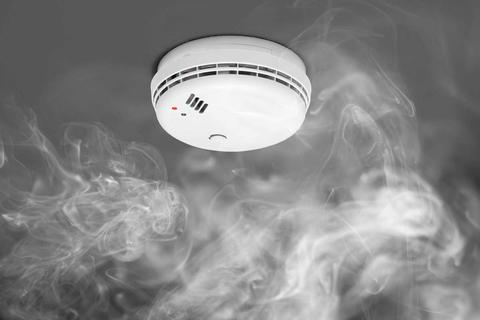
A smoke detector is an electronic device designed to sense smoke, usually as an indicator of fire. It gives a loud alarm to warn people so they can escape or take action before the fire gets out of control. In homes, smoke detectors are usually small, round, and battery-powered. In larger buildings, they may connect to a fire alarm system.

Exclusive Deals
Limited-time Exclusive Deals. Check current discount on Amazon.
Check Price on Amazon As an Amazon Associate I earn from qualifying purchases.Smoke detectors are essential because most fire deaths are not caused by burns, but by breathing smoke and toxic gases. In fact, the National Fire Protection Association (NFPA) reports that homes without working smoke alarms account for nearly 60% of fire-related deaths in the United States. Early warning is critical for survival, making these devices a must-have in every building.
How Does A Smoke Detector Work?
The way a smoke detector works depends on its type, but the goal is the same: to detect smoke quickly. There are two main technologies used—ionization and photoelectric—and some advanced models use both.
Ionization Smoke Detectors
Ionization detectors use a small amount of radioactive material between two electrically charged plates. This creates a small, constant electric current. When smoke enters the chamber, it disrupts the current, triggering the alarm.
These detectors are especially good at detecting fast, flaming fires—for example, fires caused by paper or cooking oil. They react quickly when the smoke contains tiny particles.
Exclusive Deals
Limited-time Exclusive Deals. Check current discount on Amazon.
Check Price on Amazon As an Amazon Associate I earn from qualifying purchases.How Ionization Works (step-by-step)
- Radioactive source (usually americium-241) ionizes air molecules.
- Charged plates create a current as ions move between them.
- Smoke particles enter and attach to ions, reducing current flow.
- Drop in current is detected by electronics, sounding the alarm.
Photoelectric Smoke Detectors
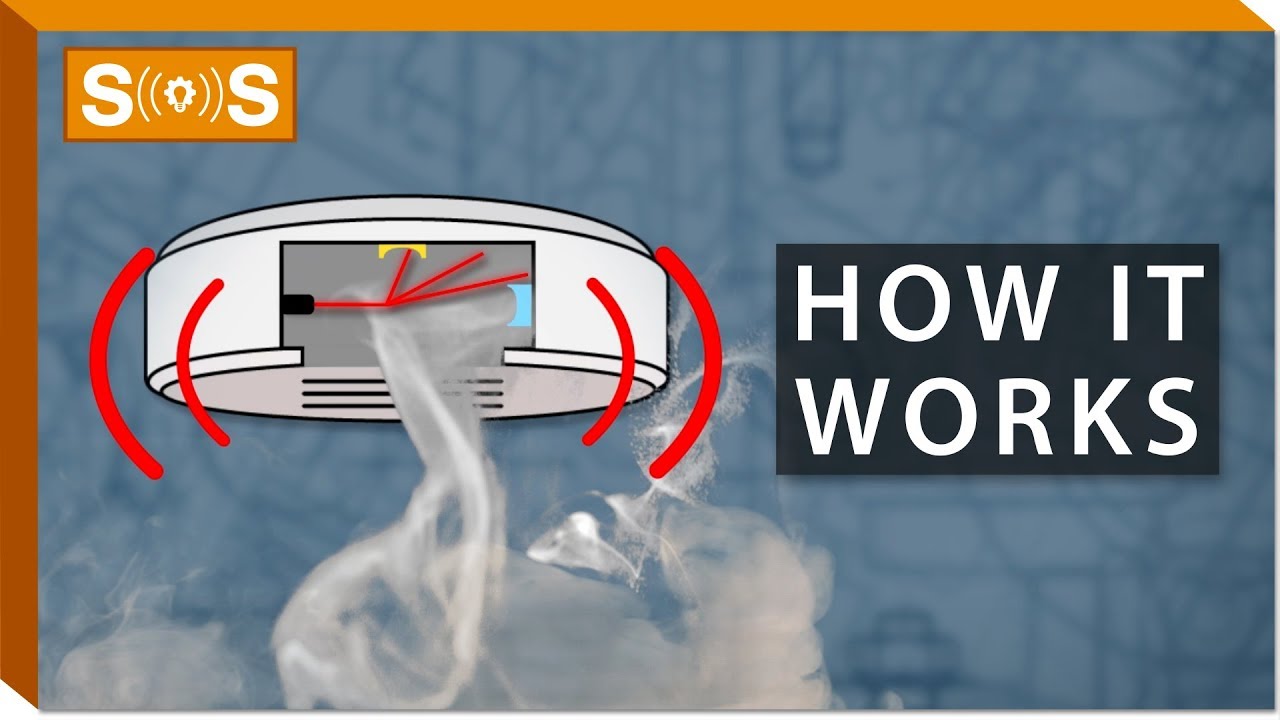
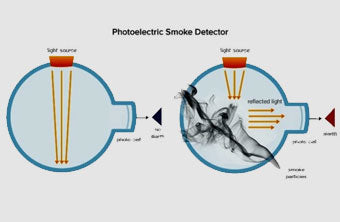
Photoelectric detectors use a light source and a sensor in a small chamber. Normally, the light beam doesn’t hit the sensor. When smoke enters, it scatters the light onto the sensor, which then triggers the alarm.
Photoelectric detectors are better at detecting slow, smoldering fires—like those caused by electrical wiring or a cigarette burning on a sofa. These fires produce more visible smoke and less flame at first.
How Photoelectric Works (step-by-step)
- LED light shines across a chamber, away from the sensor.
- Smoke enters and scatters the light.
- Sensor detects the scattered light.
- Signal is sent to the alarm circuit, activating the alert.
Dual-sensor Smoke Detectors
Some models combine both ionization and photoelectric sensors. This gives better protection, as the detector responds quickly to both fast and slow fires. Many safety experts recommend dual-sensor models, especially for homes.
Exclusive Deals
Limited-time Exclusive Deals. Check current discount on Amazon.
Check Price on Amazon As an Amazon Associate I earn from qualifying purchases.Comparison Of Smoke Detector Types
Here’s a quick look at how the main types stack up for different fire situations:
| Type | Best For | Response Time | False Alarm Risk |
|---|---|---|---|
| Ionization | Flaming fires | Faster for fast fires | Higher (cooking smoke) |
| Photoelectric | Smoldering fires | Faster for slow fires | Lower |
| Dual-Sensor | All fire types | Best overall | Medium |
Why Are Smoke Detectors So Important?
Smoke detectors are simple, but the benefits are huge. Studies show that having a working smoke detector in your home doubles your chances of surviving a house fire. Here’s why these devices are so critical:
- Early warning: Fire can spread in as little as two minutes. An alarm gives you time to escape before smoke or flames trap you.
- Night protection: Most deadly fires happen at night, when people are sleeping. The loud alarm can wake you up even from deep sleep.
- Property protection: Early detection helps limit damage, so firefighters can arrive before the fire spreads.
- Legal requirements: In many places, smoke detectors are required by law in homes, schools, and workplaces.
One non-obvious insight: even people who know about fire risks often forget about toxic smoke. Most fire victims are overcome by smoke, not heat or flames. Smoke detectors give you time to avoid these dangerous fumes.
Main Types Of Smoke Detectors
There are several types of smoke detectors, each with its own features and best uses. Choosing the right type depends on your needs and where you plan to install it.
1. Standalone Battery-powered Detectors
These are the most common in homes. They’re easy to install—just attach them to the ceiling and insert a battery. They work even during power outages, but you must check batteries regularly.
2. Hardwired Smoke Detectors
These connect to your home’s electrical system. Some models also have a backup battery in case of power failure. Hardwired detectors are often linked together, so when one goes off, all alarms sound.
3. Interconnected Smoke Detectors
Interconnected systems are common in new homes and larger buildings. All alarms are connected—if one detects smoke, every alarm in the building sounds. This ensures everyone hears the warning, even if the fire starts far from where people are sleeping.
4. Smart Smoke Detectors
Smart detectors connect to Wi-Fi and can send alerts to your phone. Some can even tell you the type and location of the danger. They often work with other smart home devices, like lights or security systems.
5. Combination Detectors
These units detect smoke and carbon monoxide (CO). CO is a deadly gas with no color or smell, so a combo detector adds extra safety.
Quick Comparison Of Smoke Detector Power Options
Here’s how the main types differ in terms of power source and reliability:
| Type | Power Source | Backup | Installation |
|---|---|---|---|
| Battery-only | Battery | Replace battery | Easy |
| Hardwired | Home wiring | Battery backup | Moderate |
| Smart | Battery or wiring | Battery backup | Easy/Moderate |
Key Parts Of A Smoke Detector
To understand how smoke detectors work, it helps to know the main parts inside the device:
- Sensing chamber: Where smoke is detected (either by ionization or photoelectric method).
- Alarm horn: Emits a loud sound, usually over 85 decibels.
- Test button: Lets you check if the alarm and battery are working.
- Battery compartment: Holds the battery (for battery-powered models).
- Indicator light: Flashes or stays on to show the unit is powered.
Some advanced models also have voice alerts, digital displays, or smart sensors.
How To Install A Smoke Detector Correctly
Many fires become deadly not because of faulty detectors, but because they’re installed in the wrong place. Here’s how to get it right:
Where To Place Smoke Detectors
- Inside every bedroom: Fires often start at night, so protect sleeping areas.
- Outside sleeping areas: Place one in the hallway near bedrooms.
- On every level: Include basements and attics if people use them.
- Near the kitchen: But not too close, to avoid false alarms from cooking.
- Near stairways: Fire and smoke often rise quickly.
Where Not To Place
- Avoid placing directly above stoves or ovens.
- Don’t install in very humid rooms (like bathrooms).
- Keep away from windows or vents, which can blow smoke away from the sensor.
Mounting Tips
- Install on the ceiling if possible (smoke rises).
- If wall-mounting, place 4–12 inches below the ceiling.
- Follow the manufacturer’s instructions for best results.
One detail often missed: high ceilings or vaulted rooms may need extra detectors, since smoke can collect in pockets far from the sensor.
Maintaining Your Smoke Detector
Having a smoke detector isn’t enough—you need to keep it working. Many tragic fire stories involve detectors with dead batteries or dust-blocked sensors.
Basic Maintenance Steps
- Test alarms monthly: Press the test button until you hear the sound.
- Change batteries once a year: Many people do this when clocks change for daylight saving time.
- Vacuum the unit: Dust can block sensors. Clean gently every few months.
- Replace the entire unit every 8–10 years: Sensors lose sensitivity over time, even if it still beeps.
Signs Of A Problem
- The alarm gives short “chirps” every minute—usually a low battery warning.
- No sound during testing—replace battery or unit right away.
- Frequent false alarms—may need cleaning or new placement.
What Beginners Miss
Many people think if the alarm light is on, the detector is fine. But some failures are silent. Always use the test button and change batteries as recommended.
Common Problems And How To Fix Them
Even a good smoke detector can give trouble sometimes. Here are common issues and what to do:
False Alarms
- Cooking smoke: Move the detector a bit farther from the kitchen.
- Steam from showers: Avoid placing near bathrooms.
- Dust/insects: Clean the unit; consider a bug screen if this happens often.
Chirping Or Beeping
- Usually means a low battery. Replace it right away.
- If new batteries don’t help, the unit may be too old—replace it.
Detector Won’t Sound During Tests
- Check battery orientation.
- Try a new battery or test with a different power source.
- If still silent, replace the detector.
Detector Goes Off For No Reason
- Power surges or humidity changes can trigger alarms.
- If this happens often, try a different model or move the unit.
How Smoke Detectors Save Lives: Real Examples
The most powerful reason to use smoke detectors is their proven record. Here are a few real-world examples:
- In 2022, a family in Ohio escaped safely from a house fire that started at night. The smoke detector woke them up before the fire blocked their exit.
- In an office building in California, interconnected smoke detectors alerted people on every floor, allowing everyone to evacuate even though the fire started in a locked storage room.
- A college student’s life was saved by a combo smoke and CO detector that went off due to a faulty heater. The student had no idea there was a problem until the alarm sounded.
One key insight: smoke detectors don’t just protect you from big fires. Many alarms catch small problems, like an overheating appliance, before they become disasters.
Choosing The Right Smoke Detector For Your Needs
Not all smoke detectors are equal. Here’s what to consider when buying:
Key Factors To Compare
- Type of sensor: Ionization, photoelectric, or dual-sensor.
- Power source: Battery, hardwired, or both.
- Interconnection: Do you need all alarms to sound together?
- Smart features: Remote alerts, app integration.
- Extra protection: Combo units for smoke and CO.
Common Buyer Mistakes
- Choosing the cheapest unit without checking sensor type.
- Ignoring battery backup for hardwired models.
- Forgetting to check the date code (never buy an old unit).
- Putting all detectors in the kitchen, which leads to false alarms.
Example: Comparing Two Popular Models
| Feature | Model A: Basic Ionization | Model B: Smart Dual-Sensor |
|---|---|---|
| Sensor Type | Ionization only | Photoelectric + Ionization |
| Power Source | 9V battery | Hardwired + battery backup |
| Smart Features | No | Yes (Wi-Fi/app alerts) |
| Average Price | $15 | $60 |
| Best For | Small apartments | Large homes/offices |
The Future Of Smoke Detectors
Technology is making smoke detectors smarter and more reliable. Here are a few trends:
- Smart home integration: New detectors can connect with home security systems and even shut off air conditioning to slow fire spread.
- Voice alerts: Some models can say, “Smoke detected in the kitchen,” which helps when you have children or guests.
- Self-testing: Advanced detectors run self-checks and notify you if there’s a problem.
- Long-life batteries: Some units use sealed batteries that last up to 10 years, reducing maintenance.
A non-obvious trend: as more homes get smart devices, smoke detectors are becoming part of whole-home safety systems. But basic models are still highly effective if used and maintained properly.
Frequently Asked Questions
What Is The Difference Between A Smoke Detector And A Smoke Alarm?
A smoke detector senses smoke and usually sends a signal to a central panel (common in big buildings). A smoke alarm is a complete unit—it senses smoke and sounds a local alarm. In homes, the terms are often used interchangeably.
How Often Should I Replace My Smoke Detector?
You should replace most smoke detectors every 8–10 years. Even if it still works, the sensors can become less sensitive over time. Check the date on the unit or the manufacturer’s recommendations.
Can I Use One Smoke Detector For My Whole House?
No. You need detectors in every bedroom, outside sleeping areas, and on every floor, including the basement. One detector cannot protect an entire house, especially if doors are closed or the house is large.
What Should I Do If My Smoke Detector Keeps Going Off For No Reason?
First, check for dust or insects inside the unit—clean it gently. Avoid placing near kitchens or bathrooms. If false alarms continue, the unit may be old or faulty, and you should replace it.
Are Smoke Detectors Required By Law?
Yes, in most places. Building codes often require smoke detectors in all new homes and renovations. Many local laws also require them in rental units. Check your local regulations for details. For more information, visit the NFPA Smoke Alarm Safety page.
A smoke detector is one of the simplest, most effective ways to protect lives and property from fire. With the right type, proper placement, and regular maintenance, you can give yourself and your loved ones the best chance of escaping a fire safely.
Don’t wait for an emergency—make sure your smoke detectors are ready to protect you today.