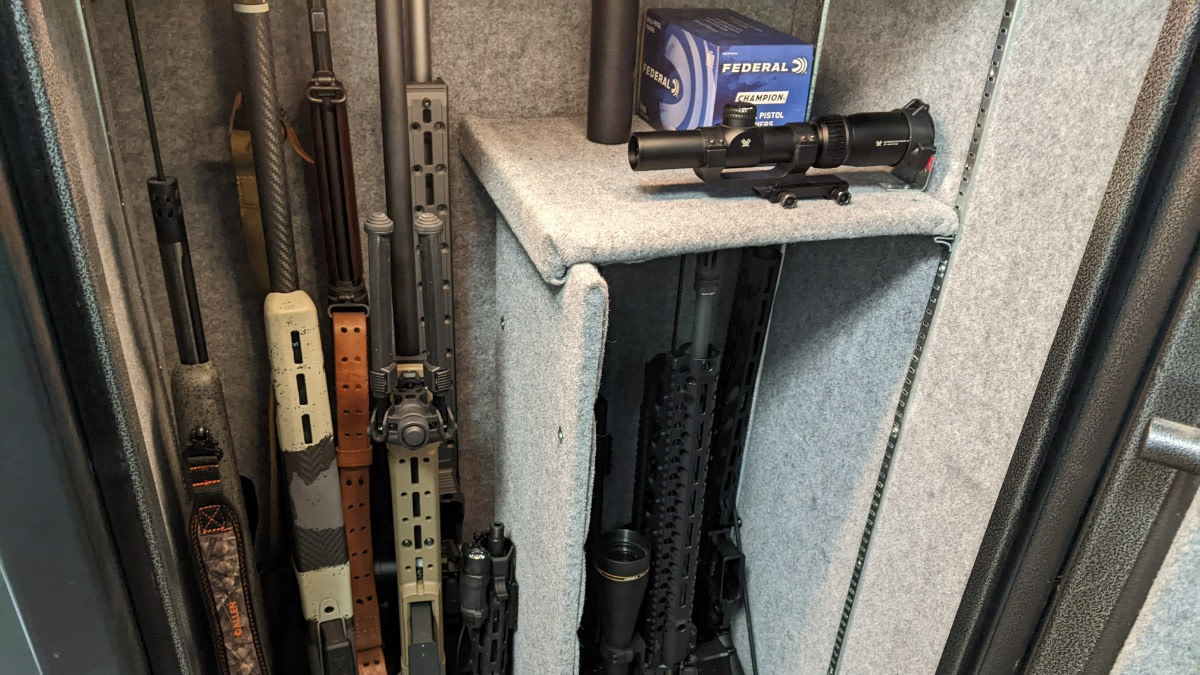
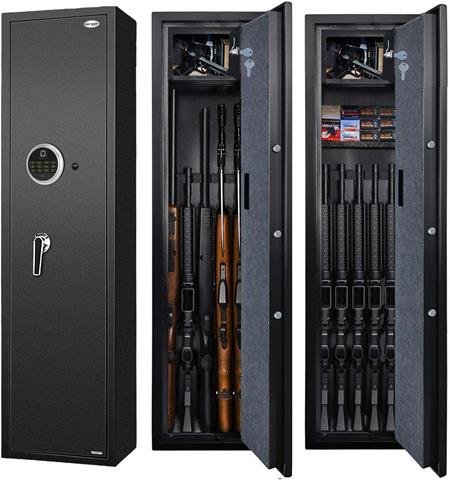
Storing cash at home is a common practice for many people. Some choose to keep their money in a gun safe, thinking it will protect their savings from thieves, fire, and other dangers. But have you ever wondered: Will money burn in a gun safe? This question is important, especially if you want to keep your emergency cash truly safe. Many people believe that a gun safe is also a fireproof safe, but is that really true? Let’s explore the truth behind storing money in a gun safe, how fire affects cash, and what you can do to protect your savings.
Exclusive Deals
Limited-time Exclusive Deals. Check current discount on Amazon.
Check Price on Amazon As an Amazon Associate I earn from qualifying purchases.How Fire Affects Paper Money
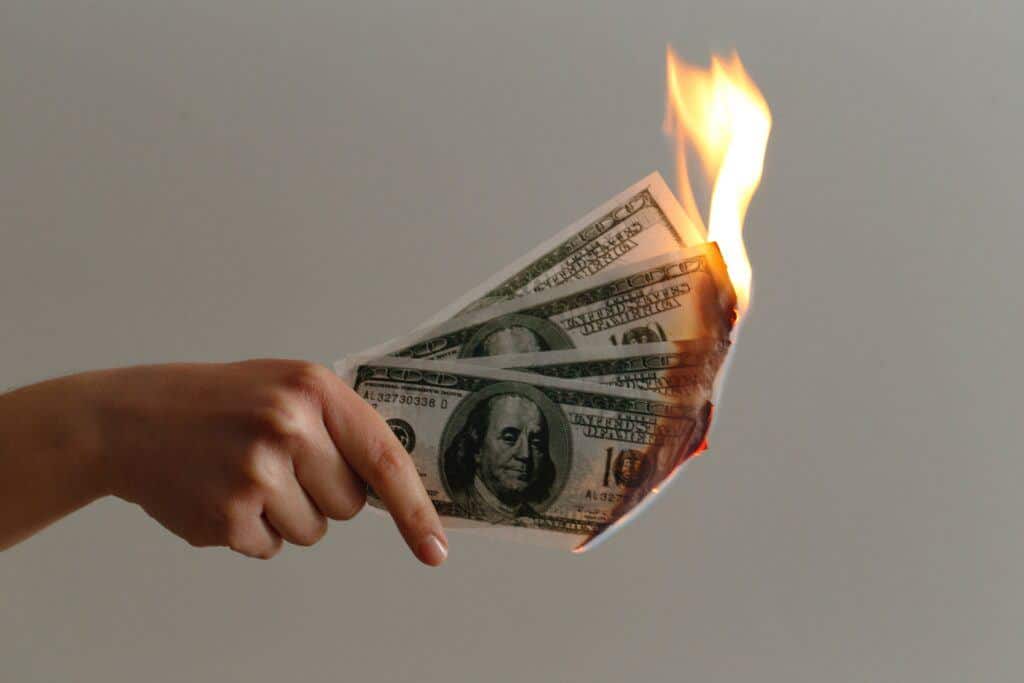
Most cash, like US dollars or Euros, is made from a blend of cotton and linen fibers. This makes it stronger than regular paper, but it is still flammable. The ignition point of paper money is similar to that of regular paper, which is about 451°F (233°C). In a house fire, temperatures can quickly reach 1,100°F (593°C) or even higher. At these temperatures, money not protected by a fire-resistant barrier will burn, turn brown, or crumble into ash.
People often assume that their cash is safe if it’s behind a thick door or inside a heavy safe. But the materials used in the safe, how well it is sealed, and how long it’s exposed to fire all matter.
Exclusive Deals
Limited-time Exclusive Deals. Check current discount on Amazon.
Check Price on Amazon As an Amazon Associate I earn from qualifying purchases.
Even a few minutes at high temperatures can destroy unprotected cash.
Exclusive Deals
Limited-time Exclusive Deals. Check current discount on Amazon.
Check Price on Amazon As an Amazon Associate I earn from qualifying purchases.
Understanding Gun Safes: Are They Really Fireproof?
What Is A Gun Safe?
A gun safe is a secure metal box designed to store firearms and ammunition. Most gun safes are made of steel with strong locking mechanisms. Their main purpose is to prevent theft and keep guns out of children’s hands.
Fire Protection In Gun Safes
Not all gun safes are fireproof. In fact, most are not. Standard gun safes are built to keep out burglars, not to survive a fire. Some gun safes do have fire ratings, but these ratings can be misleading. A “fireproof” or “fire-resistant” safe usually means that the inside temperature will stay below a certain level for a set period. But not all fire ratings are equal, and many gun safes have little or no fire protection.
Key Differences: Gun Safe Vs. Fire Safe
Let’s look at how gun safes and fire safes compare:
| Feature | Gun Safe | Fire Safe |
|---|---|---|
| Main Purpose | Protect guns from theft | Protect documents from fire |
| Fire Rating | Not guaranteed | Clearly stated (e.g., 1 hour at 1700°F) |
| Interior Temperature | Can get very hot | Stays below 350°F |
| Locking Mechanism | Strong | Strong |
| Common Contents | Guns, ammo, valuables | Documents, cash, media |
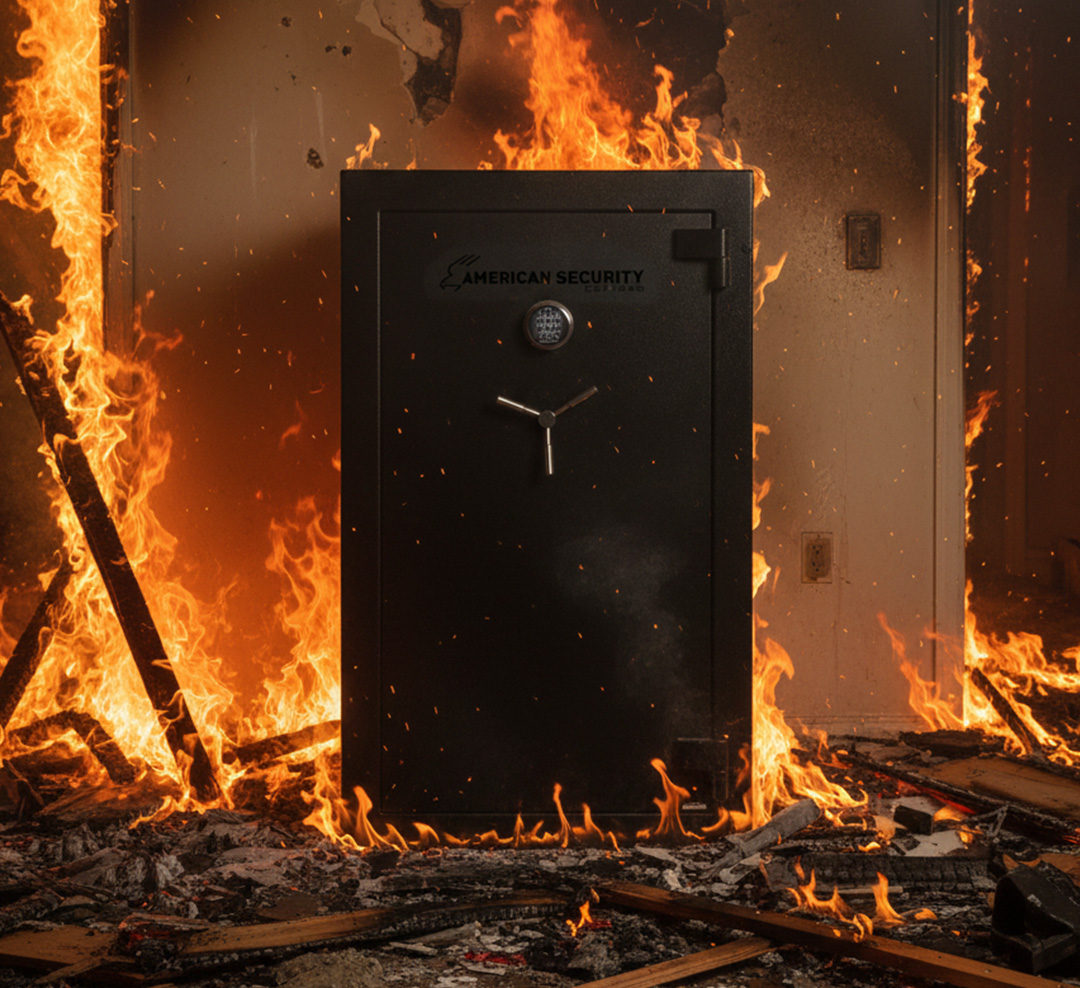
As you can see, gun safes are not automatically fireproof. If your gun safe does not have a UL fire rating or similar certification, you should not trust it to protect cash from fire.
How Gun Safes Respond To Fire
What Happens Inside A Gun Safe During A Fire?
When a fire starts, the air inside a gun safe heats up. If the safe is not fire-rated, temperatures inside will climb almost as quickly as outside. Most gun safes have thick steel walls, but steel is a good conductor of heat.
This means that heat from the fire outside the safe passes through the walls and raises the temperature inside.
If the fire lasts long enough, the inside of the safe can get hot enough to burn paper. Even if the cash does not catch fire, it can be scorched, charred, or become brittle. In some cases, the paper will turn brown and crumble when touched.
Fireproof Gun Safes: Are They Good Enough?
Some gun safes are marketed as “fireproof” or “fire resistant.” These safes usually have a layer of fireboard or insulation inside the walls. The idea is that this insulation slows the transfer of heat, keeping the inside cooler for a while.
But here’s a key detail: even “fire-rated” gun safes are not all the same. Some use cheap drywall as insulation, which can break down or release moisture and chemicals during a fire. Others use special fire-resistant materials that work better. Always check the fire rating label to see:
- The temperature tested (e.g., 1200°F, 1700°F)
- The time tested (e.g., 30 minutes, 1 hour, 2 hours)
- The maximum inside temperature allowed
For cash to survive, the inside temperature must stay below 350°F (177°C), the point at which paper starts to burn.
Real-world Example: Fire Performance
Let’s compare two types of gun safes in a house fire:
| Safe Type | Fire Rating | Fire Duration (Example) | Cash Survival |
|---|---|---|---|
| Standard Gun Safe | None | 20 minutes at 1000°F | No, cash will burn |
| Fire-Rated Gun Safe | 1 hour at 1200°F | 20 minutes at 1000°F | Likely, cash survives |
The lesson: A standard gun safe is not safe for cash in a fire. Only a high-quality, fire-rated safe can protect your money.
The Science Of Fire Ratings
How Are Fire Ratings Measured?
Fire ratings are usually given in terms of time and temperature. For example, a safe might be rated for 1 hour at 1700°F. This means that the inside of the safe will not get hotter than a certain temperature (usually 350°F) during a 1-hour fire at 1700°F.
Underwriters Laboratories (UL) is a well-known organization that tests and certifies safes. Look for the UL Class 350 label. This means that paper, including cash, will be protected as long as the fire does not last longer than the rating.
Other safes may have ratings from other organizations, but UL is the most respected.
Why 350°f Is The Magic Number
At 350°F, paper starts to brown and can catch fire. Most fire safes are designed to keep the inside temperature below this point. Electronics, photos, and media need even lower temperatures, but for cash, 350°F is the standard.
Common Myths About Money And Gun Safes
Many people believe things that are not true about storing cash in a gun safe. Here are some common myths—and the truth:
- “My gun safe is heavy and strong, so fire can’t get inside.”
Truth: Weight and strength do not protect against heat. Steel conducts heat well.
2. “a Gun Safe With A Thick Door Is Fireproof.”
Truth: Thickness helps, but without special fire insulation, heat will still pass through.
- “If I keep my cash in a metal box inside the safe, it’s safe from fire.”
Truth: A metal box offers little extra protection unless it is rated for fire.
4. “all Gun Safes Are Fire-rated.”
Truth: Many have no fire rating at all.
- “I can buy a cheap fireproof gun safe and my cash will be safe.”
Truth: Cheap safes often have poor insulation and fail quickly in real fires.
How To Protect Your Money From Fire At Home
If you want to store cash at home, and you’re worried about fire, here are practical steps:
1. Choose A Real Fire Safe
The best way to protect cash is to buy a fire-rated safe with a UL Class 350 label. Look for:
- Fire rating of at least 1 hour at 1700°F
- Good reviews and clear certification
- A brand known for fire protection (e.g., SentrySafe, AMSEC)
2. Use A Fire-resistant Pouch
For extra safety, put your cash in a fire-resistant document bag before placing it in the safe. These bags are made from materials like fiberglass or silicone-coated fabric and add another layer of protection.
3. Store Cash In Small Amounts
Don’t keep large sums of cash at home if you can avoid it. Spread your risk by keeping some money in the bank, and only store what you need for emergencies.
4. Place The Safe Wisely
Put your safe on a concrete floor or in the lowest level of your home. Heat rises, so upper floors and attics are more dangerous. Avoid placing safes against outside walls, which can heat up quickly in a fire.
5. Check Your Safe’s Seal
A fire safe should have a heat-activated door seal that expands during a fire. This stops smoke and flames from entering.
What Happens To Cash After A Fire?
Can Burnt Money Be Replaced?
If your cash is only partially burned, you may still be able to exchange it. In the United States, the Bureau of Engraving and Printing will replace damaged currency if more than half of the bill is present, or if you can prove the rest is destroyed. Other countries have similar policies.
However, if the cash is completely ash or dust, it cannot be replaced. If you keep your money in a gun safe that is not fire-rated, you risk losing everything.
How To Recover Burnt Money
- Collect all pieces carefully
- Do not try to clean or separate them
- Take them to your local bank or mail them to the proper government office
But remember, this process can take time and is not guaranteed for heavily damaged bills.
Real Stories: When Money Burns In Gun Safes
Example 1: The Unrated Safe Disaster
A family stored $5,000 in cash inside a large, heavy gun safe. Their house caught fire, and the fire burned for about 30 minutes before firefighters could put it out. When they opened the safe, the cash was a pile of black, brittle pieces—completely destroyed.
The safe was not fire-rated.
Example 2: The Fire-rated Safe Success
A business owner kept $10,000 in a UL Class 350 fire safe. After a warehouse fire, the safe was opened and the cash was slightly brown but intact. The fire lasted 45 minutes at high heat, but the safe’s insulation worked as promised.
Example 3: The “fire-resistant” Gun Safe Failure
A homeowner bought a gun safe labeled “fire resistant” but with no clear fire rating. After a kitchen fire, all the documents and cash inside were ruined. The safe had only a thin layer of drywall as insulation, which failed quickly.
These real-life examples show why the fire rating and insulation quality matter more than the safe’s weight or price.
Alternatives To Storing Cash In A Gun Safe
If you’re worried about fire, here are some alternatives:
- Keep money in the bank. Bank deposits are protected from fire, theft, and natural disasters.
- Use a safety deposit box. These are stored in secure, climate-controlled vaults at banks.
- Invest in digital assets. Consider using online savings accounts or digital wallets. These can’t be burned in a fire.
- Diversify your storage. Store some cash at home (in a fire-rated safe), some in the bank, and some in other secure places.
Practical Tips For Home Cash Storage
If you must keep cash at home, remember these:
- Choose a UL-rated fire safe, not just a gun safe.
- Use a fire-resistant pouch as a second layer.
- Do not store all your cash in one place.
- Keep a record of how much cash you store and where.
- Check your safe’s fire rating every few years—ratings can change as safes age.
- Consider insurance for valuable items and cash.
The Cost Of Fire-rated Safes Vs. Gun Safes
Many people choose gun safes because they are cheaper or more available. But fire-rated safes designed for documents and cash can cost more. Here’s a quick cost comparison:
| Safe Type | Average Price | Fire Rating |
|---|---|---|
| Standard Gun Safe | $400 – $2,000 | None or minimal |
| Fire-Rated Gun Safe | $800 – $3,500 | 30 min – 2 hours |
| Document Fire Safe | $200 – $1,500 | 1 – 2 hours, UL-rated |
Non-obvious insight: Document fire safes are often cheaper than large gun safes and offer better fire protection for cash, even if they are smaller in size.
Common Buyer Mistakes
Many people make avoidable errors when buying a safe for their cash:
- Assuming all safes are fireproof: Always check for a real fire rating.
- Focusing only on theft protection: Fire is as much a risk as burglary for cash.
- Buying the biggest safe: Size does not equal fire safety. Quality insulation matters more.
- Trusting marketing labels: “Fire resistant” is not the same as “UL-rated.”
- Ignoring proper placement: Even the best safe can fail if it’s placed in a high-risk spot.
- Not reading the warranty: Some safes are not covered for cash loss during a fire.
What Really Matters When Choosing A Safe For Cash
To keep your money safe from fire, focus on these features:
- UL Class 350 fire rating (or equivalent)
- At least 1 hour fire protection
- High-quality insulation (not just drywall)
- Heat-activated door seal
- Solid locking mechanism (to prevent theft)
- Good customer reviews and reputation
- Clear warranty and replacement policy
Frequently Asked Questions
Will Paper Money Burn Inside A Gun Safe?
Yes, paper money can burn inside a gun safe if the safe is not fire-rated. Most gun safes are designed to protect against theft, not fire. Without proper fire insulation, the inside of a gun safe will get hot enough in a house fire to destroy cash.
Are All Fireproof Gun Safes Safe For Money?
No, not all “fireproof” gun safes protect cash well. Only safes with a UL Class 350 fire rating (or similar) will keep the inside temperature low enough to protect paper money. Always check the fire rating and make sure it is tested for at least 1 hour at high temperatures.
Can I Use A Fireproof Document Bag Inside My Gun Safe?
Yes, using a fireproof document bag inside your safe adds extra protection. Place your cash and important papers in the bag, then put the bag in the safe. This double layer can help, especially if your safe has limited fire protection.
What Should I Do If My Cash Is Burned In A Fire?
If your cash is only partly burned, collect all pieces and take them to your bank. In the United States, the Bureau of Engraving and Printing may replace damaged bills if enough of the note is left. If the cash is completely turned to ash, it cannot be replaced.
Is A Safety Deposit Box Safer Than A Gun Safe For Cash?
Yes, a safety deposit box at a bank is much safer for cash than a gun safe at home. Banks have advanced fire protection and security. If you need to store large amounts of cash, consider using a bank’s safety deposit box.
For more on fire ratings and safe standards, you can read details from Underwriters Laboratories.
—
If you want true protection for your money, do not trust a regular gun safe to keep cash safe from fire. Check fire ratings carefully, use extra layers like fireproof bags, and consider alternative storage solutions. When it comes to your savings, it’s always better to be safe than sorry.