4K delivers crisper detail; 2K balances quality, bandwidth, and cost.
I’ve installed and tested both 2K and 4K security systems for homes and small businesses. This guide explains 2K vs 4K Security Camera differences, real-world trade-offs, and how to pick the best option for your needs. I’ll share clear comparisons, practical tips from field tests, and a simple decision checklist to help you choose with confidence.
Exclusive Deals
Limited-time Exclusive Deals. Check current discount on Amazon.
Check Price on Amazon As an Amazon Associate I earn from qualifying purchases.How 2K and 4K Differ: basic facts and definitions
2K and 4K refer to video resolution. 2K usually means about 2,000 horizontal pixels (commonly 2560×1440). 4K means about 4,000 horizontal pixels (commonly 3840×2160). Higher resolution gives more pixels and more detail per frame.
Resolution affects clarity, zooming, and the size of files. But resolution alone does not guarantee better images. Sensor size, lens quality, compression, and lighting matter too.
Key terms to know:
- Resolution: number of pixels in the image.
- Bitrate: how much data the camera streams per second.
- Compression: how video is reduced in size (H.265 is common).
- Field of view: how wide the camera sees.
This section lays groundwork for deeper comparisons of 2K vs 4K Security Camera choices.
Exclusive Deals
Limited-time Exclusive Deals. Check current discount on Amazon.
Check Price on Amazon As an Amazon Associate I earn from qualifying purchases.
Image quality: resolution, detail, and real-world performance
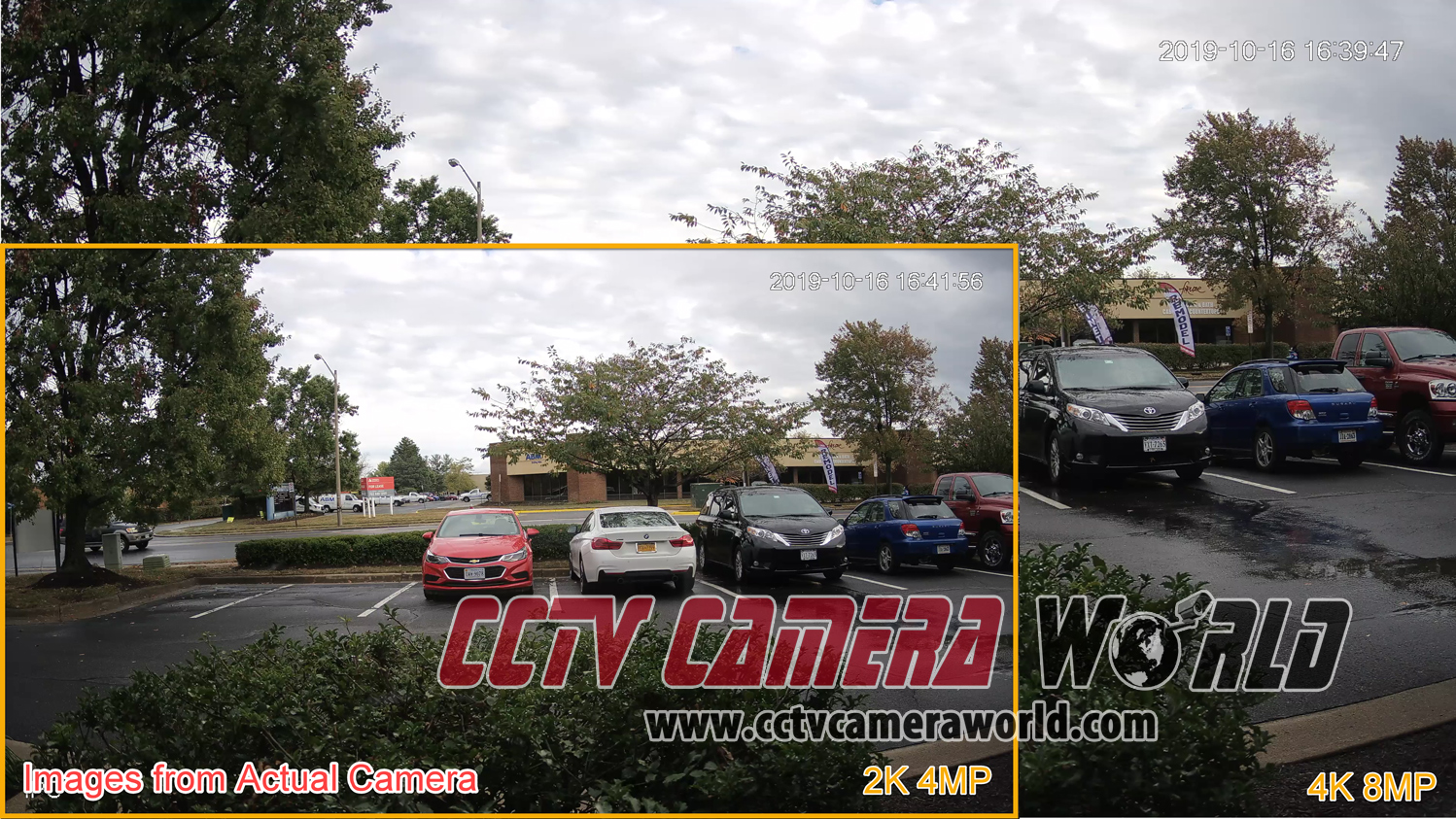
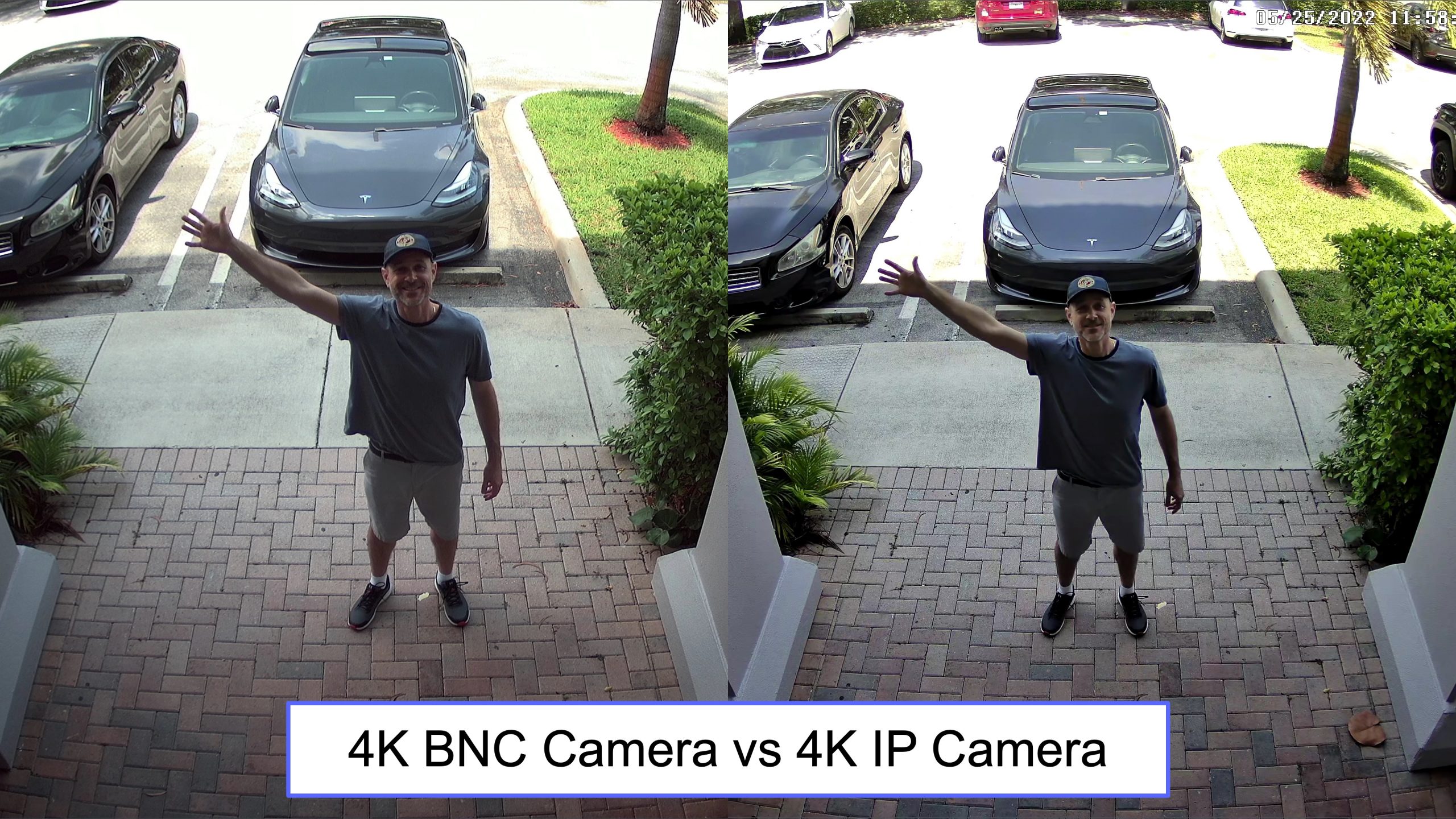
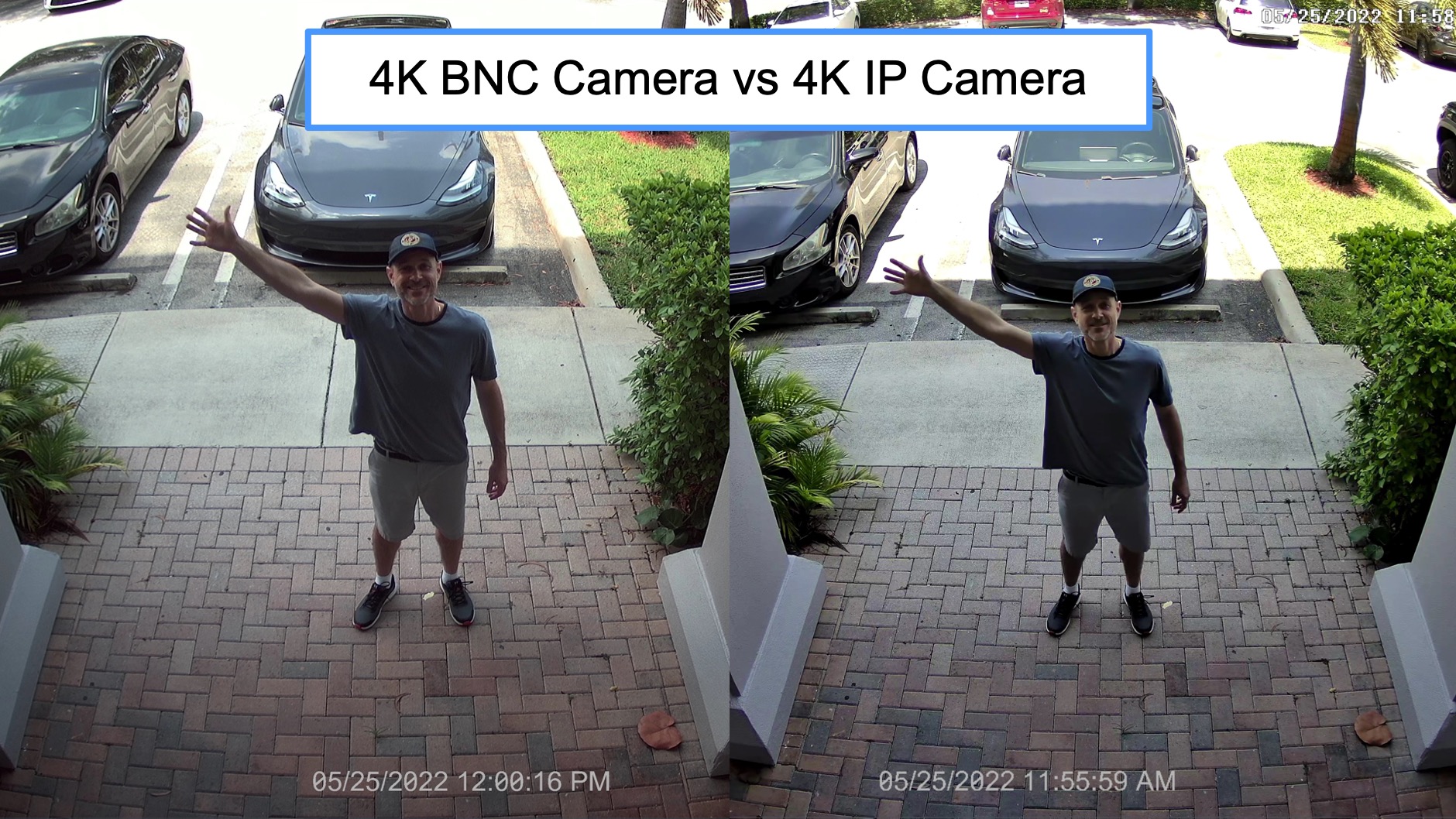
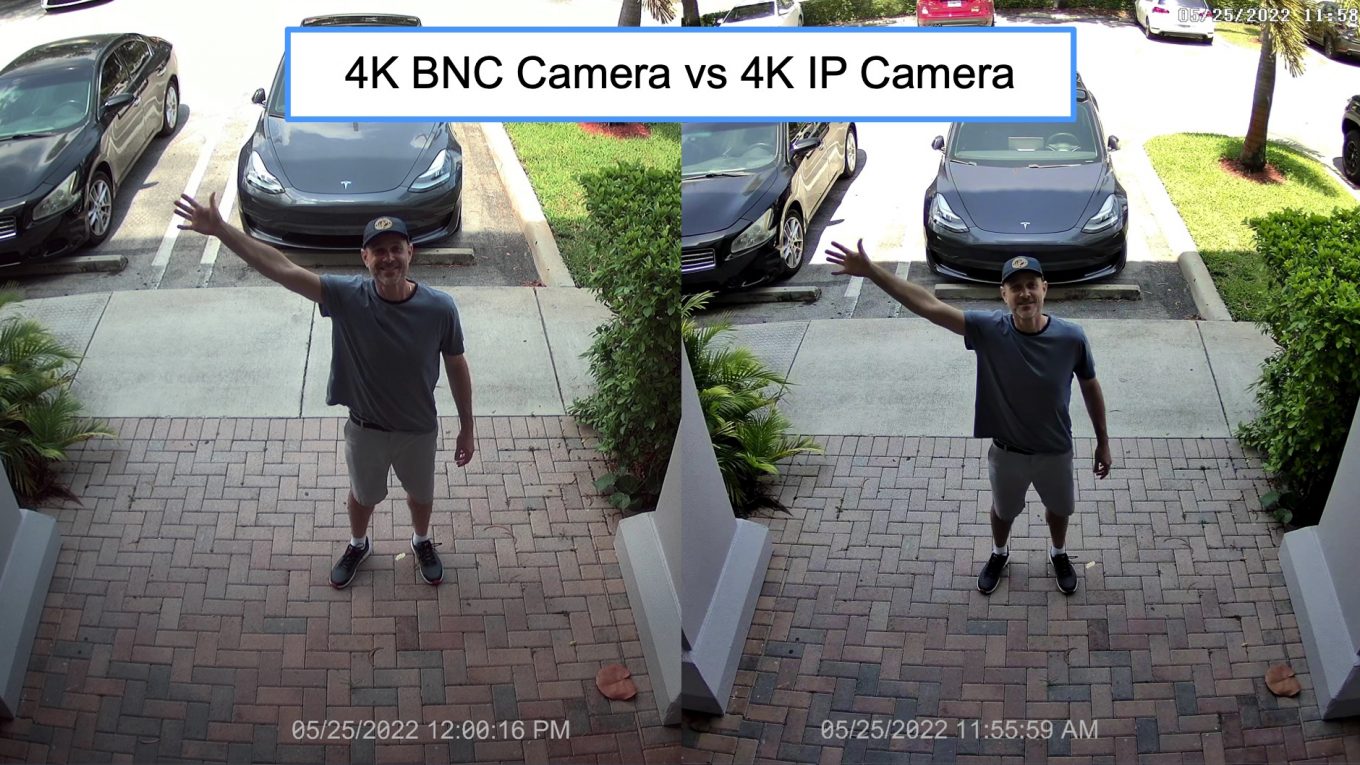
4K has roughly four times the pixels of 2K. That means more detail and better digital zoom. In good light, 4K shows small faces, license plates, and textures more clearly than 2K.
However, real-world gains depend on optics and sensor. A cheap 4K camera with a low-quality lens can look worse than a good 2K camera. Low light narrows the gap. Noise, motion blur, and compression can wash out 4K advantage.
Exclusive Deals
Limited-time Exclusive Deals. Check current discount on Amazon.
Check Price on Amazon As an Amazon Associate I earn from qualifying purchases.Practical tips:
- Choose glass lenses over plastic where possible.
- Look at sample day and night footage.
- Prefer cameras with good low-light sensors, not just high megapixel counts.
This explains how resolution intersects with other factors in a 2K vs 4K Security Camera decision.
Bandwidth, storage, and processing needs
4K files are larger. They require higher bitrate to keep quality. That raises network load and storage use. For the same scene, 4K typically needs about 2–4 times the storage of 2K, depending on compression.
Network and storage impacts:
- More upload bandwidth for remote viewing.
- Larger NVR or cloud costs for retention.
- Heavier CPU/GPU demand for processing and playback.
Ways to manage load:
- Use H.265 compression to cut bitrate.
- Set recording on motion to reduce storage.
- Use smart cropping or region-of-interest recording.
When weighing 2K vs 4K Security Camera, plan your network and storage for sustained operation.

Low-light performance and night vision
High resolution does not always mean better night images. In low light, each pixel collects less light. That can increase noise and reduce effective detail, making 4K less advantageous in very dark scenes.
What to check:
- Sensor size: larger sensors collect more light.
- Infrared (IR) range and quality.
- Noise reduction and low-light modes.
My experience: a quality 2K camera with a larger sensor often outperforms a small-sensor 4K camera at night. Consider scene lighting before choosing 2K vs 4K Security Camera.
Use cases and practical recommendations
Choose based on what you need to see and where:
- License plates and long-range detail: Prefer 4K for clear zoom and cropping.
- Indoor monitoring and faces: 2K is often sufficient and cheaper.
- Large open spaces: 4K helps cover more area with less stitching.
- Low-light or indoor dim scenes: 2K with a good sensor may perform better.
Examples from installs:
- Parking lot camera: I used 4K with a narrow lens for plate reads at 50–100 feet.
- Retail floor: I chose 2K cameras to capture faces with good low-light handling and lower storage costs.
This section helps match 2K vs 4K Security Camera to real needs.

Cost and value: initial price and long-term expenses
4K cameras tend to cost more up front. They also increase costs for storage, network upgrades, and more powerful NVRs. But 4K can cut the number of cameras needed to cover a large area.
Cost factors:
- Camera unit price
- NVR or cloud storage cost
- Network infrastructure upgrades
- Maintenance and power usage
Value tip: calculate total cost of ownership for three years. Factor in how many cameras you would need at 2K vs 4K to cover the same area. Often a single 4K can replace two 2K units, balancing cost differences.
Installation, compatibility, and network considerations
Not all systems handle 4K equally. Check compatibility with your NVR, VMS, and cloud service. Some older NVRs can’t record multiple 4K streams smoothly.
Installation checklist:
- Verify NVR/channel capacity for 4K streams.
- Test PoE switches for required throughput.
- Plan cable quality and lengths to maintain signal integrity.
- Confirm firmware and app support for 4K playback and remote access.
I once installed 4K cameras on an old NVR and hit frame-drop issues. Upgrading the NVR and switch fixed it. Plan hardware to avoid surprises when choosing 2K vs 4K Security Camera.
My experience testing 2K and 4K cameras: lessons learned
I have installed dozens of cameras across homes and businesses. From that work I learned:
- Look beyond megapixels. Sensor size and lens matter most.
- Test in the actual scene at night and day before buying.
- Use motion-triggered clips to save storage without losing key events.
- If your internet upload is below 10 Mbps, managing multiple 4K streams will be painful.
Mistakes to avoid:
- Buying 4K solely for the spec without checking optics.
- Underestimating storage and bandwidth needs.
- Ignoring firmware and app reliability.
These real-world lessons guide a practical 2K vs 4K Security Camera choice.
How to choose: a simple decision checklist
Use this checklist to decide:
- Define your main goal: plate reading, face ID, area overview, or night coverage.
- Measure distance and field of view needed.
- Check lighting: bright, mixed, or low-light scene.
- Audit network upload speed and local LAN capacity.
- Calculate storage needs for desired retention days.
- Compare cost of 4K vs enough 2K cameras to cover the same area.
- Review sample footage and test before final buy.
Follow these steps and you’ll pick the right balance for 2K vs 4K Security Camera.
Frequently Asked Questions of 2K vs 4K Security Camera
What is the main difference between 2K and 4K security cameras?
The main difference is resolution: 4K has about four times the pixels of 2K. That yields finer detail and better digital zoom when lighting and optics permit.
Will 4K always give better image quality than 2K?
Not always. Image quality also depends on sensor size, lens quality, compression, and lighting. A well-built 2K camera can outperform a poor 4K unit.
How much more storage does 4K need compared to 2K?
Roughly 2–4 times more storage, depending on compression and frame rate. Use H.265 and motion recording to reduce space.
Is 4K worth it for home security?
4K is worth it if you need sharp detail, fewer cameras, or long-range views. For simple indoor use, 2K often provides good value.
Can my current NVR handle 4K cameras?
Not always. Check your NVR’s max channel bandwidth and supported resolutions. Older NVRs may struggle with multiple 4K streams.
Do 4K cameras use more network bandwidth?
Yes. 4K streams use higher bitrates, which increases upload and LAN bandwidth requirements. Proper network planning is essential.
Are there privacy or legal concerns with high-resolution cameras?
Higher detail raises privacy considerations. Follow local laws and post clear notices where required. Use framing to avoid private areas when possible.
Conclusion
Choosing between 2K vs 4K Security Camera comes down to needs, lighting, budget, and infrastructure. 4K shines for long-range detail and fewer cameras, while 2K often wins on cost, storage, and low-light performance when paired with a good sensor. Use the checklist above, test sample footage in your setting, and plan network and storage before buying.
Take action: assess your site, run the checklist, and test cameras on a trial basis. Share your scenario in the comments or subscribe for hands-on guides and setup tips.