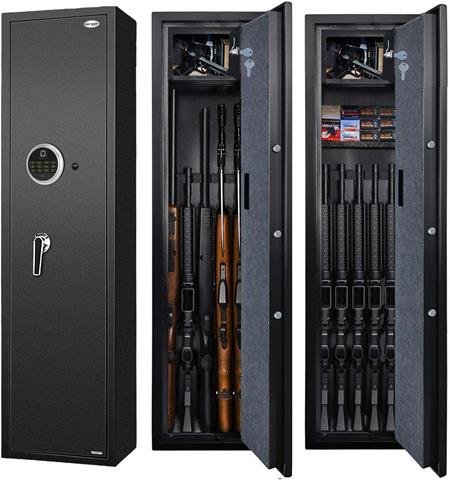
Traveling with firearms requires careful planning. Safety, legality, and protecting your equipment are all important. One item many gun owners consider is the gun sock. These soft, stretchy sleeves are designed to cover and protect firearms. But are gun socks good for travel? The answer depends on what you expect from your firearm storage during a trip. This article explores the strengths and weaknesses of gun socks for travel, how they compare to other solutions, and whether they deserve a spot in your travel kit.

Exclusive Deals
Limited-time Exclusive Deals. Check current discount on Amazon.
Check Price on Amazon As an Amazon Associate I earn from qualifying purchases.What Is A Gun Sock?
A gun sock is a fabric sleeve, usually made from materials like cotton, polyester, or a blend with silicone. They’re shaped like long tubes and come in different lengths for pistols, rifles, and shotguns. The main purpose is to provide a thin layer of protection against dust, moisture, and scratches. Gun socks are lightweight, flexible, and take up almost no space when empty.
Most gun socks have a drawstring closure at one end. Some are treated with silicone or other rust inhibitors to help prevent corrosion. They are simple, but that simplicity is part of their appeal.
The Main Benefits Of Using Gun Socks
Gun socks are popular among gun owners for several reasons. Here’s why they attract attention:
1. Protection From Scratches And Dings
The soft material acts as a cushion, especially useful when firearms are stored with other gear. Sliding guns in and out of safes, bags, or cases becomes less risky.
Exclusive Deals
Limited-time Exclusive Deals. Check current discount on Amazon.
Check Price on Amazon As an Amazon Associate I earn from qualifying purchases.2. Moisture And Rust Prevention
Silicone-treated gun socks create a barrier against humidity. This is important for preventing rust, especially in humid climates or during long trips.
3. Dust And Dirt Defense
When firearms are stored for a while or transported in open environments, gun socks keep out dust and debris.
4. Discreet Storage
Gun socks are non-rigid, so they don’t draw attention and can conceal the outline of the firearm.
5. Lightweight And Flexible
They add almost no weight, making them easy to pack in any bag.
6. Cost-effective
Compared to hard cases, gun socks are much cheaper. A quality gun sock usually costs between $7 and $20.
Exclusive Deals
Limited-time Exclusive Deals. Check current discount on Amazon.
Check Price on Amazon As an Amazon Associate I earn from qualifying purchases.
Where Gun Socks Shine For Travel
Some travel situations are ideal for gun socks:
- Road Trips:
When firearms are transported in a vehicle, gun socks keep them from getting scratched by other objects.
- Backpacking or Hiking:
Gun socks are perfect for protecting a firearm inside a larger soft bag or pack, especially if weight and space are concerns.
- Multiple Firearms:
Carrying more than one gun? Gun socks make it easy to stack firearms in a larger case without them touching.
- Layovers and Extended Storage:
If your travel involves waiting, gun socks help shield your firearm from environmental changes.
Where Gun Socks Fall Short
Despite their benefits, gun socks have clear limitations—especially when it comes to travel:
1. No Impact Protection
The soft material won’t protect against drops, bumps, or crushing. If your gun is tossed around in transit, a gun sock alone is not enough.
2. Not Secure Or Lockable
Gun socks cannot be locked. For airline travel or situations requiring secure storage, they don’t meet legal requirements.
3. Limited Water Protection
While they help with humidity, gun socks are not waterproof. Direct exposure to rain or spills can soak through.
4. No Theft Deterrence
They offer no security. Anyone can remove a gun sock quickly.
5. Airline And Legal Requirements
Most airlines require hard, lockable cases. Gun socks do not substitute for these rules.

Comparing Gun Socks To Other Travel Storage Options
To understand how gun socks fit into travel, let’s compare them with other popular firearm storage solutions.
| Storage Type | Protection Level | Lockable | Weight | Best For |
|---|---|---|---|---|
| Gun Sock | Low (scratch, dust, some moisture) | No | Very light | Extra layer inside bags, short-term storage |
| Soft Case | Medium (light impact, weather) | Some models | Light to medium | Car travel, range use |
| Hard Case | High (impact, crushing, weather) | Yes | Heavy | Air travel, shipping, legal transport |
Gun socks are best as a supplement, not a replacement, for secure cases.
When Should You Use A Gun Sock While Traveling?
Inside A Hard Or Soft Case
Many experienced gun owners use gun socks inside a locked case. This adds extra protection against scratches and helps keep moisture away from the firearm during travel. The combination is much better than using either one alone.
For Short-distance Trips
If you’re driving a short distance and your firearm will not leave your sight, a gun sock can be enough. For example, moving a rifle from your home to a friend’s house for cleaning or storage.
For Additional Organization
Gun socks are helpful when you’re transporting several firearms in one case. They keep guns separated, making it easier to grab the right one without risk of accidental scratches.
For Discreet Carrying
If you want to carry a firearm without drawing attention, a gun sock inside a nondescript bag is less obvious than a tactical case. This won’t work for all travel but can be useful in some situations.
When Not To Rely On Gun Socks Alone
Air Travel
U.S. law and airline policies require firearms to be transported in a hard, locked case. A gun sock does not meet these requirements. If you try to check a firearm for a flight with only a gun sock, you’ll be denied at the counter.
Public Transportation
Buses, trains, and other public systems usually have strict rules. Even if a gun sock covers your firearm, most systems require locked containers. Check all local laws before traveling.
Long-term Storage In Unpredictable Environments
If you’re storing a firearm in the trunk of a car for days or in a damp cabin, a gun sock alone is not enough. Prolonged exposure to moisture, heat, or cold can still cause damage.
Gun Socks And Legal Considerations
Legal requirements for firearm transportation vary by state and country. Here are a few common rules:
- Lockable Storage: Many places require firearms to be locked during transport. Gun socks do not lock.
- Unloaded Firearms: Most laws require guns to be unloaded in transit. Gun socks do not guarantee this.
- Ammunition Separation: Some areas require ammo to be stored separately from firearms.
- Declaration: Air travel in the U.S. requires you to declare firearms and use a locked, hard case.
Always check local, state, and airline laws before traveling with a firearm. Ignorance of the law is not a valid defense.
For current regulations, see the TSA’s official firearms transportation page.
What To Look For In A Good Gun Sock
If you decide to use a gun sock for travel, some features are more important than others:
1. Material Quality
Silicone-treated fabrics offer better rust protection than plain cotton or polyester.
2. Size And Fit
The sock should fit your firearm snugly—not too tight, not too loose. A poor fit can lead to shifting or exposure.
3. Drawstring Closure
A secure closure helps keep out dust and moisture.
4. Length
Make sure the sock covers the barrel and action completely.
5. Color
Bright colors are easier to spot if dropped or left behind. Some travelers prefer black or gray for discretion.
6. Brand Reputation
Established brands often use better materials and manufacturing methods. Look for reviews and test results.
Popular Brands And Models
Some of the most respected gun sock brands include:
- Bore Stores: Known for custom-fit, padded gun socks.
- Allen Company: Offers a wide range of sizes and colors, many with silicone treatment.
- Hoppe’s: Well-known for quality and affordable options.
- Sack-Ups: Pioneers in silicone-treated gun socks.
Prices usually range from $7 to $20 depending on features and size.
Tips For Using Gun Socks While Traveling
Experienced travelers use these tips to get the most from gun socks:
1. Always Use As A Layer, Not The Only Protection
Don’t rely on a gun sock alone unless you’re moving the firearm yourself over a short distance.
2. Add A Desiccant Packet
A small silica gel pack inside the sock can further reduce moisture risk.
3. Label Your Socks
If you carry multiple firearms, labeling socks with a tag or marker avoids confusion and speeds up unpacking.
4. Check For Tears Or Wear
Replace gun socks that develop holes or lose their elasticity.
5. Clean Before Use
Make sure firearms are clean and lightly oiled before storage. Even the best gun sock can’t stop rust on a dirty gun.
6. Avoid Overpacking
Don’t stuff a gun sock into an overloaded bag. Compression can lead to bent sights or damage to delicate parts.
Real-world Example: Traveling With A Rifle For A Hunting Trip
Imagine you’re driving from Texas to Colorado for an elk hunt. You have a scoped rifle, a shotgun, and a handgun.
- You place each gun in a silicone-treated gun sock.
- The sock-covered guns are then stored in a lockable hard case.
- Silica gel packs go into the case for extra moisture control.
- Ammo is packed in a separate, locked box as required by law.
This setup gives you:
- Scratch and moisture protection (from socks)
- Impact and theft protection (from the hard case)
- Legal compliance (because of the locked case)
If you stop overnight at a hotel, you bring the case inside, reducing theft risk. When you get to your cabin, the socks keep your firearms safe from dust and humidity.
Gun Socks Vs. Silicone-treated Gun Cloths
Some gun owners wonder if a silicone-treated cloth is enough for storage during travel. Here’s a quick look at the differences:
| Feature | Gun Sock | Gun Cloth |
|---|---|---|
| Coverage | Full (entire firearm) | Partial (wiped over surface) |
| Moisture Protection | Good | Basic |
| Scratch Protection | Yes | No |
| Travel Suitability | Moderate | Low |
A gun sock is clearly better for travel, as it covers the firearm fully and provides better scratch resistance.
Common Mistakes When Using Gun Socks For Travel
1. Using Only A Gun Sock For Air Travel
This is not allowed. Always combine with a hard, locked case.
2. Skipping Moisture Control
Gun socks help, but in humid places, extra moisture control (like silica gel) is important.
3. Storing Dirty Firearms
Dirt and fingerprints inside the sock can lead to rust, even with protection.
4. Choosing The Wrong Size
A too-small sock can stretch and tear; a too-large one may slip off.
5. Ignoring Local Laws
Not all areas allow transport with soft cases or gun socks. Research before you go.
Are Gun Socks Worth It For Travel?
Gun socks are a smart addition for firearm travel, but only when you understand their limits. They are not a substitute for a secure, lockable case. Instead, they act as a valuable extra layer—protecting your gun’s finish from scratches and reducing exposure to moisture and dust.
For most travelers, the best approach is to use a gun sock inside a locked case. This combination gives you the best of both worlds: physical protection and environmental defense.
Two non-obvious insights:
- Gun socks can also prevent “case rash.” This is the finish wear that happens when a firearm rubs against foam in a hard case during travel. Using a gun sock almost eliminates this problem.
- Gun socks help with insurance claims. If you ever need to prove you took steps to protect your firearms, having them in gun socks (and a locked case) shows you acted responsibly.
Frequently Asked Questions
Are Gun Socks Tsa Approved For Air Travel?
No, gun socks are not TSA approved as a standalone travel solution. The TSA requires firearms to be transported in a hard-sided, locked case. However, you can use a gun sock inside an approved case for extra protection.
Can Gun Socks Prevent Rust During Travel?
Silicone-treated gun socks help prevent surface rust by blocking moisture, but they are not foolproof. For best results, combine them with a clean, oiled firearm and a desiccant packet in your case.
Do Gun Socks Fit All Types Of Firearms?
Gun socks come in many sizes—short for pistols, longer for rifles and shotguns. Some are extra-wide for scoped guns. Always check the length and width before buying to ensure a proper fit.
How Should I Clean My Gun Sock?
Most gun socks can be washed by hand with mild soap and air dried. Avoid using bleach or fabric softener, as these can damage silicone treatments. Replace socks if they lose elasticity or develop holes.
Are Gun Socks Waterproof?
Gun socks are not waterproof. They can resist light moisture and humidity, but direct exposure to water (rain, spills) will soak through. Always pack firearms in waterproof cases if you expect wet conditions.
Traveling with firearms is serious business. Planning ahead, knowing the rules, and using the right gear—including gun socks as part of a larger protection strategy—will keep your firearms safe, legal, and in top condition, wherever your journey takes you.