Every year, more homeowners and building managers look for smart ways to save energy and cut costs. One small change that’s catching attention is the use of motion sensor stair lights. These clever devices turn on only when someone is nearby, making them seem like a perfect solution for both safety and savings. But there’s a question that often comes up: How much electricity do motion sensor stair lights use? If you’re considering installing them, or just want to know if they really make a difference, you’re in the right place. Let’s dive deep into the real energy impact of these lights, how they work, what influences their power use, and whether they’re worth adding to your home or business.
Exclusive Deals
Limited-time Exclusive Deals. Check current discount on Amazon.
Check Price on Amazon As an Amazon Associate I earn from qualifying purchases.Understanding Motion Sensor Stair Lights
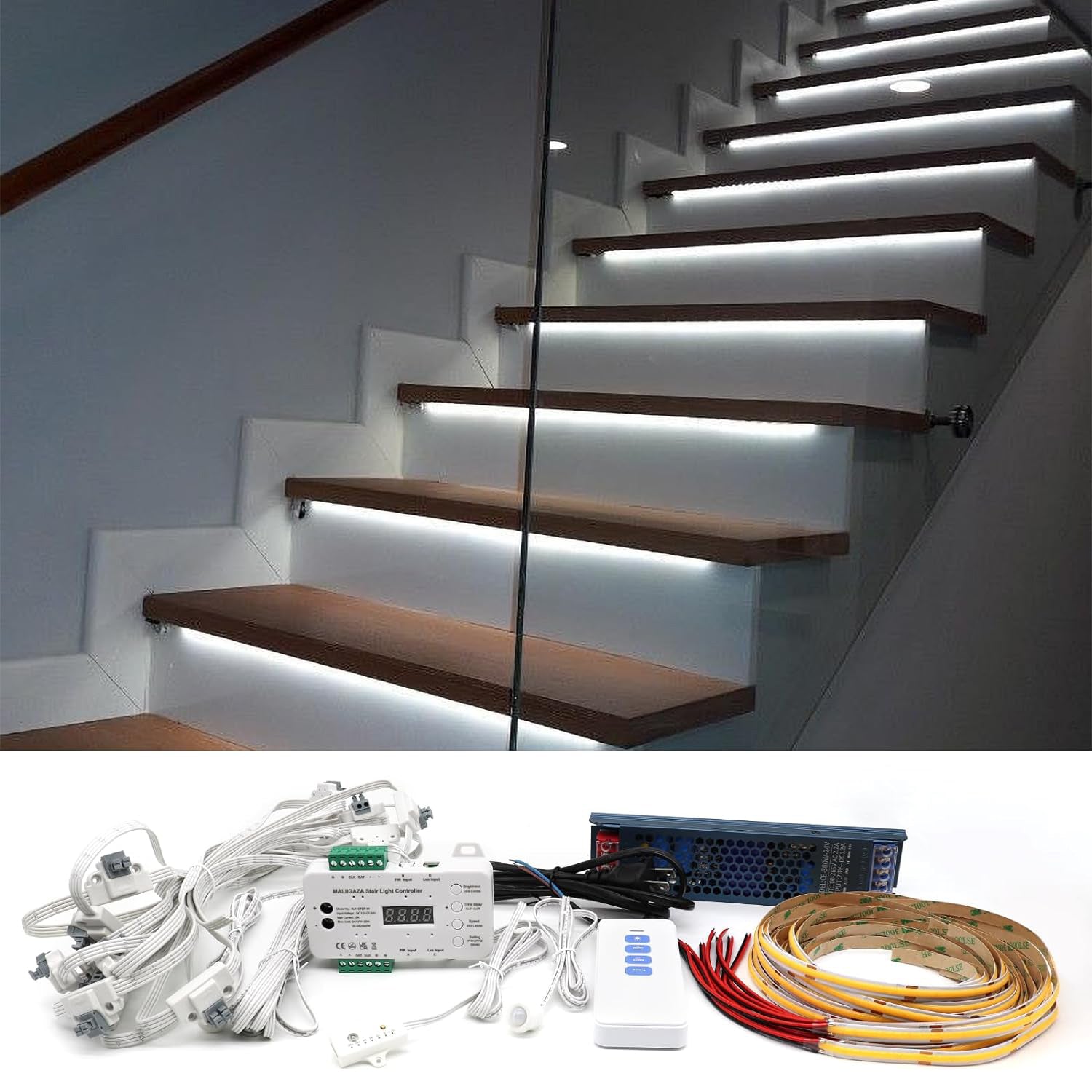
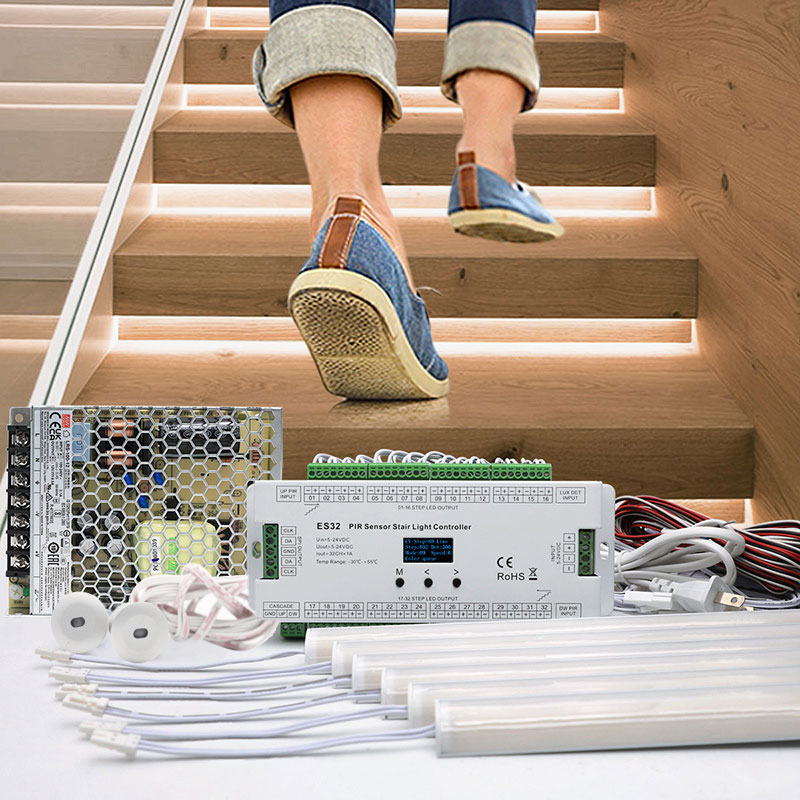
Motion sensor stair lights combine two main parts: the light fixture and the motion sensor. When the sensor detects movement—like someone walking up or down the stairs—it triggers the light to switch on. After a set time with no movement, the light automatically turns off.
This design is practical for several reasons. First, you don’t have to fumble for a switch in the dark, which is safer—especially at night or for kids and older adults. Second, the lights stay off most of the time, so you aren’t wasting electricity when nobody is using the stairs.
There are different types of motion sensors. The most common for stair lights is Passive Infrared (PIR), which senses the heat given off by people or animals. Other types, like microwave or ultrasonic sensors, are less common in residential stair lighting but sometimes used in commercial buildings. Most stair lights today use LED bulbs because they’re efficient and long-lasting.
How Motion Sensor Stair Lights Work
It’s helpful to know the basic process. When someone enters the sensor’s range, it sends a signal to the light. The light turns on, stays lit for a set period (often 30 seconds to a few minutes), then switches off if there’s no more movement.
Exclusive Deals
Limited-time Exclusive Deals. Check current discount on Amazon.
Check Price on Amazon As an Amazon Associate I earn from qualifying purchases.Some systems allow you to adjust the sensitivity (how easily the sensor triggers) and the duration the light stays on.
A simple example: You walk into a stairwell at night. The sensor detects you, and the light turns on. You climb the stairs, and as you leave the area, the light turns off after a short delay.
Key Factors That Affect Electricity Use
The electricity use of motion sensor stair lights depends on several variables. Not all systems are equal, and how you set up or use them can change your energy consumption.
1. Type Of Light Bulb
Most modern systems use LED bulbs, which are very efficient. An LED stair light might use 1 to 5 watts. Older systems with incandescent or halogen bulbs use much more—sometimes 20 to 60 watts per light.
2. Sensor Power Draw
The motion sensor itself uses a small amount of electricity, even when the light is off. This is usually low—often 0. 1 to 0. 5 watts—but it adds up over time, especially if you have many lights.
Exclusive Deals
Limited-time Exclusive Deals. Check current discount on Amazon.
Check Price on Amazon As an Amazon Associate I earn from qualifying purchases.3. Number Of Lights Installed
More lights mean higher total energy use. Some stairways use one or two, while others have a light on every step.
4. How Often The Lights Are Triggered
If your stairs are in a busy hallway, the lights will turn on more often and stay on longer. In a rarely used stairwell, they might be off most of the day.
5. Duration Settings
Many systems let you set how long the light stays on after movement is detected. A longer delay (say, 5 minutes) increases energy use compared to a short delay (30 seconds).
6. Ambient Light Sensor
Some motion sensor lights also check the background light. If it’s already bright, the light won’t turn on. This feature saves electricity during the daytime.
Typical Power Consumption: Real Numbers
Let’s look at a practical example. Suppose you have LED motion sensor stair lights rated at 3 watts each. The sensor uses 0.2 watts when the light is off.
- Number of lights: 8 (one per step)
- Average “on” time per use: 2 minutes
- Average uses per day: 20
Daily Energy Use Calculation:
- Lights: 3 watts x 8 lights = 24 watts
- Time on per day: 2 minutes x 20 = 40 minutes (0.67 hours)
- Light energy per day: 24 watts x 0.67 hours = 16.08 watt-hours
- Sensor standby: 0.2 watts x 8 sensors = 1.6 watts (always on)
- Sensor energy per day: 1.6 watts x 24 hours = 38.4 watt-hours
Total energy per day: 16.08 + 38.4 = 54.48 watt-hours
Total per month: 54.48 watt-hours x 30 = 1,634.4 watt-hours (or about 1.63 kWh)
How Much Does This Cost?
Electricity prices vary, but in the US, the average is about $0. 16 per kWh.
1.63 Kwh X $0.16 = $0.26 Per Month
So, running 8 LED motion sensor stair lights may cost only about 26 cents per month.
Comparison: Motion Sensor Vs. Always-on Stair Lights
How does this compare to leaving your stair lights on all the time? Here’s a side-by-side look:
| Setup | Watts (Total) | Hours On/Day | Daily Energy (Wh) | Monthly Cost ($) |
|---|---|---|---|---|
| Motion Sensor LED (8 lights) | 24 + 1.6 (sensor) | 0.67 (active) + 23.33 (standby) | 54.48 | 0.26 |
| Always-On LED (8 lights) | 24 | 24 | 576 | 2.76 |
| Always-On Incandescent (8 lights @ 40W) | 320 | 24 | 7,680 | 36.86 |
Insight: Using motion sensors saves a huge amount of electricity, especially if you’re switching from older bulbs. The cost difference is dramatic.
Motion Sensor Power: The Hidden Cost
Most people focus on the bulb’s wattage, but the sensor’s standby use is easy to forget. While small, it’s always present. If you use lots of sensor lights (not just on stairs, but all around your home), this standby use can add up.
For example, 20 sensor lights at 0. 2 watts each would use 96 watt-hours per day—about 2. 9 kWh per month, or around 46 cents at US rates. It’s not huge, but it’s not zero.
Non-obvious insight: In very low-use areas, a simple switch-controlled light may use less energy, since the sensor is always drawing power.
Types Of Motion Sensor Stair Lights And Their Efficiency
Let’s break down the main types you’ll find:
1. Integrated Led Motion Sensor Lights
These are “all-in-one” units with a built-in sensor and LED. They’re usually the most energy-efficient option. Power use is low, and the sensor is matched to the light.
2. Add-on Sensors (retrofit)
Sometimes, you add a motion sensor to an existing light fixture. The sensor may use a bit more electricity—sometimes up to 1 watt in standby. If paired with an old bulb, the total energy use can be much higher.
3. Battery-powered Motion Sensor Lights
These use AA or AAA batteries. They’re great where wiring is hard, but you’ll need to replace batteries. Most are low-power LEDs and last months on a set of batteries, but battery production and disposal have their own environmental impacts.
4. Smart Motion Sensor Stair Lights
Some systems connect to Wi-Fi or smart home hubs. These may use extra power for wireless communication, usually less than 1 watt, but it’s more than basic models. Features like remote control and scheduling add convenience but can affect overall energy use.
Energy Use In Different Settings
Home stairways: Most people use 4–12 motion sensor lights. Even with heavy use, total monthly energy use is usually under 3 kWh.
Apartment buildings: Shared stairwells with motion sensor lighting can save hundreds of dollars per year compared to always-on systems. Many buildings set lights to stay on for a few minutes after motion, balancing safety and savings.
Commercial spaces: Large buildings often use brighter lights and more sensitive sensors. The savings are still significant, but the power draw per unit is higher.
Led Vs. Other Bulbs: The Big Difference
Here’s a quick look at energy use for different bulb types in motion sensor stair lights:
| Bulb Type | Watts per Light | Estimated Life (Hours) | Annual Energy Use (8 lights, 40 min/day) |
|---|---|---|---|
| LED | 3 | 25,000 | 194 kWh |
| CFL | 9 | 8,000 | 583 kWh |
| Halogen | 20 | 2,000 | 1,294 kWh |
| Incandescent | 40 | 1,000 | 2,589 kWh |
LED bulbs are the clear winner for efficiency and lifespan.
How To Calculate Your Own Usage
To know exactly how much electricity your motion sensor stair lights use, you’ll need:
- The wattage of your lights (check the packaging or bulb).
- The wattage of your sensor (usually in the manual).
- The number of lights.
- The average time on per day.
- Electricity cost per kWh (from your bill).
Formula:
(Total watts ON x hours ON per day) + (Total sensor watts x 24) = Daily watt-hours
Divide by 1000 to get kWh. Multiply by your electricity rate for cost.
Example:
4 lights at 3W, sensor 0.2W each, 30 minutes ON per day:
(12W x 0. 5) + (0. 8W x 24) = 6 + 19. 2 = 25. 2 Wh/day = 0. 0252 kWh
Cost per month (at $0.16/kWh): 0.0252 x 30 x 0.16 = $0.12
Ways To Reduce Energy Use Even More
If you want to get the lowest possible electricity use from your motion sensor stair lights, try these tips:
- Choose the lowest wattage LED that still gives enough light for safety.
- Adjust the sensor delay—set the light to turn off as soon as you’re clear of the stairs.
- Use ambient light sensors to keep lights off during the day.
- Clean sensors and lenses regularly; dirt can make sensors less efficient, causing lights to stay on longer.
- Group lights with one sensor if possible; one sensor can trigger several lights, reducing total standby power.
- Use battery-powered options for rarely used stairways, so you’re not drawing standby power 24/7.
- Review and update old systems. Replacing halogen or incandescent lights with LEDs gives instant savings.
Common Mistakes That Waste Energy
1. Overly long delay times: Some people set lights to stay on for 5–10 minutes after motion. This wastes power, especially if the stairs are used often.
2. Using high-wattage bulbs: Even with a sensor, a 40W bulb uses much more electricity than a 3W LED.
3. Poor sensor placement: If the sensor doesn’t cover the whole stairway, the lights may turn on and off too often, using more energy and annoying users.
4. Ignoring ambient light: If your system doesn’t sense daylight, you might have lights turning on during the day.
5. Using smart lights everywhere: Smart features are great, but extra power is needed for Wi-Fi or Bluetooth. For simple stair lighting, basic models are more efficient.
Case Study: Real-world Savings
Small Apartment Building:
A building with three stairwells, each with 10 steps, used to keep 30 incandescent bulbs (40W each) on 24/7 for safety. Monthly cost:
- 1,200 watts x 24 hours x 30 days = 864 kWh/month
- At $0.16 per kWh = $138.24/month
After switching to 30 LED motion sensor lights (3W each, 0.2W standby), average ON time 2 hours/day (combined), cost:
- Lights: 90W x 2 hours = 180 Wh/day
- Sensors: 6W x 24 = 144 Wh/day
- Total daily: 324 Wh, monthly: 9.72 kWh
- Cost: 9.72 x $0.16 = $1.56/month
Result: Nearly $137 per month saved, plus bulbs last much longer.
Environmental Impact
Switching to motion sensor stair lights does more than just lower your bill. Less electricity use means fewer greenhouse gas emissions, especially if your power comes from fossil fuels. LEDs last years longer than older bulbs, so you throw away fewer bulbs. If you choose battery-powered models, consider using rechargeable batteries to reduce waste.
Non-obvious tip: Even if your home runs on clean energy, reducing demand lowers stress on the grid during peak times.

When Motion Sensor Stair Lights Might Not Be Best
While these lights save energy in most cases, there are exceptions:
- Very rarely used stairs: In an attic or basement, a manual switch may use even less power than a sensor, since the sensor draws power 24/7.
- Outdoor stairs in extreme weather: Sensors can sometimes malfunction or use more power in very cold or hot climates.
- When maximum control is needed: Some people prefer to decide exactly when lights are on or off.
Future Trends In Motion Sensor Lighting
Smart technology is making motion sensor stair lights even more efficient. Newer models use AI to learn your habits and adjust automatically. Some link to your phone or smart home system, so you can check energy use in real time.
Solar-powered options are appearing for outdoor stairs, using zero grid electricity.
The biggest gains, though, still come from using efficient LEDs and setting the right delay. As tech improves, expect even lower standby power and smarter sensors.
Frequently Asked Questions
How Much Electricity Does A Motion Sensor Use When The Light Is Off?
Most motion sensors use 0.1 to 0.5 watts in standby mode. For a single light, this is only a few cents per month. If you have many sensors throughout your home or building, it can add up.
Are Motion Sensor Stair Lights More Efficient Than Smart Bulbs?
Usually, yes. Basic motion sensor LED lights use less power than smart bulbs that stay connected to Wi-Fi. However, smart bulbs offer more features, such as remote control and color changes, which may be useful in some situations.
Can I Replace My Old Stair Lights With Motion Sensor Models Easily?
In most cases, yes. Many motion sensor LED stair lights are designed to fit standard fixtures. Some require wiring, while others are battery-powered and mount with adhesive or screws. Always check your wiring and follow safety instructions.
Do Motion Sensor Stair Lights Need To Be Left On All Night?
No. The main benefit is that they turn on only when movement is detected. You don’t need to leave them on overnight, which saves electricity and extends bulb life.
Are There Any Downsides To Using Motion Sensor Stair Lights?
There are a few. Sensors use a small amount of power even when the light is off. In rare cases, pets or air movement can trigger lights unnecessarily. For very low-traffic areas, a regular switch may use even less energy.
For more technical details on motion sensor technology and energy efficiency, see the Wikipedia Motion Detector page.
Switching to motion sensor stair lights is one of the easiest ways to save energy, improve safety, and reduce maintenance. The actual electricity use is very low—especially with modern LEDs. Set them up thoughtfully, and you’ll enjoy bright, safe stairs and a lower power bill for years to come.