When you think about home safety, smoke detectors are one of the first things that come to mind. For many people, the choice comes down to hardwired smoke detectors or battery-powered smoke detectors. Both are designed to protect lives, but they work in different ways. Picking the right type could make a real difference during a fire emergency. Yet, for many homeowners and renters, the differences are not clear. This article will walk you through how each type works, their strengths and weaknesses, and what really matters for your safety. By the end, you’ll know which smoke detector fits your needs best—and avoid common mistakes that put families at risk.
Exclusive Deals
Limited-time Exclusive Deals. Check current discount on Amazon.
Check Price on Amazon As an Amazon Associate I earn from qualifying purchases.How Smoke Detectors Work
A smoke detector’s main job is simple: alert people when smoke is present, often before flames appear. Most modern smoke detectors use one of two technologies—ionization or photoelectric sensors. Ionization detectors respond faster to flaming fires, while photoelectric models are better for slow, smoldering fires. Some detectors combine both for wider coverage.
No matter the sensor, all smoke detectors do the same thing: they sense smoke, sound a loud alarm, and (in some cases) communicate with other detectors in the building. The main difference between hardwired and battery models is how they get power and how they connect with each other.
Hardwired Smoke Detectors Explained
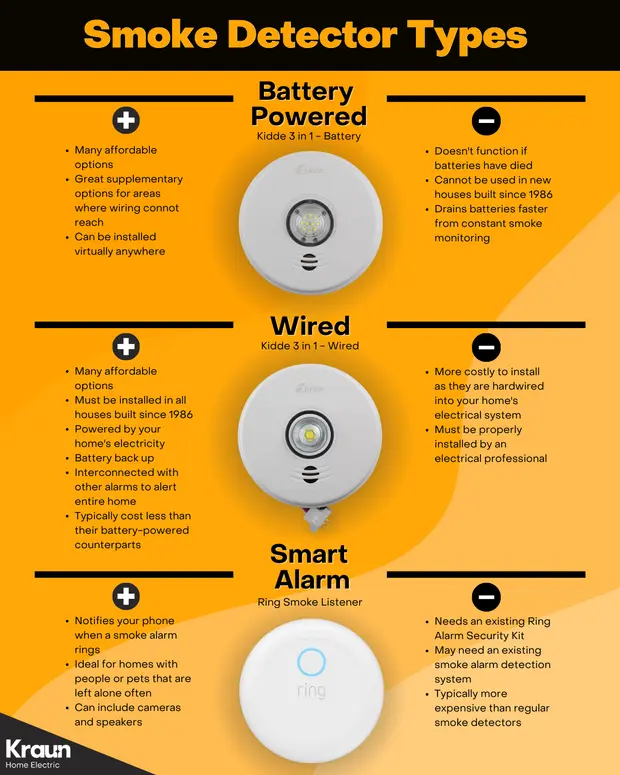
Hardwired smoke detectors are connected directly to your home’s electrical wiring. They usually have a backup battery in case the power goes out. Most building codes in the US require hardwired detectors in new construction or major remodels.
Key features of hardwired detectors:
Exclusive Deals
Limited-time Exclusive Deals. Check current discount on Amazon.
Check Price on Amazon As an Amazon Associate I earn from qualifying purchases.- Constant power supply (from your home’s electricity)
- Backup battery for outages
- Can be interconnected: When one alarm sounds, all alarms go off
- Installation is more complex and may require an electrician
Example: In a two-story home, if smoke triggers the detector in the basement, all hardwired units will sound together. This gives everyone in the house more time to escape.

Battery-powered Smoke Detectors Explained
Battery smoke detectors run only on batteries—either replaceable (like AA or 9V) or sealed long-life batteries that can last up to 10 years.
Key features of battery detectors:
- Fully wireless—easy to install anywhere
- No need for electrical wiring
- Some newer models offer wireless interconnection through radio frequency
- Batteries must be checked and replaced regularly
Example: Renters often choose battery-powered units because they don’t need professional installation. You can mount them with screws or even adhesive tape.
Comparing Hardwired And Battery Smoke Detectors
To understand which type might be better, let’s compare the most important factors side by side.
Exclusive Deals
Limited-time Exclusive Deals. Check current discount on Amazon.
Check Price on Amazon As an Amazon Associate I earn from qualifying purchases.| Feature | Hardwired Smoke Detectors | Battery Smoke Detectors |
|---|---|---|
| Power Source | Home electricity + backup battery | Batteries only |
| Installation | Professional (usually) | DIY, easy |
| Interconnection | Standard (wired together) | Optional (wireless or none) |
| Maintenance | Test regularly, replace backup battery yearly | Test regularly, replace battery as needed |
| Reliability | Very reliable if installed and maintained | Depends on battery status |
| Cost | Higher (product + installation) | Lower (product only) |
Safety: Which Detector Is More Reliable?
The main reason smoke detectors save lives is that they wake people up in time to escape. So, reliability is the most important factor.
Power Supply
Hardwired detectors have two power sources: the house’s electricity and a backup battery. If the power goes out, the battery keeps the alarm working. This double system makes them less likely to fail.
Battery-only detectors rely on the battery 100% of the time. If the battery is dead, the alarm will not work at all. Many fire deaths happen in homes where the smoke alarm battery was missing or dead.
Insight: People often forget to replace batteries. In one study, about 24% of smoke alarm failures were due to dead or missing batteries.
Interconnection
Hardwired units are usually interconnected. If smoke is detected in one room, all alarms in the house will sound. This is especially important in large or multi-story homes.
Battery units are usually not interconnected, but some newer models use wireless signals to connect. However, these are less common and can be more expensive.
Non-obvious fact: Many people don’t realize that hearing an alarm far from the bedroom may not wake them up in time. Interconnected alarms can make a big difference for safety.
Maintenance And Testing
Both types need regular testing. Hardwired detectors need their backup batteries checked once a year, while battery units need their main batteries checked more often (every 6 months is best).
Installation: What’s Involved?
Hardwired Installation
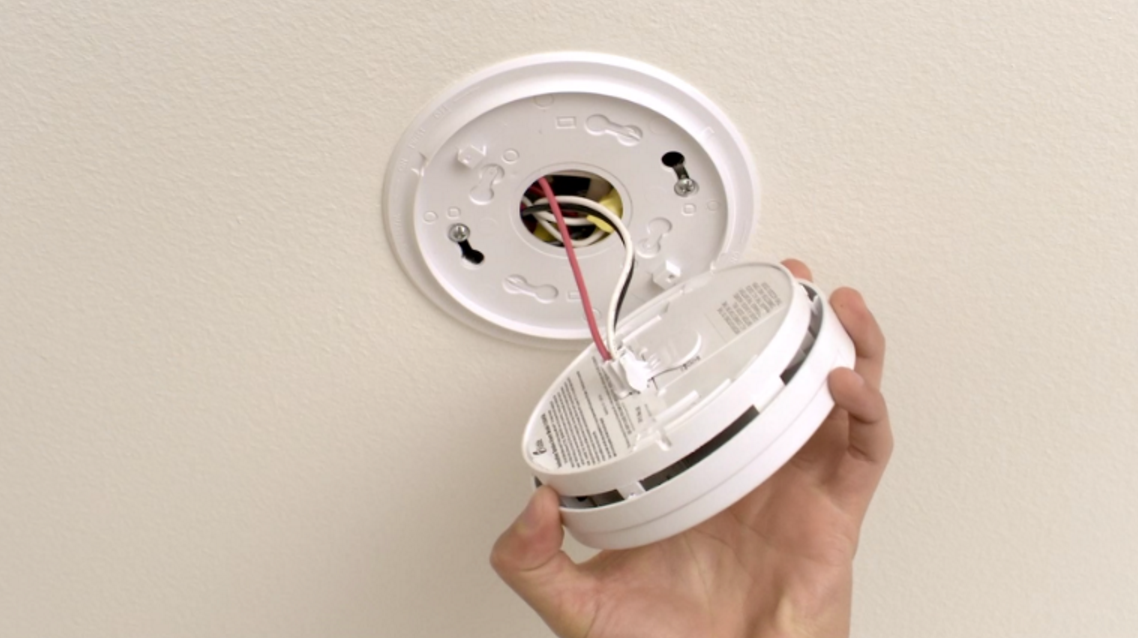
Installing a hardwired smoke detector usually means:
- Turning off home power at the breaker
- Connecting wires from the detector to the house wiring
- Securing the unit to the ceiling or wall
- Testing the alarm and backup battery
This is not a simple DIY job unless you have electrical experience. Most people hire an electrician, which adds to the cost.
Battery Detector Installation
Battery-powered models are much easier:
- Insert batteries
- Mount the unit using screws or adhesive
- Test the alarm
No special skills are needed, and you can install them in minutes.
Tip: Install smoke alarms in every bedroom, outside each sleeping area, and on every level of the home—including the basement.
Cost Differences
The cost of smoke detectors depends on type, features, and installation.
| Type | Typical Unit Cost | Installation Cost | Total (per unit) |
|---|---|---|---|
| Hardwired | $20–$60 | $50–$150 (electrician) | $70–$210 |
| Battery | $10–$40 | $0 (DIY) | $10–$40 |
Hardwired detectors have a higher upfront cost, but their reliability may be worth it, especially for families or large homes.
Legal Requirements And Building Codes
In the United States, building codes often require hardwired smoke detectors in new homes or when remodeling. For example, the National Fire Protection Association (NFPA) recommends interconnected smoke alarms in every sleeping room, outside each sleeping area, and on every level.
Older homes may only have battery-powered detectors. Renters can use battery units if hardwired systems are not in place, but landlords must provide working smoke alarms by law in most states.
Insight: Not following local codes can result in fines or insurance issues. Always check your local laws before choosing a detector type.
Pros And Cons: Hardwired Vs Battery Smoke Detectors
Let’s look at the main advantages and disadvantages of each type.
Hardwired Smoke Detectors
Pros:
- Very reliable due to dual power sources
- Interconnected alarms improve safety
- Long lifespan (10+ years with proper care)
- Meets most modern building codes
Cons:
- Expensive installation
- Needs an electrician
- Not easy to move or add extra units
- Backup batteries still need yearly checks
Battery Smoke Detectors
Pros:
- Low cost and easy to buy anywhere
- Simple installation
- Portable and flexible—move them as needed
- Good for renters or older homes
Cons:
- Easy to forget battery replacement
- No interconnection (unless you buy special models)
- Batteries can be removed or die without warning
- Some “10-year” batteries may fail early in hot or humid conditions
User Scenarios: Which Detector Fits Your Situation?
For Homeowners
If you own your home and plan to stay for years, hardwired smoke detectors are the best investment. They offer the highest level of protection, especially for families or large houses. If you’re renovating, installing hardwired interconnected detectors is often required by code.
For Renters
Renters usually cannot change wiring, so battery-powered detectors are the practical choice. Choose models with a sealed 10-year battery for less maintenance, and place them in every sleeping area. Ask your landlord about existing detectors to avoid overlap or gaps.
For Older Homes
Older houses may not have wired systems. You can add battery units quickly, but if you’re upgrading your electrical system, consider switching to hardwired for long-term safety.
For Large Or Multi-story Homes
Interconnected alarms are crucial in big homes. Hardwired systems make this easy, but newer wireless battery models can also connect alarms together. This feature may save lives in homes where bedrooms are far apart.
Special Features To Consider
Modern smoke detectors offer more than basic alarms. Here are some features to look for:
- Combination units: Some detectors also sense carbon monoxide (CO). This is vital if you use gas appliances.
- Voice alerts: Instead of just a loud beep, some alarms speak, saying “Fire! Fire!” This can help wake children.
- Smart detectors: These connect to your phone and send alerts if smoke is detected—even when you’re away. Examples include Nest Protect and First Alert Onelink.
- Wireless interconnection: Some battery-powered models can “talk” to each other without wires.
- Hush button: Lets you silence nuisance alarms (like from burnt toast) without removing the battery.
- End-of-life warning: Alerts you when the unit needs to be replaced, not just the battery.
Non-obvious insight: Some smart alarms can test themselves and alert you if there’s a problem—reducing the chance of human error.
Common Mistakes People Make
Even the best smoke detector is useless if not maintained or installed correctly. Here are mistakes to avoid:
- Not testing alarms regularly: Press the test button monthly.
- Ignoring battery warnings: Change batteries right away when you hear a “chirp.”
- Installing in the wrong place: Avoid placing alarms near kitchens or bathrooms, where steam or cooking smoke can cause false alarms.
- Not having enough alarms: The NFPA recommends one in each bedroom, outside bedrooms, and on every floor.
- Disabling alarms: Never remove batteries to stop nuisance alarms. Use the hush button instead.
- Not replacing old detectors: Most smoke detectors last about 10 years. Replace the whole unit, not just the battery.
Are Hardwired Smoke Detectors Worth The Extra Cost?
The main advantage of hardwired smoke detectors is reliability. They are less likely to fail due to dead batteries and more likely to wake everyone in the home if a fire starts. The extra cost pays for a higher level of safety, especially in larger homes or for families.
However, battery-powered units are still much better than nothing, especially if you test them regularly and never ignore battery warnings.
Real-world Data And Studies
- According to the National Fire Protection Association, homes with working smoke alarms reduce the risk of fire death by about 50%.
- Three out of five home fire deaths happen in homes with no smoke alarms or alarms that do not work.
- In one US study, hardwired smoke alarms were present in 53% of homes, but only 36% of homes had interconnected alarms.
- Battery failure was the leading reason for smoke alarm failures in fires.
Practical tip: No matter which type you choose, regular testing and maintenance are essential for your safety.
How To Choose: Decision Guide
Here’s a quick guide to help you decide.
| Situation | Best Detector Type | Why |
|---|---|---|
| New home or remodel | Hardwired, interconnected | Meets code, best protection |
| Renter or apartment | Battery-powered (10-year) | Easy install, no wiring needed |
| Large/multi-story home | Hardwired or wireless interconnected | All alarms sound together |
| Old home, no wiring | Battery-powered | Quick, affordable safety |
| Tech lover/travel a lot | Smart alarms | Remote alerts, auto-testing |
Final Thoughts
Choosing between hardwired smoke detectors and battery-powered smoke detectors is not just about cost or convenience. It’s about what will protect your loved ones best if a fire starts while you sleep. Hardwired alarms, with their dual power and interconnection, offer the highest level of safety for most homes—especially if you can afford professional installation. But battery-powered models are still lifesavers and are perfect for renters, old houses, or small spaces. The most important thing is to have working smoke detectors on every floor and in every sleeping area, and to check them regularly.
Don’t wait for your insurance company or landlord to push you. Take charge of your family’s fire safety today. For more details on fire safety standards, see the NFPA’s smoke alarm safety page.
Frequently Asked Questions
What Is The Lifespan Of A Smoke Detector?
Most smoke detectors last 8–10 years. After that, the sensors may become less sensitive. Always replace the whole unit, not just the battery, when it reaches its expiration date.
How Often Should I Test My Smoke Detector?
Test your smoke detector once a month by pressing the test button until the alarm sounds. Regular testing ensures the unit works and the battery is still good.
Can I Mix Hardwired And Battery Smoke Detectors In The Same Home?
Yes, you can use both types in the same home. In fact, it’s common in older homes to add battery units where hardwiring is not possible. However, only hardwired or wireless interconnected models will sound together.
Do Smoke Detectors Need To Be Installed On The Ceiling?
Smoke rises, so the best place for a smoke detector is on the ceiling, or high on a wall (within 12 inches of the ceiling). Keep alarms at least 10 feet from stoves or showers to avoid false alarms.
What Should I Do If My Smoke Alarm Keeps Chirping?
A chirping alarm usually means the battery is low or the unit is near the end of its life. Replace the battery first. If it keeps chirping, replace the entire smoke detector.
With the right smoke detector—and regular maintenance—you can keep your home and family safe from one of the most common household dangers.