Choosing the best smoke detector for your home can feel confusing. There are many types, features, and prices. The right choice can protect your family from fire and save lives. But with so many options, it’s easy to make mistakes or miss important details.
Exclusive Deals
Limited-time Exclusive Deals. Check current discount on Amazon.
Check Price on Amazon As an Amazon Associate I earn from qualifying purchases.This guide will help you understand the main differences, what matters most, and how to avoid common errors. You’ll learn exactly what to look for and how to compare smoke detectors. By the end, you’ll feel confident choosing the best smoke detector for your home.
Why Smoke Detectors Matter
Every year, thousands of people die in home fires. Most deaths happen at night while people sleep. Smoke detectors warn you early, giving you time to escape. According to the National Fire Protection Association (NFPA), homes without working smoke detectors have a much higher risk of fatal fires. Data shows that having smoke detectors can cut your risk in half.
But not all smoke detectors are equal. The wrong type or a poor-quality device may fail to warn you. Some detectors may miss certain fires, while others have annoying false alarms. Choosing wisely can make a big difference.
Types Of Smoke Detectors
There are two main types: ionization and photoelectric. Each works in a different way and has strengths and weaknesses.
Exclusive Deals
Limited-time Exclusive Deals. Check current discount on Amazon.
Check Price on Amazon As an Amazon Associate I earn from qualifying purchases.| Type | Best For | Weakness | Price Range |
|---|---|---|---|
| Ionization | Fast, flaming fires | Can miss slow, smoldering fires | $10–$25 |
| Photoelectric | Slow, smoldering fires | Can miss fast, flaming fires | $15–$40 |
| Dual Sensor | Both fire types | Usually higher price | $30–$60 |
Ionization Smoke Detectors
Ionization detectors use a small amount of radioactive material to sense smoke particles. They respond quickly to fast-burning fires, like those started by paper or grease. These fires produce tiny particles that ionization sensors detect well.
However, ionization detectors are less sensitive to slow-burning fires, such as those caused by a cigarette on a couch. These fires create larger smoke particles, which ionization sensors may not notice right away.
Photoelectric Smoke Detectors
Photoelectric detectors use a light sensor. When smoke enters, it scatters the light beam, triggering the alarm. These detectors respond best to smoldering fires, which often produce thick smoke before flames start.
Photoelectric detectors are less likely to have false alarms from cooking, but they may be slower to react to fast, flaming fires.
Dual Sensor Smoke Detectors
Dual sensor models combine both ionization and photoelectric technology. This gives you coverage for both fast and slow fires. Dual sensor detectors are recommended for most homes, especially if you want maximum safety.
Exclusive Deals
Limited-time Exclusive Deals. Check current discount on Amazon.
Check Price on Amazon As an Amazon Associate I earn from qualifying purchases.Non-obvious insight: Many people don’t know that no single sensor is perfect for all fire types. That’s why experts often suggest dual sensor smoke detectors.
Power Source Options
Smoke detectors need power to work. There are three main ways they get power:
| Power Source | Advantages | Disadvantages | Maintenance |
|---|---|---|---|
| Battery-powered | Easy to install, portable | Needs battery changes | Check every 6 months |
| Hardwired | Reliable, connects to home power | Professional installation needed | Battery backup check yearly |
| Plug-in | Simple for some models | Needs outlet, limited placement | Check plug connection |
Battery-powered Detectors
These are simple to install and can be placed almost anywhere. Most use 9-volt or AA batteries. Newer models use sealed lithium batteries, which last up to 10 years. Battery-powered detectors are good for apartments or places without wiring.
One risk: if the battery dies, the detector will not work. Many fires happen when detectors have dead batteries.
Hardwired Detectors
Hardwired detectors are connected to your home’s electrical system. They usually have a backup battery in case of power failure. Hardwired models are very reliable and often required in new homes.
Installation is more complex and may need an electrician. These models can also be interconnected, so if one alarm sounds, all alarms in the house go off.
Plug-in Detectors
Some smoke detectors plug into a wall outlet. These are less common and usually for special use, like carbon monoxide detectors. Placement is limited because they must be near an outlet.
Non-obvious insight: Hardwired detectors with battery backup give extra safety. If your home loses power during a storm, the backup battery keeps the detector working.
Placement: Where Should Smoke Detectors Go?
Placement is as important as the type of detector. If you put detectors in the wrong spots, they may not work well.
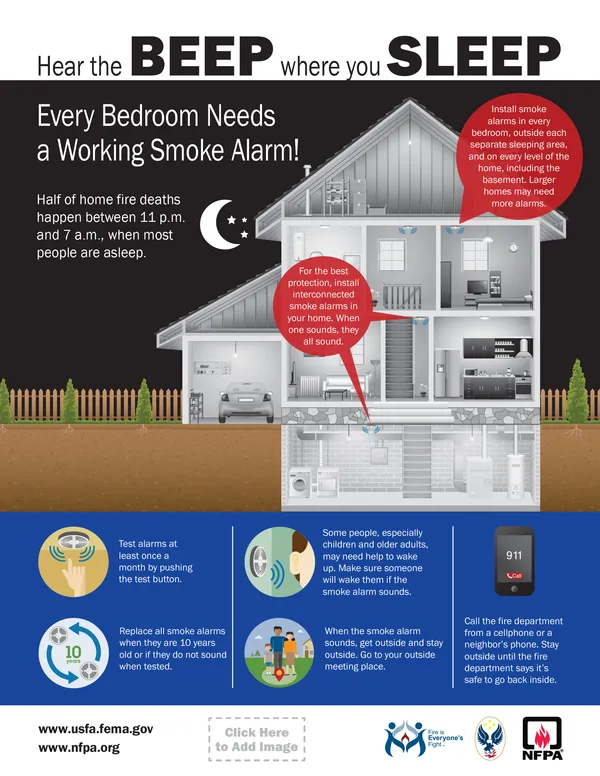
- Bedrooms: Install a detector in every sleeping area.
- Hallways: Place detectors outside each bedroom, especially if rooms are separated by doors.
- Living Areas: Put detectors in living rooms, family rooms, and basements.
- Kitchen: Be careful. Kitchen detectors often cause false alarms. Place at least 10 feet away from cooking appliances.
- Garage: Install a detector if your garage is attached to your home.
- Stairways: Fires can spread quickly up stairs, so detectors here can help warn early.
The NFPA recommends one detector per level, including basements and attics. Test placement by imagining where smoke would go if a fire started.
Tip: If your home has multiple levels, interconnected detectors are best. They alert everyone, even if the fire starts far from bedrooms.
Key Features To Consider
Smoke detectors now offer many features. Some are basic, others are advanced. Here are the main features to compare:
Interconnectivity
This means all detectors in the home are linked. If one senses smoke, all alarms sound. This is important for larger homes, homes with multiple floors, or families with children.
Silence Button
Also called a “hush” or “pause” feature. It lets you silence the alarm temporarily during false alarms, like cooking smoke. Useful for kitchens and near bathrooms.
Battery Life
Modern detectors may have sealed batteries that last 10 years. Older models need battery changes every 6–12 months. Check battery life before buying.
Smart Features
Some detectors connect to your phone. They send alerts if smoke is detected, even when you’re away. Smart detectors can also monitor battery status and offer voice alerts.
Carbon Monoxide Detection
Some smoke detectors also sense carbon monoxide (CO), a deadly gas. Dual smoke/CO detectors are good for homes with gas appliances or attached garages.
Voice Alerts
Instead of just a siren, some detectors speak messages like “Fire detected in kitchen. ” This can help children or people with hearing problems.
Escape Light
A few detectors have a built-in light that comes on during an alarm. This helps you see through smoke and find exits.
Sensitivity Adjustment
Some advanced models let you adjust how sensitive the detector is. This can reduce false alarms in kitchens or bathrooms.
Practical insight: Smart detectors are useful if you travel or leave home often. They can alert your phone, so you can act quickly—even if you’re not home.
Comparing Popular Smoke Detector Brands
There are several trusted brands in the US market. Here’s a comparison of three popular brands:
| Brand | Sensor Type | Features | Price Range | Warranty |
|---|---|---|---|---|
| First Alert | Ionization, photoelectric, dual | Interconnectivity, CO detection | $10–$60 | 5–10 years |
| Kidde | Ionization, photoelectric, dual | Battery, hardwired, smart features | $12–$70 | 5–10 years |
| Nest Protect | Photoelectric | Smart, voice, CO detection, app | $100–$130 | 2 years |
Experience-based tip: Don’t just look at price. Check warranty length, customer reviews, and ease of installation. Some brands offer better support and longer warranties.
How To Install Smoke Detectors
Correct installation is key. Even the best detector won’t help if installed wrong.
- Read the instructions: Each model has specific requirements.
- Mount on ceiling: Place detectors at least 4 inches away from walls. If mounting on a wall, place 4–12 inches from the ceiling.
- Avoid corners: Smoke may not reach corners quickly.
- Test after installation: Press the test button to make sure the alarm works.
- Interconnect if possible: Link detectors so all sound together.
- Replace old detectors: Detectors older than 10 years should be replaced.
If you’re not comfortable with hardwired installation, hire a professional. Battery-powered models are easier for most people.
Maintenance: Keeping Detectors Working
Smoke detectors need regular care. Neglect is a common mistake.
- Test monthly: Press the test button to check the alarm.
- Change batteries: Replace batteries every 6–12 months, unless you have a sealed battery model.
- Clean detectors: Dust and dirt can block sensors. Use a vacuum or soft cloth.
- Replace after 10 years: Sensors degrade over time.
- Check for recalls: Rarely, detectors may be recalled due to defects. Check the manufacturer’s website.
Non-obvious insight: Even if a detector seems to work, old sensors may not detect smoke well. Always replace after 10 years.
Common Mistakes When Choosing Smoke Detectors
Many buyers make simple errors. Avoid these to keep your home safe.
- Choosing only one detector: One detector is not enough for most homes.
- Ignoring sensor type: Don’t buy only ionization or only photoelectric. Fires are unpredictable.
- Not checking placement: A detector in the wrong spot can miss smoke.
- Skipping maintenance: Dead batteries or dirty sensors make detectors useless.
- Buying cheap models only: Low price can mean poor quality or short life.
- Ignoring special needs: If you have elderly family or children, consider voice alerts or escape lights.
- Not checking local codes: Some areas require specific types or placement.
Confident guidance: Always use multiple detectors, consider dual sensor models, and check placement carefully.
How Many Smoke Detectors Do You Need?
The number depends on your home’s size and layout.
- Small apartments: At least one per bedroom and one in the hallway.
- Single-family homes: One per bedroom, hallway, living room, basement, and each floor.
- Large homes: Use interconnected detectors for best coverage.
Example: A two-story home with three bedrooms should have:
- One detector in each bedroom (3)
- One in upstairs hallway (1)
- One in downstairs living room (1)
- One in basement (1)
- One in garage (if attached) (1)
Total: 7 Detectors
Tip: More detectors mean better safety. Don’t just meet the minimum—exceed it if possible.
Price Vs. Value: What Should You Spend?
Prices range from $10 to over $100. You don’t need the most expensive model, but avoid the cheapest if possible.
- Basic models: $10–$25, usually battery-powered, single sensor.
- Mid-range: $30–$60, dual sensor, interconnectivity, or CO detection.
- Premium: $100–$130, smart features, phone alerts, voice, advanced sensors.
Value factors:
- Reliability: Does the alarm work every time?
- Battery life: Will you need to change batteries often?
- Features: Do you need smart alerts or just basic warning?
- Warranty: Longer warranty means more trust in product.
Practical advisor tip: Spending $30–$60 per detector is reasonable for most homes. Only buy premium models if you want extra features like phone alerts.
Smart Smoke Detectors: Are They Worth It?
Smart detectors connect to Wi-Fi and offer phone alerts, app controls, and more. Nest Protect is a popular example.
Benefits:
- Alerts when you’re away from home
- Monitors battery life and status
- Offers voice messages and location alerts
Drawbacks:
- Higher price
- Needs Wi-Fi
- May require smartphone setup
Example: If you travel often or have a large home, smart detectors can give peace of mind. For small homes or apartments, basic models may be enough.
Smoke Detectors And Carbon Monoxide
Many fires produce both smoke and carbon monoxide (CO). CO is deadly and has no smell. Detectors with CO sensors are best for homes with:
- Gas stoves
- Gas furnaces
- Fireplaces
- Attached garages
Non-obvious insight: Even electric homes can have CO risk from attached garages or backup generators.
Local Building Codes And Regulations
Check your local codes before buying. Some cities require hardwired detectors, dual sensor models, or CO detection. If you rent, your landlord must provide working detectors.
Tip: Visit your city’s website or ask your fire department for details.
Where To Buy Smoke Detectors
You can buy smoke detectors at hardware stores, big box retailers, or online. Look for trusted brands and check reviews. Always buy from a reliable source.
For more safety tips, check the National Fire Protection Association.
Frequently Asked Questions
What Is The Difference Between Ionization And Photoelectric Smoke Detectors?
Ionization detectors react quickly to fast, flaming fires. Photoelectric detectors respond faster to slow, smoldering fires. Each type works best for different fire types, so using both is safest.
How Often Should I Replace My Smoke Detector?
Replace all smoke detectors every 10 years, even if they seem to work. Sensors degrade over time and may not detect smoke properly.
Can I Install A Smoke Detector Myself?
Yes, most battery-powered detectors are easy to install. Hardwired models may need an electrician, especially for interconnectivity.
How Do I Stop False Alarms From Cooking?
Place the detector at least 10 feet from cooking appliances. Choose photoelectric detectors for kitchens, as they are less sensitive to small particles from cooking.
Do I Need A Smoke Detector With Carbon Monoxide Detection?
If your home has gas appliances, a fireplace, or an attached garage, dual smoke/CO detectors are best. Even all-electric homes can benefit if there’s a CO risk.
Making a smart choice about smoke detectors is simple when you know what matters. Focus on sensor type, power source, placement, and key features. Avoid common mistakes by using multiple detectors, checking local codes, and maintaining them regularly. The right smoke detector will keep your family safe, giving you peace of mind every day.