
Blink Outdoor wins for battery life; Arlo Essential wins for video quality and smart features.
I’ve tested both systems and written this guide to help you choose between Blink Outdoor vs Arlo Essential. I’ll break down design, video, power, storage, smart home integration, pricing, and real-world pros and cons so you can pick the camera that fits your needs. Read on for clear comparisons, hands-on tips, and practical advice based on real use.
Design, build, and weather resistance
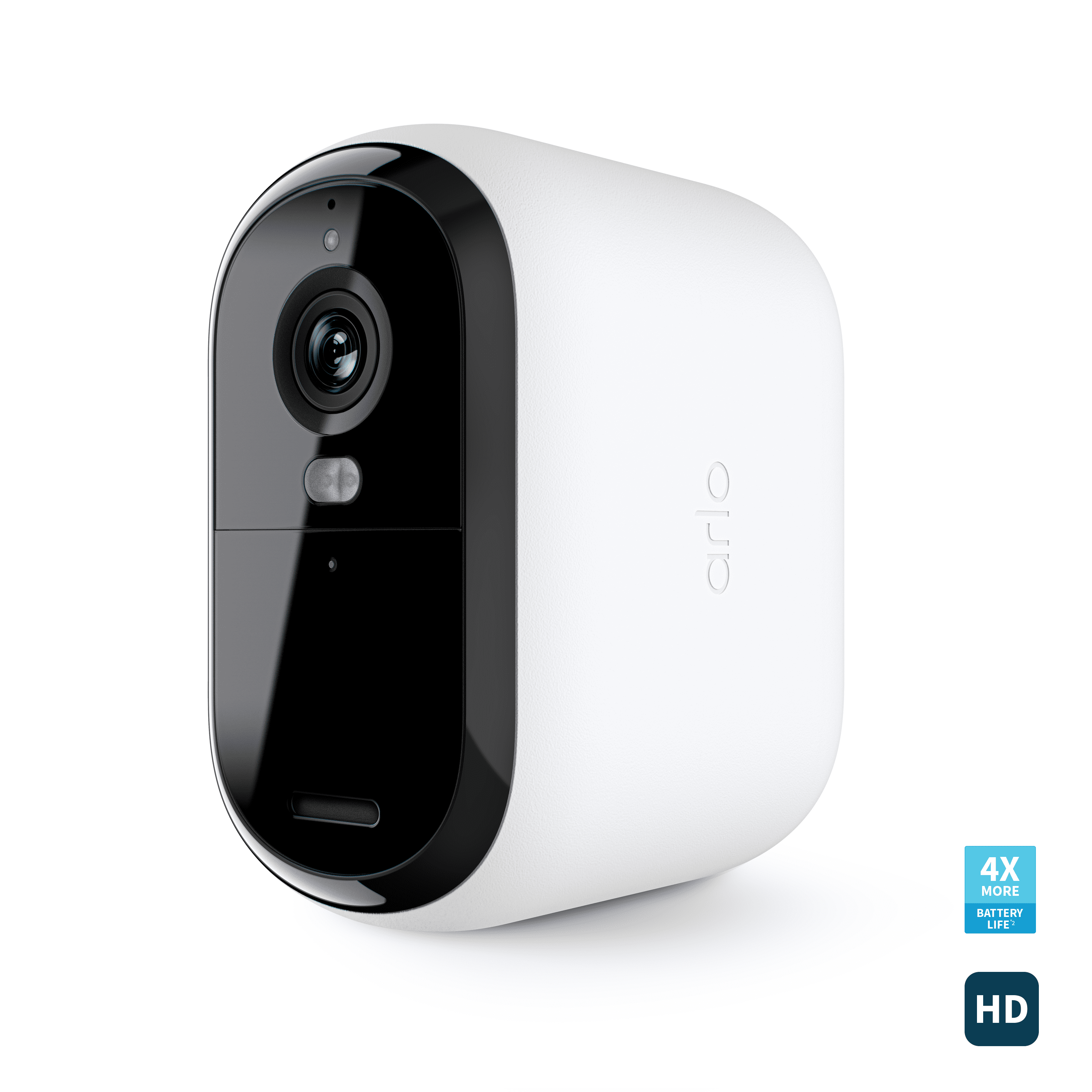
Both Blink Outdoor vs Arlo Essential are built for the outdoors and focus on simple installs. Blink Outdoor is compact and light. Its plastic body and magnetic mount make it easy to move and aim.
Arlo Essential feels slightly more premium. It often includes a built-in spotlight or siren depending on model. The mounts are sturdy and the housing feels more solid in windy or exposed spots.
Common design differences
- Blink Outdoor favors minimalism and portability.
- Arlo Essential favors extra features built into the camera, like lights and speakers.
- Both are weather resistant and handle rain and heat in normal conditions, but placement under eaves still helps.

Video quality, night vision, and motion detection
Video is the heart of the Blink Outdoor vs Arlo Essential debate. Both record at 1080p, but Arlo Essential tends to capture richer color and dynamic range. Arlo’s integrated spotlight gives true color night vision in many cases, while Blink relies on infrared night vision that is clearer in black-and-white.
Motion detection accuracy differs too. Arlo Essential uses more advanced motion filtering and often reduces false alerts for branches or cars. Blink Outdoor can be tuned with sensitivity settings but will sometimes produce more false positives in high-traffic areas.
What you’ll notice day to day
- Blink Outdoor provides reliable 1080p video for general monitoring.
- Arlo Essential shows better detail in high-contrast scenes and at night with its spotlight.
- For catching faces or license plates at distance, Arlo Essential usually performs better.
Power, battery life, and connectivity
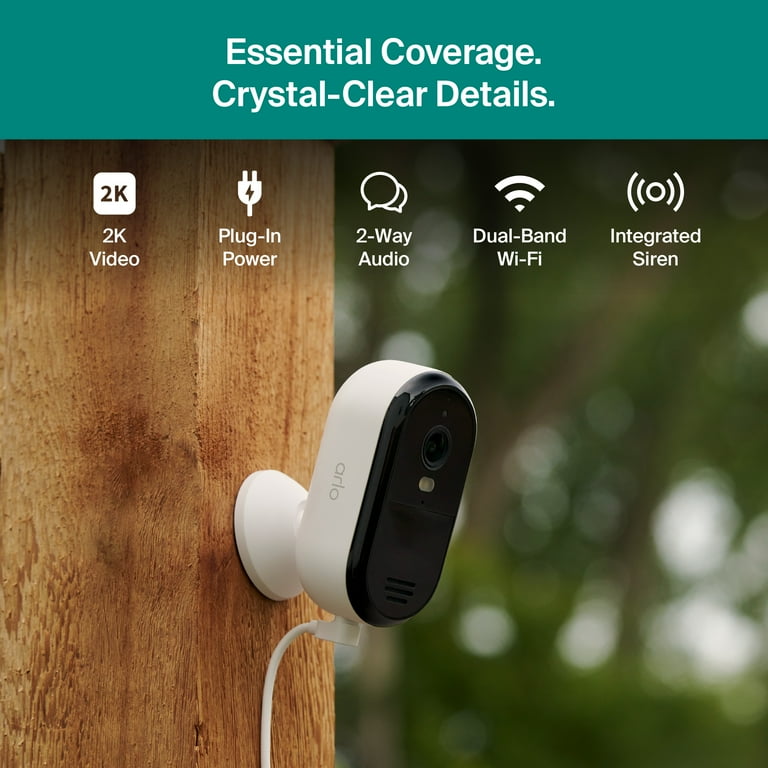
Power setup is a major deciding factor in Blink Outdoor vs Arlo Essential. Blink Outdoor uses replaceable AA lithium batteries that commonly last months to over a year in typical use. That long battery life is a major convenience for low-maintenance setups.
Arlo Essential uses a rechargeable battery pack or can be wired in some versions. Rechargeable batteries usually need charging every few weeks to a few months depending on activity and settings. If you want the longest time between battery changes, Blink often wins.
Connectivity tips
- Both require reliable Wi‑Fi. Place cameras where signal is strong.
- Blink Outdoor is often forgiving on weak networks, but both perform best on 2.4 GHz.
- Consider a Wi‑Fi extender or mesh node if you have dropouts near camera locations.
Storage, subscriptions, and privacy
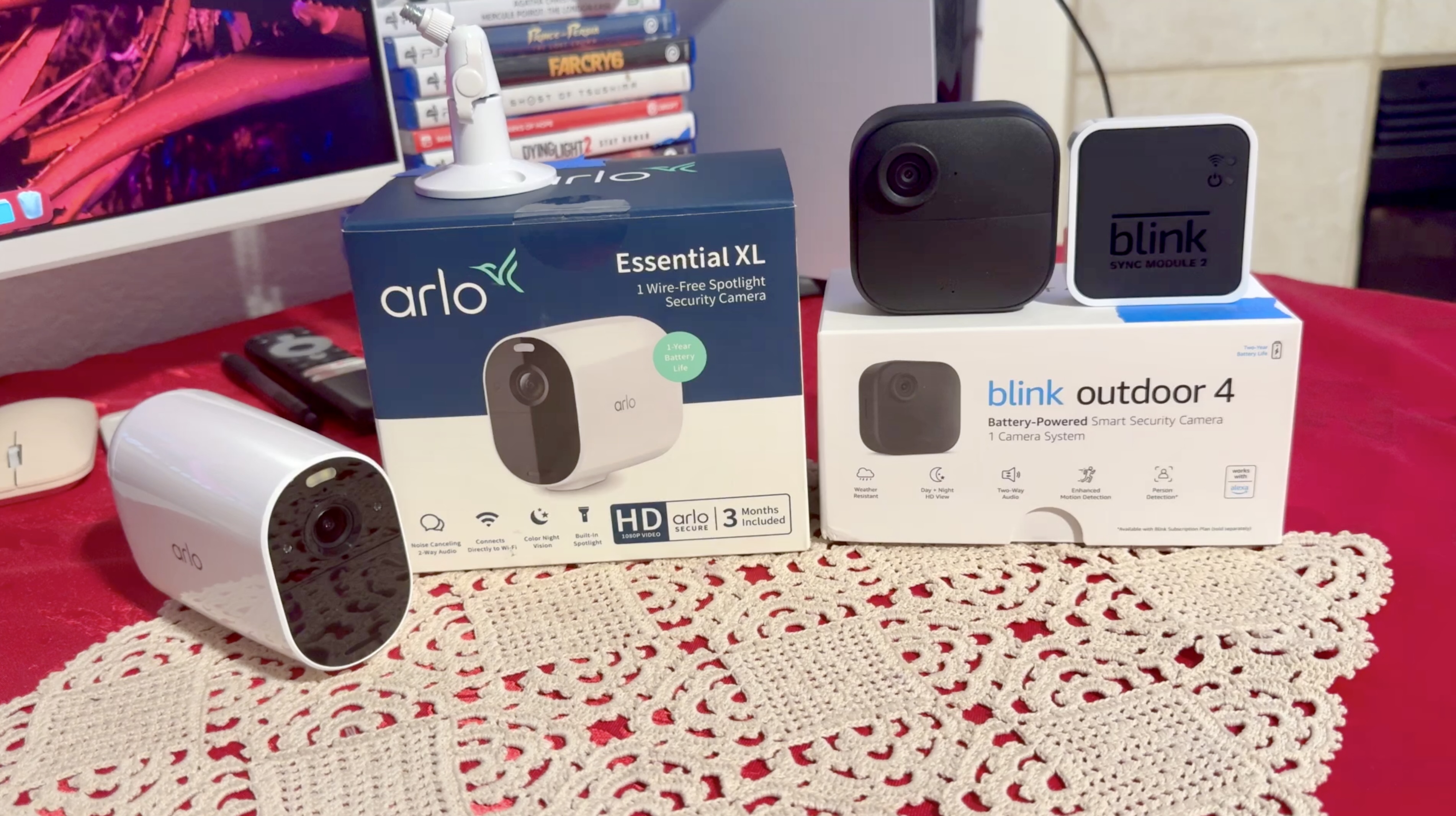
Storage models matter when comparing Blink Outdoor vs Arlo Essential. Both offer cloud subscriptions for video retention and advanced features. Blink has an optional inexpensive cloud plan and also supports local storage via a Sync Module with a USB drive. That local option is handy if you want to avoid ongoing fees.
Arlo Essential’s cloud plan is more feature-rich but also more expensive. Arlo can work with a smart hub or base station for local storage in some setups, but many users rely on Arlo’s cloud offerings for person detection, activity zones, and richer alerts.
Key points on privacy and cost
- Blink: cheaper cloud plans and a simple, optional local storage path.
- Arlo: powerful cloud features but higher subscription costs for the best detection options.
- If privacy and no monthly fee matter, plan for local storage ahead of purchase.

Smart home integration and app experience
If smart home compatibility matters, Blink Outdoor vs Arlo Essential diverge in meaningful ways. Arlo Essential integrates broadly with Alexa and Google Assistant and offers richer routines for lights and security systems. Blink works well with Alexa devices and has straightforward voice commands, but it is more limited with other platforms.
The mobile apps differ too. Arlo’s app puts more features up front and gives more control over video analytics. Blink’s app is simpler and easier for novices. Both apps allow live view, alerts, and basic camera controls.
Integration checklist
- Arlo Essential: stronger third-party integrations and advanced automation options.
- Blink Outdoor: simple app, tight Alexa support, easier initial setup for beginners.
- Consider which ecosystem (Alexa, Google, Apple) you already use before choosing.

Pricing, value, and total cost of ownership
Price influences the Blink Outdoor vs Arlo Essential decision more than any single spec. Blink Outdoor cameras are cheaper upfront than Arlo Essential models. Blink’s subscription is also more affordable, which lowers ongoing costs.
Arlo Essential commands a higher price but includes more hardware features. If you need color night vision, integrated siren, or superior detection, Arlo can be worth the premium. Over time, subscription fees can outweigh hardware cost differences, so add subscription choices into your budget.
Cost-saving tips
- Use local storage with Blink to avoid monthly fees.
- If you choose Arlo, check for bundle deals that include a hub or extra cameras.
- Consider which paid features you’ll actually use before committing to a subscription.
Setup, real-world use, and lessons from testing
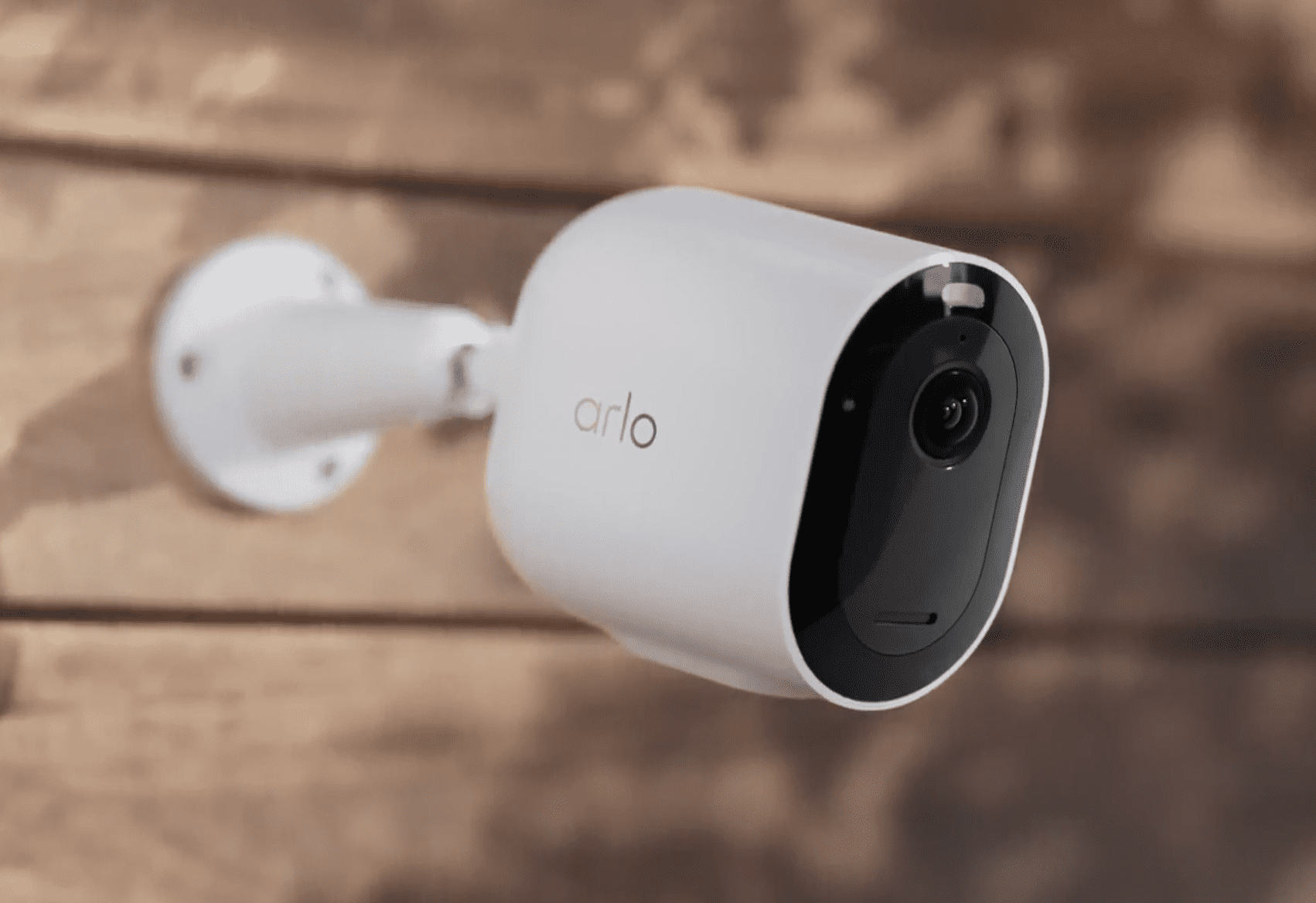
I installed both Blink Outdoor vs Arlo Essential around my house and tested them through rain, wind, and seasonal light changes. Setup was quicker with Blink Outdoor because the camera is lighter and the app is straightforward. Blink’s long battery life meant I rarely climbed a ladder to swap cells.
Arlo Essential required a bit more configuration to get the spotlight and motion zones tuned. Once tuned, Arlo provided fewer false alerts and better actionable clips. I learned a few lessons that can help you avoid common mistakes.
Practical tips from experience
- Place cameras slightly above eye level and tilt them downward to reduce false alerts.
- Use activity zones on Arlo Essential to focus detection and reduce alerts from streets.
- For Blink Outdoor, keep the Sync Module within good range and use high-quality lithium AAs for best life.
Which should you choose: scenarios and recommendations
To make a final choice between Blink Outdoor vs Arlo Essential, match the camera to your needs and budget.
Choose Blink Outdoor if
- You want long battery life and minimal maintenance.
- You prefer lower upfront cost and a simple app.
- You want optional local storage to avoid subscriptions.
Choose Arlo Essential if
- You value superior night vision and better detection accuracy.
- You need richer smart home integration and advanced alerts.
- You’re willing to pay more for hardware and subscription features.

Common quick questions (PAA-style)
Does Blink Outdoor or Arlo Essential have better night vision?
Arlo Essential usually offers better color night vision thanks to built-in lights, while Blink Outdoor uses infrared for crisp black-and-white night clips.
Which camera lasts longer on battery?
Blink Outdoor typically lasts longer on replaceable AA batteries. Arlo Essential’s rechargeable battery tends to require more frequent charging under heavy use.
Can I store footage locally with both systems?
Blink supports local storage via a Sync Module and USB drive. Arlo can offer local storage with a compatible base station in some setups, but many users rely on cloud plans.
Frequently Asked Questions of Blink Outdoor vs Arlo Essential
What are the main differences between Blink Outdoor vs Arlo Essential?
The main differences are battery life, built-in features, and subscription models. Blink focuses on long battery life and low cost, while Arlo offers better night vision and advanced detection features.
Do either cameras require a subscription to function?
Both cameras work without a subscription for live view and basic alerts, but cloud storage and advanced features often need paid plans. Local storage options can reduce the need for subscriptions.
Which camera is easier to install for a non-technical user?
Blink Outdoor is generally easier to install due to its lightweight design and simpler app. Arlo Essential requires a bit more setup for advanced features but remains user-friendly.
Can Blink Outdoor or Arlo Essential record continuously?
Continuous recording is typically a subscription or local-storage feature. Neither camera is designed for long-term continuous recording without an added plan or local storage solution.
Are these cameras compatible with voice assistants?
Both Blink Outdoor vs Arlo Essential support Alexa and Google Assistant to varying degrees. Arlo tends to offer broader smart home integrations and more advanced voice routines.
How do they perform in bad weather?
Both cameras are weather resistant and designed for outdoor use. Proper placement under eaves or in covered areas still improves longevity and performance.
Conclusion
Choosing between Blink Outdoor vs Arlo Essential comes down to priorities: battery life and low cost versus richer video, night vision, and smarter detection. Blink Outdoor is ideal if you want low maintenance and a wallet-friendly system. Arlo Essential fits households that want clearer night footage and tighter integrations with smart home tools.
Takeaway: pick the camera that matches your day-to-day needs, factor subscription costs into your budget, and place cameras thoughtfully for best results. Try one camera in a trial spot, tune settings, and then expand based on what worked. If you found this helpful, leave a comment with your setup ideas or subscribe to get more hands-on home security reviews.

