Traveling with firearms involves strict rules. If you’re planning to fly in the United States and want to bring your gun, you need to understand the TSA (Transportation Security Administration) guidelines. One question many gun owners ask is: Are trigger locks TSA approved for travel? The answer isn’t simple, and there are important details to know before heading to the airport. This article will explain TSA rules about trigger locks, compare them to other locking options, and help you avoid mistakes that could ruin your trip.
Let’s break down what TSA really wants, how trigger locks fit into their requirements, and what you need to do to travel legally and safely.
Tsa Rules For Traveling With Firearms
The TSA controls security at all U.S. airports. Their rules for firearms are strict, and breaking them can lead to fines or even criminal charges. To understand if a trigger lock is TSA approved, you must first look at their main requirements.
Exclusive Deals
Limited-time Exclusive Deals. Check current discount on Amazon.
Check Price on Amazon As an Amazon Associate I earn from qualifying purchases.- Firearms must be unloaded.
- Firearms must be in a hard-sided, locked container.
- Only the passenger may keep the key or combination.
- Firearms must be declared to the airline at check-in.
TSA does not allow firearms in carry-on bags. They must be checked as luggage. The TSA also checks containers to make sure they are locked properly.
What Does “locked Container” Mean?
According to the TSA, a locked container means a hard-sided case that can’t be easily opened. The case must keep the firearm secure from unauthorized access. This is the main rule that affects trigger locks.
Many travelers think a trigger lock will meet this requirement. But TSA’s language is clear: the firearm must be inside a locked, hard-sided case. A trigger lock alone, without a hard case, does not meet the rule.
Are Trigger Locks Tsa Approved?
The TSA does not officially “approve” trigger locks for travel. They focus on the hard-sided, locked case. So, the answer is no—a trigger lock by itself is not TSA approved for traveling with firearms.
Exclusive Deals
Limited-time Exclusive Deals. Check current discount on Amazon.
Check Price on Amazon As an Amazon Associate I earn from qualifying purchases.However, trigger locks can be used as an extra layer of safety. They do not replace the locked container. If you pack your gun inside a hard-sided case, locked with a padlock, and also use a trigger lock, you’re adding security.
But if you only use a trigger lock and no locked case, TSA will not accept it.
Tsa Official Statement
Here’s what TSA’s official site says:
Exclusive Deals
Limited-time Exclusive Deals. Check current discount on Amazon.
Check Price on Amazon As an Amazon Associate I earn from qualifying purchases.> “Firearms must be unloaded and packed in a hard-sided container that is locked. Only the passenger may retain the key or combination. The container must completely secure the firearm from being accessed. ”
They do not mention trigger locks as an approved device. They also do not require them. The focus is always on the locked, hard-sided case.
Comparing Trigger Locks, Cable Locks, And Locked Cases
Many gun owners use different locking devices. Let’s compare the main options and see how they fit TSA rules.
| Lock Type | Meets TSA Rules? | Security Level | Common Use |
|---|---|---|---|
| Trigger Lock | No (by itself) | Low | Prevent accidental firing |
| Cable Lock | No (by itself) | Medium | Block firing and opening |
| Locked Case | Yes | High | Travel, storage |
A trigger lock covers the trigger and stops the gun from firing. It does not secure the whole gun. A cable lock goes through the action, stopping firing and opening. But neither is enough for TSA travel unless they are used inside a locked, hard-sided case.
The locked case is what TSA cares about. It must be strong, hard-sided, and lockable with a padlock or built-in lock.
Why Trigger Locks Are Not Enough For Tsa
Many beginners think a trigger lock is enough because it prevents accidental firing. But TSA is not worried about the gun firing during travel. They want to prevent unauthorized access.
A trigger lock can be cut or removed by someone with basic tools. It also leaves the gun exposed. If someone opens your luggage, they can still take the gun. That’s why TSA insists on a locked case.
Even if you use a trigger lock, TSA will reject your firearm if it’s not inside a locked, hard-sided container. This is a common mistake, especially for people new to flying with firearms.
Example: Real-life Airport Experience
In 2022, a traveler tried to check a pistol with only a trigger lock, packed inside a soft bag. TSA agents did not accept the setup. The passenger had to buy a hard-sided case at the airport store and transfer the gun before checking in.
This delay cost extra money and caused travel stress.

What Kind Of Locked Case Does Tsa Accept?
Not every case is TSA compliant. The case must be:
- Hard-sided (plastic, metal, or composite)
- Lockable (with a padlock or built-in lock)
- Strong enough to resist opening
TSA does not specify brands. But popular examples include Pelican, Plano, and Hornady cases. Many gun stores sell “TSA-approved” cases, but you should check the features yourself.
Comparison Of Popular Gun Cases
Here’s a quick look at three popular cases used for travel:
| Brand | Material | Lock Type | Price Range | TSA Compliance |
|---|---|---|---|---|
| Pelican 1200 | Plastic/Polymer | Padlock holes | $40–$55 | Yes |
| Plano All Weather | Plastic/Polymer | Built-in lock + padlock holes | $35–$45 | Yes |
| Hornady Alpha Vault | Steel | Key lock | $50–$65 | Yes |
Choose a case that fits your gun, locks securely, and is hard-sided. Avoid soft cases, even if they have locks.
How To Pack Your Firearm For Air Travel
To follow TSA rules and avoid problems, pack your gun step by step:
- Unload the firearm. Remove all ammunition.
- Apply a trigger lock or cable lock (optional, but safer).
- Place the gun inside a hard-sided, locked case.
- Lock the case with a padlock or built-in lock.
- Pack ammunition separately (check airline rules).
- Put the locked case in your checked luggage.
When you reach the airport, declare your firearm at the check-in desk. Never try to carry it in your carry-on bag.
Airline Rules Vs. Tsa Rules
Airlines often add their own rules on top of TSA’s requirements. For example, some airlines want ammunition packed in the original box. Others limit the number of firearms per passenger.
Always check your airline’s website before flying. Delta, American, and United all have slightly different rules for firearms.
Example: United Airlines Firearm Policy
United Airlines says:
> “The firearm must be packed in a hard-sided, locked container. Trigger locks do not meet the requirement for securing firearms. “
This is clear: only the locked case matters. Trigger locks are not enough.
Advantages And Disadvantages Of Trigger Locks
Trigger locks have pros and cons. They are useful but not a replacement for a locked case.
Advantages
- Extra safety against accidental firing
- Cheap and easy to use
- Lightweight
Disadvantages
- Not TSA approved for travel
- Easy to remove by someone with tools
- Do not secure the whole firearm
Common Mistakes When Traveling With Firearms
Many travelers make simple mistakes. Here are some to avoid:
- Using only a trigger lock without a hard case.
- Packing a loaded firearm.
- Using a soft case, even if it locks.
- Not declaring the firearm at check-in.
- Forgetting to check airline-specific rules.
If you avoid these mistakes, you’ll have a smoother travel experience.
Extra Security Tips For Traveling With Firearms
If you want to add safety, here are some tips:
- Use both a trigger lock and a locked case.
- Choose a case with two padlock holes for extra strength.
- Pack ammunition in a separate, locked container.
- Keep the key or combination with you at all times.
- Write down the serial number and take photos of your firearm before travel.
These steps make your firearm safer and help you if something goes wrong.
Legal Risks Of Not Following Tsa Rules
If you break TSA’s rules, you can face:
- Fines up to $13,000 for each violation
- Criminal charges (rare, but possible)
- Confiscation of your firearm
- Missed flights or travel delays
TSA agents are trained to check for proper packing. If you use only a trigger lock, your gun will be rejected, and you may be fined.
Can You Use Tsa Locks For Firearm Cases?
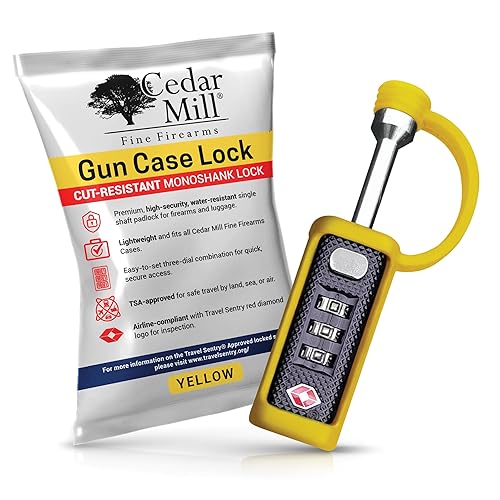
TSA locks are special padlocks that can be opened by TSA agents with a master key. Many people use them for luggage. But for firearms, TSA does not allow these locks. Only the passenger may have the key or combination.
If you use a TSA lock, agents can access your firearm without you. This is against the rules. Use a regular padlock or a built-in lock, and keep the key or combination yourself.

International Travel With Firearms
If you plan to fly outside the U. S. , rules are even stricter. Many countries do not allow firearms at all. Some require special permits.
For example, Canada requires a permit and only allows certain types of firearms. Europe is very strict, and many airlines will not carry firearms.
Always check the laws in your destination country. Trigger locks are almost never enough—locked, hard-sided cases are required everywhere. For detailed information, visit the TSA official site.
Frequently Asked Questions
Are Trigger Locks Required By Tsa For Air Travel?
No, trigger locks are not required. TSA only demands a locked, hard-sided case for firearms. Trigger locks are optional and can be used for extra safety, but they do not meet TSA’s main rule.
Can I Use A Cable Lock Instead Of A Trigger Lock?
Cable locks are similar to trigger locks, but neither is enough by itself for TSA travel. Both can be used inside the locked case for extra protection, but the locked case is always required.
Will Tsa Accept My Gun If It’s Packed With A Trigger Lock Inside A Soft Bag?
No. The bag must be hard-sided and locked. A trigger lock inside a soft bag will be rejected. Always use a hard-sided case.
Can I Use A Tsa-approved Padlock For My Gun Case?
No. TSA-approved padlocks are not allowed for firearm cases. Only the passenger may keep the key or combination. Use a regular padlock or built-in lock.
What Happens If I Break Tsa’s Firearm Rules?
You may face fines, missed flights, or legal trouble. TSA can confiscate your firearm and report you to law enforcement. Always follow their rules strictly.
Final Thoughts
Trigger locks are useful for preventing accidental firing and adding a layer of safety. But they are not TSA approved for air travel by themselves. The key requirement is a locked, hard-sided case. If you want to fly with firearms, follow all TSA and airline rules, use the right case, and pack your gun properly. Avoid common mistakes and double-check your setup before leaving home. With the right preparation, you can travel safely and legally.