
Smoke detectors are a small device found in many homes, but few people think deeply about their role in fire safety. You might wonder, can smoke detectors prevent house fires, or do they simply warn us when a fire has started? This is an important question, especially for families and anyone concerned about home safety. With fires causing thousands of deaths and injuries every year, understanding the true impact of smoke detectors is vital. In this article, you’ll discover how smoke detectors work, their limits and benefits, and whether they truly help prevent house fires—or if their real value lies elsewhere. We’ll also look at statistics, practical advice, and common misconceptions, so you can make informed choices about fire protection in your home.
What Are Smoke Detectors?
A smoke detector is a device that senses smoke, often as an indicator of fire. They are usually installed on ceilings or high on walls because smoke rises. When smoke is detected, the device triggers an alarm, alerting people in the building.
There are two main types of smoke detectors:

Exclusive Deals
Limited-time Exclusive Deals. Check current discount on Amazon.
Check Price on Amazon As an Amazon Associate I earn from qualifying purchases.- Ionization smoke detectors: These detect small smoke particles, which are common in fast-burning fires. They use a small amount of radioactive material to sense changes in air.
- Photoelectric smoke detectors: These are better at detecting larger smoke particles from slow, smoldering fires. They use a light beam and sensor to notice when smoke interrupts the beam.
Most modern homes use a combination of both types to ensure better coverage. Some advanced smoke detectors also sense heat or carbon monoxide.
How Smoke Detectors Work
Smoke detectors function by sensing changes in their environment. Ionization detectors react quickly to flaming fires, while photoelectric detectors respond faster to smoldering fires.
When smoke enters the device:
- Ionization detectors notice changes in electrical current caused by smoke particles.
- Photoelectric detectors sense when smoke blocks a beam of light inside the device.
If smoke is detected, a loud alarm sounds. This is intended to wake people up or alert them, giving time to escape or take action. The alarm is often loud enough to be heard throughout the house.
Exclusive Deals
Limited-time Exclusive Deals. Check current discount on Amazon.
Check Price on Amazon As an Amazon Associate I earn from qualifying purchases.The Role Of Smoke Detectors In Fire Prevention
Many people believe smoke detectors can prevent house fires. However, it’s important to understand their true purpose. Smoke detectors do not stop fires from starting. Instead, they provide early warning when smoke is present, so you can respond quickly.
Early Warning Saves Lives
Smoke detectors are most valuable for their ability to give early warning. According to the National Fire Protection Association (NFPA), homes with working smoke alarms have a 50% lower risk of fire-related death. This is because early warning allows people to escape before smoke and flames make evacuation impossible.
Prevention Vs. Detection
The difference is clear:
Exclusive Deals
Limited-time Exclusive Deals. Check current discount on Amazon.
Check Price on Amazon As an Amazon Associate I earn from qualifying purchases.- Prevention: Actions that stop fires from starting (e.g., safe cooking, electrical checks).
- Detection: Finding fires early to reduce harm (e.g., smoke detectors).
Smoke detectors are detection devices, not prevention tools. They cannot stop a fire from starting, but they can limit damage by providing quick alerts.
Smoke Detectors And Fire Statistics
Data shows how important smoke detectors are for safety, even if they don’t prevent fires directly.
| Year | Home Fire Deaths | Homes with Working Smoke Detectors | % of Deaths in Homes Without Detectors |
|---|---|---|---|
| 2019 | 2,620 | 74% | 41% |
| 2020 | 2,730 | 76% | 38% |
| 2021 | 2,670 | 78% | 36% |
The numbers show that many fire deaths happen in homes without working smoke detectors. This means that detectors are not preventing fires, but they are reducing fatalities. Homes with detectors see fewer deaths, even though fires still occur.
Smoke Detectors Vs. Fire Prevention Methods
Let’s compare smoke detectors to actual fire prevention methods.
| Method | Purpose | Effect on Fire Risk |
|---|---|---|
| Smoke Detectors | Detect smoke/fire | Reduce injury/death |
| Safe Cooking Practices | Prevent fire start | Reduce fire risk |
| Electrical Maintenance | Prevent electrical fires | Reduce fire risk |
| Fire Extinguishers | Fight small fires | Limit fire spread |
You can see that smoke detectors are part of a broader fire safety strategy. Other methods work to prevent fires, while detectors help reduce harm when prevention fails.
Limitations Of Smoke Detectors
Smoke detectors save lives, but they have limits. Understanding these limits helps you improve home safety.
- Cannot prevent fire ignition: Detectors alert you only after smoke is present. They don’t stop fires from starting.
- False alarms: Cooking, steam, or dust can trigger alarms, causing people to ignore or disable them.
- Device failure: Batteries can die, or the device can malfunction. Regular testing is essential.
- Slow response in some cases: If smoke doesn’t reach the detector quickly (e.g., closed doors), the alarm may not sound soon enough.
- Hearing issues: Some people, especially elderly or those with hearing loss, may not hear alarms.
These limitations show that smoke detectors are not a complete solution. They are most effective when combined with other safety measures.
Real-life Examples Of Smoke Detector Effectiveness
Smoke detectors have saved many lives, but also failed in some cases. Here are a few real examples:
- Saved by early warning: In 2020, a family in Illinois woke up to their smoke alarm and escaped a kitchen fire. The detector gave them precious seconds to leave before smoke filled the house.
- Failure due to dead batteries: In another case, a house fire in Texas caused fatalities because the smoke detector’s batteries were dead. The alarm never sounded, and the family was trapped.
- Missed fire due to placement: A fire in California spread quickly in a garage. The detector was only in the main house, so the alarm did not go off until flames reached inside, limiting escape time.
These examples highlight two important lessons:
- Testing and maintaining detectors is critical
- Proper placement is necessary for full protection
Where To Place Smoke Detectors For Maximum Safety
Proper placement makes smoke detectors more effective. According to experts, you should install detectors:
- In every bedroom
- Outside each sleeping area
- On every level of the home (including basement)
- Near stairways
- In living rooms and hallways
Avoid placing detectors near windows, doors, or vents, as airflow can prevent smoke from reaching the device. Also, don’t place detectors in kitchens or bathrooms, as steam and cooking can cause false alarms.
Placement Tips
- Mount detectors high on walls or ceilings
- Keep at least 10 feet away from cooking appliances
- Test detectors monthly to ensure functionality
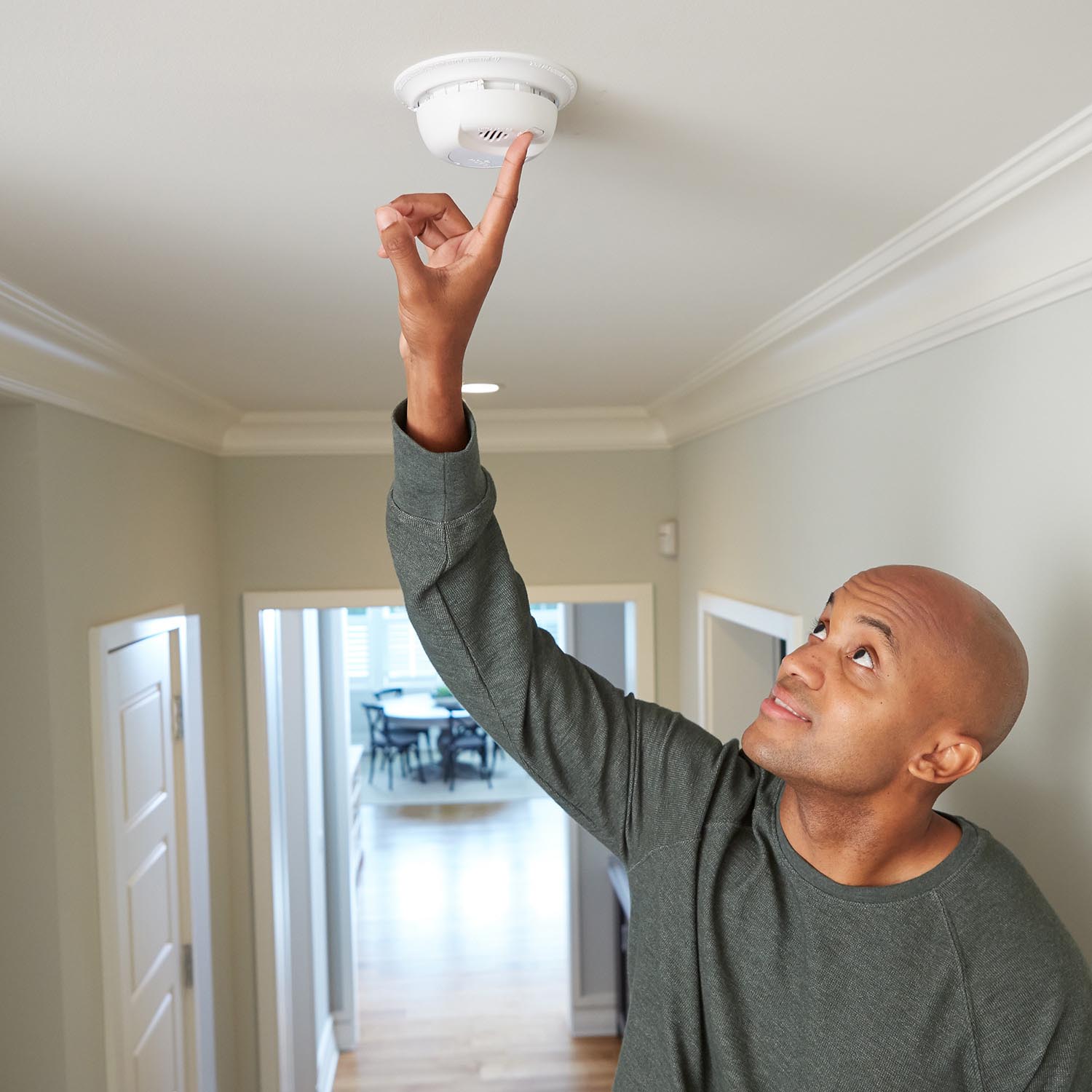
Maintaining Your Smoke Detectors
Smoke detectors need regular attention to work properly. Here’s how to keep them in good condition:
- Test monthly: Press the test button to make sure the alarm works.
- Replace batteries: Change batteries at least once a year, or whenever the device chirps.
- Clean detectors: Dust and debris can block sensors. Gently vacuum the outside.
- Replace devices: Most detectors last 8-10 years. After this, replace them even if they seem to work.
A common mistake is forgetting about the device after installation. Many fires happen in homes with non-working detectors, often due to dead batteries or old devices.
Are Smart Smoke Detectors Better?
Traditional smoke detectors work well, but smart smoke detectors offer extra features. These connect to Wi-Fi or apps and can send alerts to your phone, even when you’re not home.
Features of smart detectors:
- Remote notifications
- Automatic battery checks
- Integration with home security systems
- Voice alerts
Smart detectors can help if you travel often or live in a large house. However, they are more expensive and may require internet access.
Comparing Traditional Vs. Smart Smoke Detectors
| Feature | Traditional Detector | Smart Detector |
|---|---|---|
| Alarm Sound | Loud siren | Loud siren + phone alert |
| Battery Monitoring | Manual | Automatic notification |
| Remote Access | No | Yes |
| Integration | Limited | Smart home systems |
| Cost | Low | High |
Smart detectors add convenience, but basic detectors are still effective when properly maintained.
How Smoke Detectors Fit Into A Complete Fire Safety Plan
To truly protect your home, smoke detectors should be part of a broader fire safety plan. Here are some key steps:
- Install smoke detectors in all recommended places.
- Maintain detectors regularly.
- Practice fire prevention: Avoid unsafe cooking, check electrical systems, keep flammable items away from heat.
- Have fire extinguishers on hand and know how to use them.
- Create an escape plan: Make sure everyone knows how to leave the house quickly.
- Practice fire drills: Run through your escape plan at least twice a year.
- Keep doors closed at night: This slows the spread of fire and smoke, giving detectors time to alert you.
Smoke detectors are one part of the puzzle. Fire prevention actions and emergency plans are just as important.
Common Myths About Smoke Detectors
Many people misunderstand smoke detectors. Here are some common myths:
- Myth 1: Smoke detectors stop fires from starting.
- Fact: They only alert you after smoke appears.
- Myth 2: One detector is enough for a whole house.
- Fact: You need multiple detectors for full coverage.
- Myth 3: Detectors last forever.
- Fact: Most need replacement every 8-10 years.
- Myth 4: Smoke detectors always work, even if the battery is dead.
- Fact: Dead batteries mean no alarm.
- Myth 5: You don’t need detectors if you’re careful.
- Fact: Fires can start unexpectedly, even in careful homes.
Understanding these myths helps you make better safety choices.
Non-obvious Insights For Homeowners
Most guides mention basic facts, but here are two insights many beginners miss:
- Smoke travels differently in each home: The layout, furniture, and airflow affect how quickly smoke reaches detectors. Test your alarms with smoke from incense or candles to see if placement needs adjustment.
- Closed doors change escape time: A closed bedroom door during a fire can keep smoke out for longer, giving you more time to escape. But it also delays smoke reaching detectors in the hallway. Consider adding detectors inside bedrooms for extra safety.
What To Do When Your Smoke Detector Goes Off
When a smoke detector sounds, act quickly:
- Check for fire or smoke: Look for signs near the alarm.
- Evacuate immediately: Don’t wait to see how serious the fire is.
- Call 911: Once outside, call for help.
- Don’t go back inside: Wait for firefighters to declare it safe.
If it’s a false alarm, ventilate the area and reset the device. Don’t disable detectors after false alarms—fix placement or clean them.
How Smoke Detectors Impact Insurance
Many insurance companies offer discounts for homes with smoke detectors. This is because detectors lower the risk of injury or death, even though they don’t prevent fires.
Having working detectors may:
- Reduce insurance premiums
- Help with claims if damage occurs
- Show you took reasonable safety steps
Check with your insurer for details. Some require proof of detector installation and maintenance.
Global Regulations And Standards
In many countries, smoke detectors are required by law in new homes or rental properties. In the US, most states have regulations about placement and maintenance. Europe and Australia have similar rules.
These regulations ensure basic safety, but you should go beyond minimum requirements for full protection.
For more details on regulations and statistics, see the National Fire Protection Association.
Frequently Asked Questions
What Is The Main Purpose Of A Smoke Detector?
The main purpose is to alert people quickly when smoke is detected, giving them time to escape before a fire spreads. Smoke detectors do not prevent fires from starting.
How Often Should I Test And Replace My Smoke Detector?
Test your smoke detector once a month. Replace batteries yearly and the entire device every 8–10 years. Regular maintenance is essential for safety.
Can Smoke Detectors Reduce Fire Damage In My Home?
Yes, by giving early warning, smoke detectors reduce injury and property loss. Quick alerts allow people to escape and firefighters to respond sooner, limiting damage.
What Should I Do If My Smoke Detector Keeps Giving False Alarms?
If false alarms happen often, check placement (avoid kitchens and bathrooms), clean the device, and consider upgrading to a newer model. Never disable the alarm—fix the cause instead.
Are Smart Smoke Detectors Worth The Extra Cost?
Smart smoke detectors offer remote alerts and easier maintenance. They are useful for large homes or frequent travelers, but traditional detectors are still effective when properly maintained.
Smoke detectors are a powerful tool for home safety, but they don’t prevent fires from starting. Their true value lies in early detection and warning, giving you a chance to escape and call for help. To protect your home, combine smoke detectors with fire prevention actions and a clear escape plan.
Regular maintenance, proper placement, and understanding their limitations will help you get the most from your detectors. With these steps, you can greatly reduce risk and protect your family from fire danger.