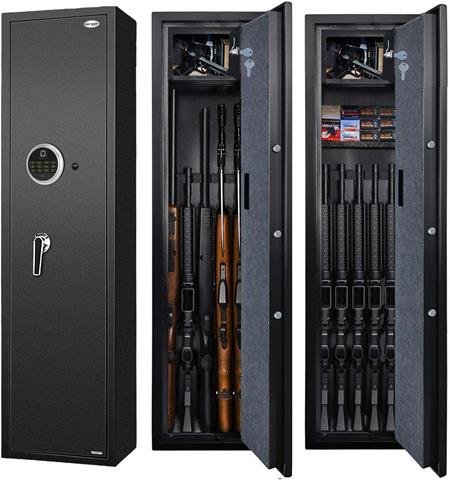
Gun cabinets are cheaper and lighter; gun safes provide stronger theft and fire protection.
I’ve spent years testing storage options and helping gun owners choose what fits their needs. This article compares Gun Cabinet vs Gun Safe with clear facts, real-world tips, and buying guidance. You will learn the differences in security, fire protection, laws, costs, and everyday use. Read on for practical advice so you can pick the right option for your home.
Exclusive Deals
Limited-time Exclusive Deals. Check current discount on Amazon.
Check Price on Amazon As an Amazon Associate I earn from qualifying purchases.What is a gun cabinet and what is a gun safe?
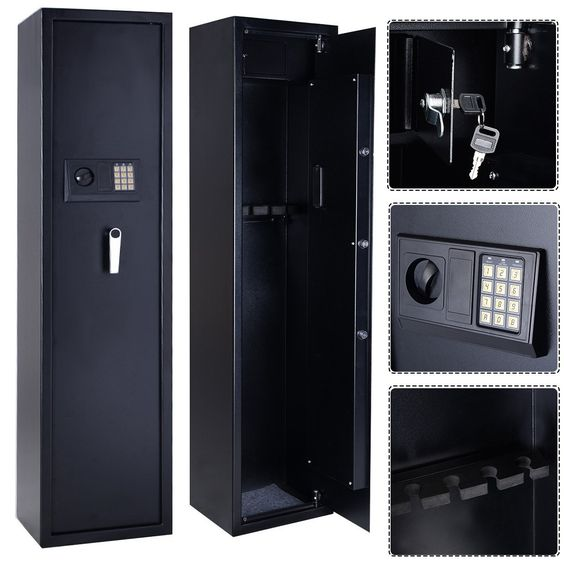
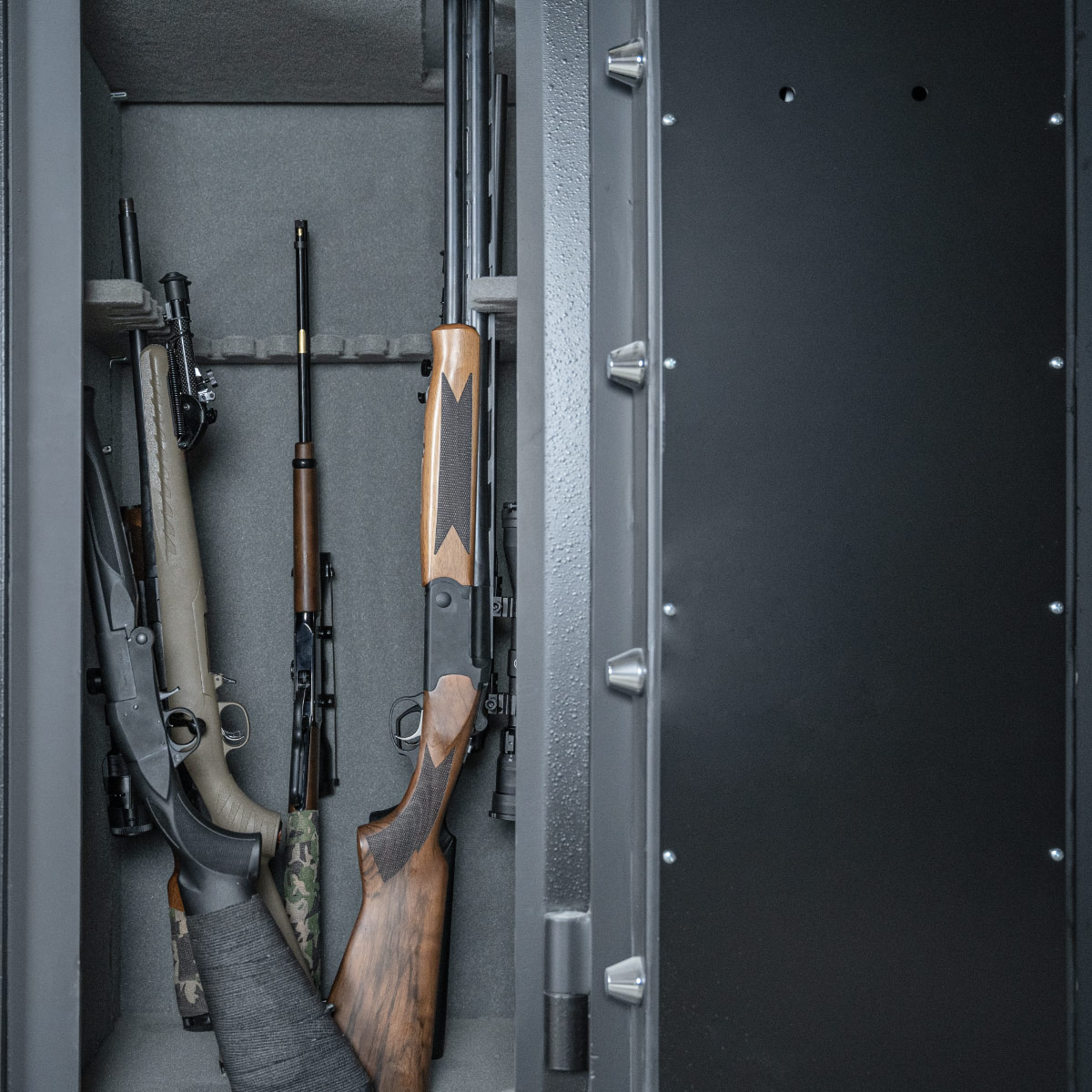
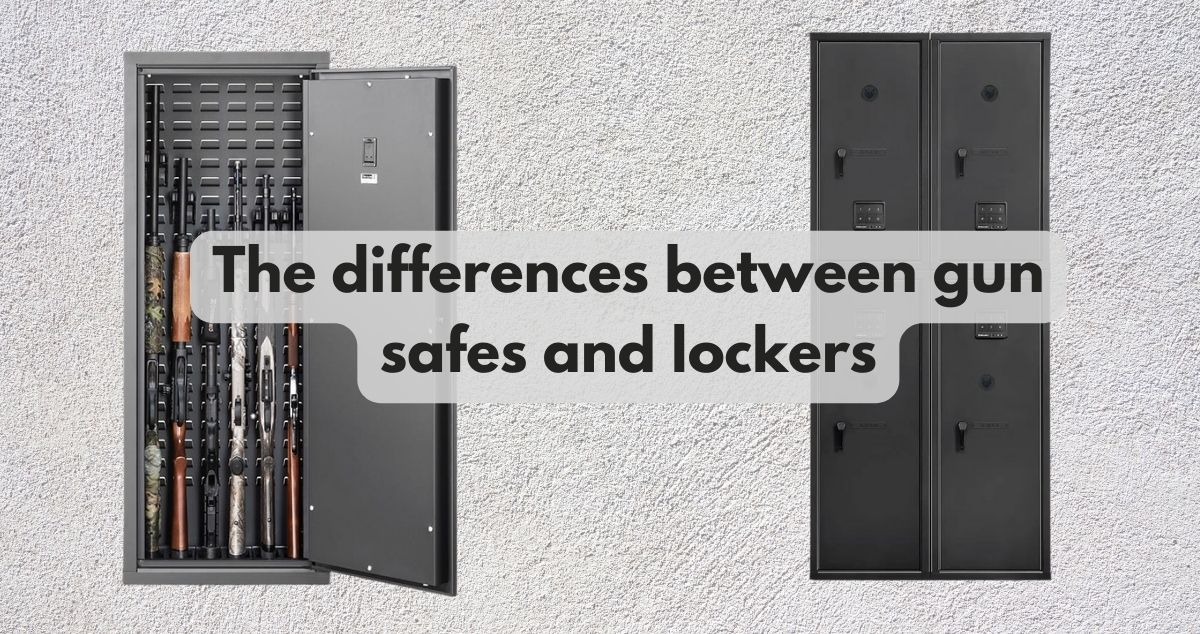
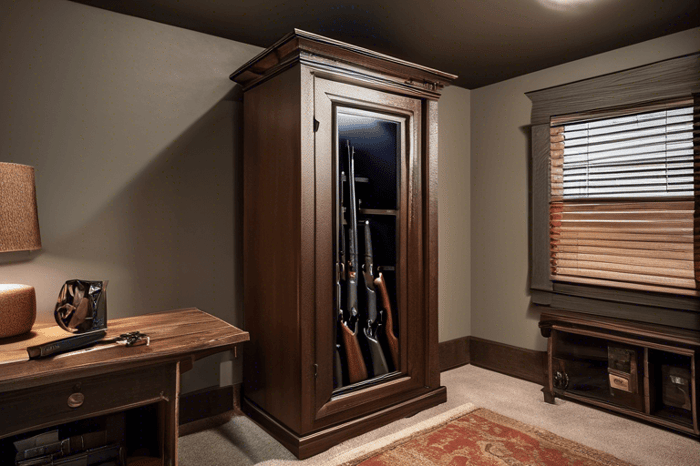
A gun cabinet is a light, often metal or wood, storage unit with a lock. It usually holds rifles or shotguns upright on racks. Gun cabinets are aimed at basic organization and a modest barrier against casual access.
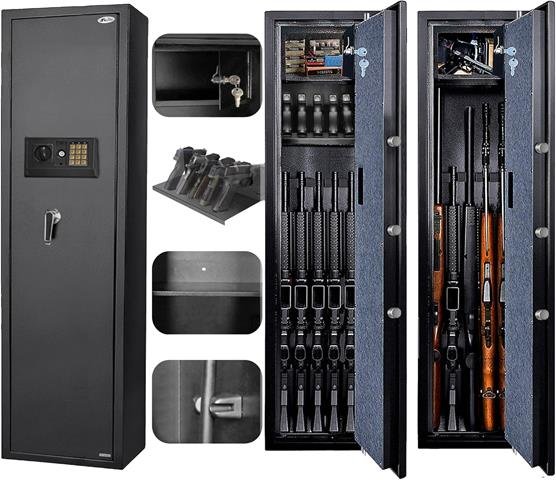
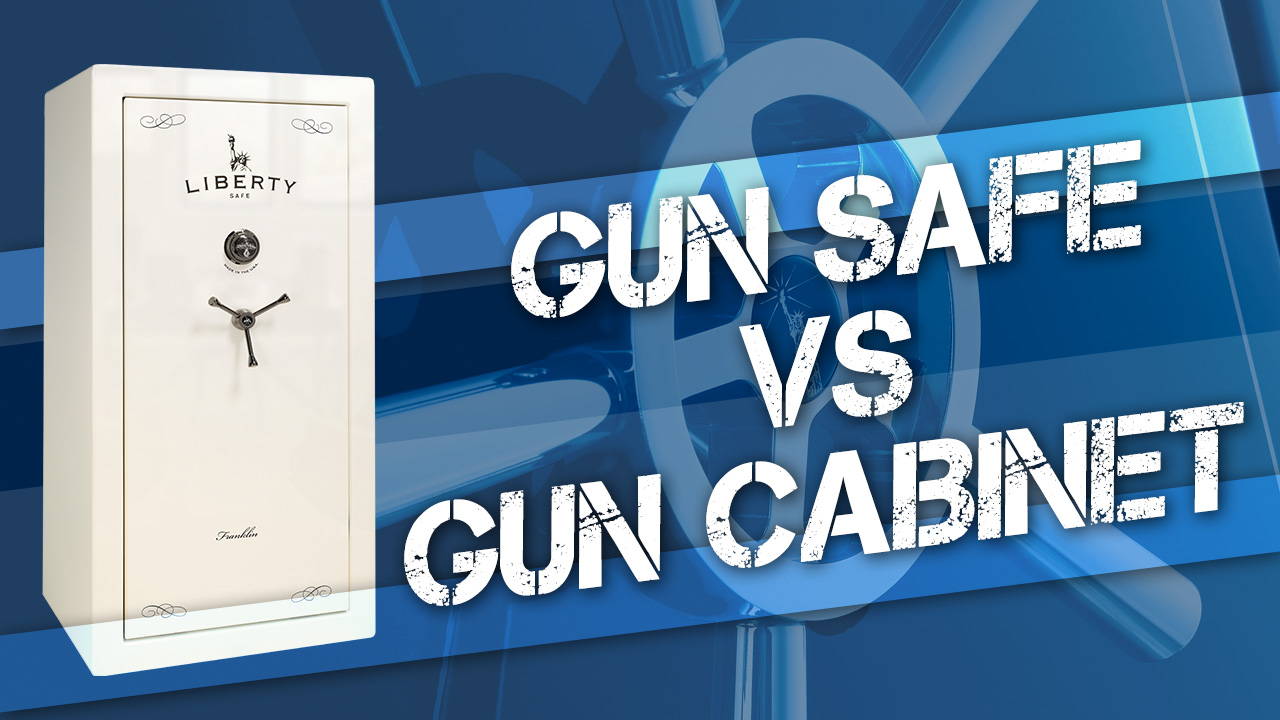
A gun safe is a heavy, reinforced box built for security and fire resistance. It uses thicker steel, complex locks, and often fire-rated insulation. Safes are designed to stop theft, delay forced entry, and protect contents from heat.
Why this matters for the Gun Cabinet vs Gun Safe decision:
- Security needs vary by household and risk.
- Budget and space shape your choice.
- Legal or insurance rules may favor safes over cabinets.
Exclusive Deals
Limited-time Exclusive Deals. Check current discount on Amazon.
Check Price on Amazon As an Amazon Associate I earn from qualifying purchases.Key differences at a glance
This section highlights the main contrasts so you can compare quickly.
Security
- Gun cabinets: Thin steel or wood, simple locks, low resistance to tools.
- Gun safes: Thick steel, reinforced doors, complex locking systems, higher resistance.
Fire protection
Exclusive Deals
Limited-time Exclusive Deals. Check current discount on Amazon.
Check Price on Amazon As an Amazon Associate I earn from qualifying purchases.- Gun cabinets: Little to no fire resistance.
- Gun safes: Often carry a fire rating (minutes at set temps) and protect contents from heat.
Weight and anchoring
- Gun cabinets: Lightweight, easy to move, may not be bolted down.
- Gun safes: Heavy, often bolted to floor, much harder to remove.
Cost
- Gun cabinets: Lower price, entry-level option.
- Gun safes: Higher initial cost, longer-term investment.
Accessibility
- Gun cabinets: Faster access, simpler locks.
- Gun safes: Slower access in some designs, but newer models have fast-access features.
Use cases
- Gun cabinets: Hunters, casual owners on a budget, low-risk storage.
- Gun safes: Homes with children, high-value firearms, collectors, legal compliance needs.
Security and construction: what stops a thief?
Understanding materials and locks is crucial for the Gun Cabinet vs Gun Safe choice.
Materials
- Cabinets usually use stamped sheet metal or wood. They bend or cut easily.
- Safes use plate steel, welded seams, and reinforced bolts. They resist cutting and prying.
Locks and mechanisms
- Cabinets often use simple keyed locks. Keys can be lost or copied.
- Safes use mechanical dial, electronic keypad, or biometric locks. Some safes have relocking devices and multiple bolts.
Delay vs prevention
- Cabinets can deter casual access and curious children.
- Safes aim to delay entry long enough to stop theft or force the thief to give up.
My experience: I once had a cabinet with a tubular lock that failed in minutes when tested with basic tools. After upgrading to a safe with an electronic lock and relocker, I felt far more secure.
Fire protection and environmental hazards
If protecting firearms and ammunition from heat and moisture matters, safes win.
Fire ratings
- Gun cabinets rarely have fire ratings.
- Gun safes often list ratings: minutes at specified temperatures. Ratings vary by manufacturer and test method.
Humidity and corrosion
- Cabinets provide poor seals and may allow moisture build-up.
- Safes with seals and desiccants offer better humidity control and protect metal and wood components.
A practical tip: Invest in a humidity monitor and silica gel packs inside any safe or cabinet to limit rust and stock damage.
Legal requirements, insurance, and compliance
Law and insurance often influence the Gun Cabinet vs Gun Safe decision.
Legal rules
- Some states require locked storage; specifics vary.
- Transport and storage rules may demand certified locking devices in certain cases.
Insurance
- Insurers may require safes for coverage of high-value firearms.
- Policy discounts sometimes apply when firearms are stored in certified safes.
If you need verified compliance, choose a safe that meets recognized standards or ask your insurer what they accept.

Size, capacity, and organization
Choosing the right size keeps guns safe and ready.
Capacity considerations
- Cabinets fit several long guns but often lack modular interiors.
- Safes come in many sizes, from small pistol safes to full-size gun safes holding dozens of rifles.
Interior organization
- Cabinets typically offer simple racks and a small shelf for cartridges.
- Safes offer adjustable shelving, the option for a dehumidifier, and interior lighting.
Tip: Measure your longest firearm and accessories before buying. Consider future purchases when you plan capacity.
Cost, value, and lifecycle
Budget matters when comparing Gun Cabinet vs Gun Safe.
Initial cost
- Cabinets are far cheaper up front.
- Safes cost more but are an investment in security and protection.
Long-term value
- A safe may save money by protecting expensive firearms and meeting insurance requirements.
- Cabinets may need replacement or augmentation if risks increase.
Consider total cost of ownership: delivery, anchoring, maintenance, and potential insurance savings.
Installation, placement, and anchoring
Proper installation prevents theft and improves safety.
Placement tips
- Avoid garages and sheds if you live in high-theft areas.
- Place safes on lower floors near interior walls for easier anchoring.
Anchoring
- Cabinets often lack strong anchor points.
- Safes should be bolted down to concrete or anchored to a solid floor.
Access and stealth
- Concealment helps. A safe hidden in a closet or built into furniture reduces visibility.
- Think about quick access in emergencies and balance it with security needs.
Maintenance, care, and lifespan
Simple upkeep extends service life and protection.
Routine tasks
- Check locks and hinges monthly.
- Replace batteries in electronic locks yearly.
- Use a dehumidifier or silica gel to control moisture.
When to replace
- Replace a cabinet if it shows rust, bent metal, or a compromised lock.
- A well-maintained safe can last decades. Update locks if technology improves security.
Buying guide and practical checklist
Use this checklist when choosing between a gun cabinet vs gun safe.
Checklist
- Define primary goal: theft prevention, fire protection, child safety, or storage.
- Measure space and firearms to determine needed capacity.
- Check lock type and certifications for safes.
- Ask about fire ratings and test methods for safes.
- Confirm anchoring options and delivery requirements.
- Compare warranty and service policies.
- Factor in total cost including installation and accessories.
Shopping tips
- Try the lock and feel the door action in person.
- Read owner reviews about build quality and customer service.
- Get quotes for delivery and anchoring if needed.
My real-world tip: I once bought a compact safe with poor relocking. I returned it after a locksmith showed me weak points. Inspect or test before finalizing a purchase.
Common mistakes and how to avoid them
Learn from errors I’ve seen in the field.
Mistake: Buying by price only
- Cheap cabinets look attractive, but they fail basic security tests.
- Avoid purchases without checking materials and locks.
Mistake: Ignoring anchoring
- Leaving a heavy safe unanchored lets thieves remove it.
- Anchor safes to the floor or structure to stop theft.
Mistake: Overlooking humidity
- Stored firearms can corrode without moisture control.
- Use desiccants and monitor humidity inside storage.
Mistake: Poor placement
- A visible unit draws attention.
- Conceal safes or integrate them into furniture.
Personal experience and final practical tips
From my years helping owners, these tips will save time and worry.
What I learned
- A safe brings peace of mind unmatched by a cabinet.
- Cabinets work for low-risk homes, short-term storage, or transport locks.
- Always plan for the worst-case: break-in, fire, or curious children.
Daily habits
- Keep keys and codes secure but accessible to trusted adults.
- Regularly inspect locks and seals.
- Teach household members safe gun protocols, but never share codes widely.
A story: I once lost a small pistol because it was in a flimsy cabinet. After moving it to a certified safe and adding a dehumidifier, the gun stayed safe and maintained. That change paid for itself in reassurance.
Frequently Asked Questions of Gun Cabinet vs Gun Safe
Is a gun cabinet secure enough for home use?
Gun cabinets offer basic security and are better than leaving firearms unsecured. For homes with children, high theft risk, or high-value firearms, a gun safe is a stronger choice.
Do gun safes protect against fire?
Many gun safes include fire-rated insulation that protects contents for specified minutes and temperatures. Check the manufacturer’s fire rating and testing method before relying on it.
Are gun cabinets legal for firearm storage?
Legal requirements vary by state and country. Some laws accept locked cabinets, while others require certified safes, so check local rules and your insurance policy.
Can a gun safe be bolted down or moved easily?
Gun safes are heavy and intended to be bolted to a floor or wall for security. Small safes exist but can still be bolted; never leave a safe unanchored if theft is a concern.
What is the main benefit of a gun safe over a cabinet?
The main benefit is enhanced protection against theft, forced entry, and often fire. Safes use thicker materials and better locks to secure firearms and valuables.
How often should I maintain a gun safe or cabinet?
Inspect locks, hinges, and seals at least once a year and replace batteries annually for electronic locks. Check for rust or moisture more frequently if you live in a humid climate.
Are biometric locks on gun safes reliable?
Biometric locks speed access and work well when properly maintained and programmed. They can fail with dirty sensors or low batteries, so keep backups like a keyed override.
Conclusion
Choosing between a gun cabinet vs gun safe comes down to risk, budget, and goals. Cabinets work for basic storage and lower budgets. Safes offer stronger theft resistance, fire protection, and long-term value. Assess your needs, measure your space, and prioritize anchoring and humidity control.
Take action: review your storage plan this week. Measure, check local laws, and pick the option that matches your safety goals. If you found this helpful, share your experience or ask a question below.