Smoke detectors are a small invention with a big impact. They watch over homes, offices, hotels, and factories, ready to warn people before fire can spread. Most of us know the loud beep, but not many understand how smoke detectors actually sense fire.
Exclusive Deals
Limited-time Exclusive Deals. Check current discount on Amazon.
Check Price on Amazon As an Amazon Associate I earn from qualifying purchases.Knowing how these devices work is important for safety—and it also helps you choose the right one, maintain it well, and avoid common mistakes. Let’s explore the science and technology behind smoke detectors, the different types, how they detect fires, and what makes them reliable.
Why Fire Detection Matters
Fire spreads quickly. According to the National Fire Protection Association (NFPA), a small flame can turn into a major fire in less than 30 seconds. In homes without working smoke detectors, the risk of dying in a fire is twice as high compared to homes that have them. Early detection gives people time to escape, call for help, and minimize damage.
Smoke detectors are not just about meeting building codes. They save lives. More than 80% of fire deaths happen in homes, and in nearly 40% of these cases, there were no smoke detectors or the detectors had dead batteries. This shows how important these devices are—not only for personal safety but for public health.
What Is A Smoke Detector?
A smoke detector is an electronic device that senses smoke, usually as a sign of fire. It makes a loud alarm to alert people. Some are standalone, others are connected to systems that notify fire departments.
Exclusive Deals
Limited-time Exclusive Deals. Check current discount on Amazon.
Check Price on Amazon As an Amazon Associate I earn from qualifying purchases.There are two main types:
- Ionization smoke detectors: Good for fast, flaming fires.
- Photoelectric smoke detectors: Better for slow, smoldering fires.
Each uses a different method to detect smoke.
How Smoke Detectors Detect Fire
Smoke detectors do not actually sense flames—they detect smoke particles or sometimes heat. Here’s how the two main types work:
Ionization Smoke Detectors
These are common in homes. Inside, they have a small amount of radioactive material (usually americium-241) between two electrodes. This creates a tiny electric current.
- When smoke enters, it disrupts this current.
- The detector senses the drop and triggers the alarm.
Ionization detectors are sensitive to tiny smoke particles from fast-burning fires (like paper or wood catching quickly).
Exclusive Deals
Limited-time Exclusive Deals. Check current discount on Amazon.
Check Price on Amazon As an Amazon Associate I earn from qualifying purchases.Key Features:
- Responds fast to open flames.
- May give false alarms from cooking smoke.
- Usually cheaper.
Photoelectric Smoke Detectors
Photoelectric detectors use a light beam and a sensor.
- Smoke particles scatter the light beam.
- This scattered light hits the sensor.
- When enough smoke is present, the alarm sounds.
These detectors are best for smoldering fires—like a cigarette burning on a couch, which produces thicker smoke.
Key Features:
- Good for slow-burning fires.
- Less likely to give false alarms from cooking.
- Slightly more expensive.
Heat Detectors
Some devices use heat sensors instead of smoke detection.
- They trigger when the air temperature rises quickly or reaches a set limit (usually 135°F or 57°C).
- Used in kitchens, garages, and places with dust or steam.
Heat detectors do not warn as quickly as smoke detectors but are important where smoke detectors might give false alarms.
Combination Detectors
Many modern devices combine smoke and heat detection, or use both ionization and photoelectric methods.
- They offer broader fire detection.
- Some also sense carbon monoxide (CO).
Comparing Smoke Detector Technologies
To understand the differences, look at this comparison:
| Type | How It Works | Best For | False Alarm Risk | Cost |
|---|---|---|---|---|
| Ionization | Electric current disrupted by smoke | Fast, flaming fires | Cooking smoke | Lower |
| Photoelectric | Light beam scattered by smoke | Slow, smoldering fires | Steam, dust | Higher |
| Heat | Detects temperature rise | High-risk, dusty areas | Low | Medium |
| Combination | Uses two or more methods | General coverage | Low | Highest |
Smoke Detector Parts And How They Work Together
Every smoke detector contains several important parts:
- Sensor: Ionization chamber or photoelectric sensor.
- Circuit board: Processes signals and triggers alarms.
- Alarm: Loud buzzer or siren.
- Battery or power supply: Keeps the device running.
- Test button: Lets you check if the detector works.
Some devices have extra features, like lights, voice alerts, or wireless connections.
Example: Inside An Ionization Detector
- The ionization chamber contains two plates and radioactive americium.
- Air flows between the plates, carrying ions (charged particles).
- When smoke enters, it blocks the ions and lowers the current.
- The circuit detects this drop and activates the alarm.
Example: Inside A Photoelectric Detector
- A light beam shines in a chamber.
- Smoke enters and scatters the light.
- The scattered light hits a sensor.
- The circuit senses the change and triggers the alarm.
Where Smoke Detectors Should Be Installed
Placement is critical. The NFPA recommends:
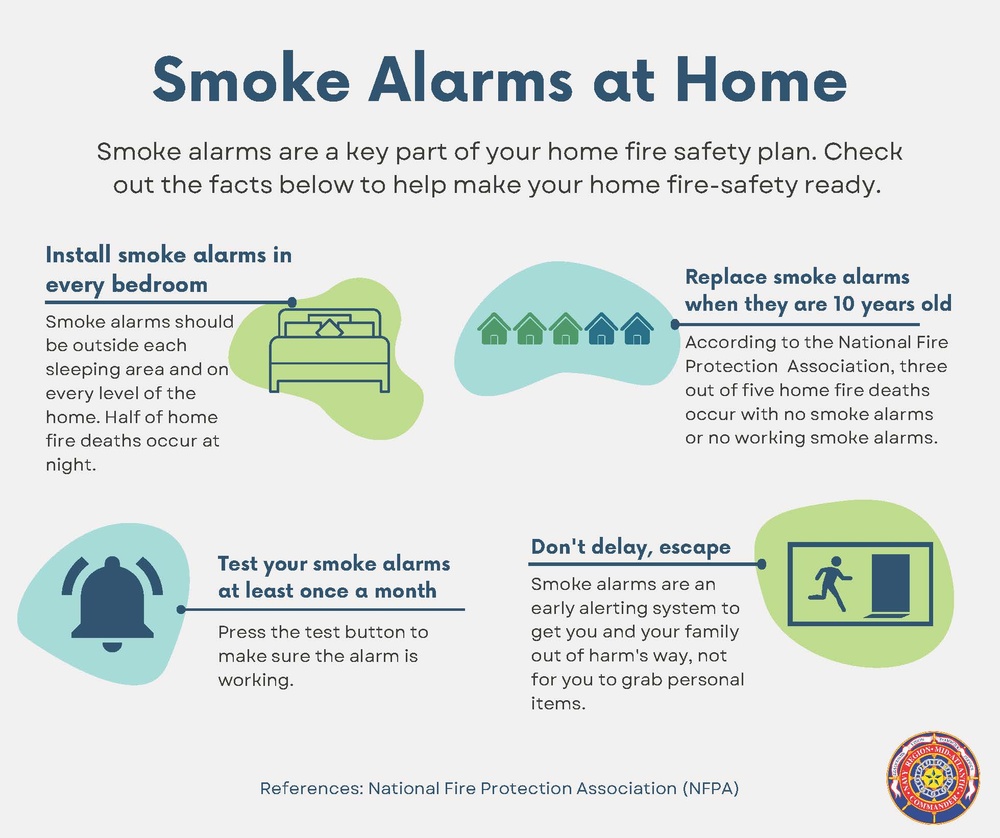
- One detector in every bedroom.
- One outside each sleeping area.
- One on each level, including basements.
Detectors should be placed:
- On ceilings or high up on walls (smoke rises).
- At least 10 feet from cooking appliances (to avoid false alarms).
- Away from air vents, windows, and doors.
Common mistake: Putting detectors too close to kitchens or bathrooms. Steam and cooking smoke may cause false alarms.
Installation Data
Homes with detectors in the right places have 50% fewer fire deaths than homes with poor placement.

How Smoke Detectors Sense Different Fire Types
Fires are not all the same. Here are two main types:
- Flaming fires: Start quickly, produce small smoke particles.
- Smoldering fires: Burn slowly, make bigger smoke particles.
Ionization detectors are better for flaming fires. Photoelectric detectors are better for smoldering fires. Combination detectors handle both.
Example Scenario
If a curtain catches fire, an ionization detector will likely sound first. If a cigarette burns on a sofa, a photoelectric detector is more reliable.
How Smoke Detectors Avoid False Alarms
False alarms are annoying and can lead people to ignore real warnings. Modern detectors use several tricks to avoid them:
- Some photoelectric detectors filter out dust and insects.
- Ionization detectors may have screens to block larger particles.
- Combination detectors use logic circuits to check for real fire conditions.
Non-obvious insight: Many false alarms come from humidity, not just smoke. Devices with humidity sensors can reduce these errors.
Power Supply: Batteries Vs. Wired Detectors
Smoke detectors use different power sources:
- Battery-powered: Easy to install, but batteries must be changed every 6–12 months.
- Hardwired: Connected to house power, often with battery backup.
Homes built after 1999 in the US usually require hardwired detectors. Battery-powered ones are popular for older homes and apartments.
Power Source Comparison
| Power Source | Pros | Cons | Common Use |
|---|---|---|---|
| Battery | No wiring needed, portable | Batteries die, needs regular checks | Older homes, rentals |
| Hardwired | Reliable, often interconnected | Requires installation, cost | New buildings |
| Battery Backup | Works during power outages | Extra cost, more maintenance | Critical areas |
How Smoke Detectors Communicate
Some detectors work alone. Others are connected:
- Interconnected detectors: If one alarm goes off, all sound. Useful for large homes.
- Smart detectors: Connect to Wi-Fi, send alerts to phones, and can notify emergency services.
Example: Smart Smoke Detectors
Modern devices like Nest Protect use both smoke and CO sensors, connect to apps, and send messages if smoke is detected. They can also tell you which room the alarm is coming from.
Maintenance And Testing
A smoke detector is only as good as its maintenance. You should:
- Test detectors every month (use the test button).
- Change batteries at least once a year.
- Replace detectors every 10 years.
Non-obvious insight: Dust and insects can block sensors. Vacuum the detector gently every few months.
Detector Lifespan Data
Most detectors lose sensitivity after 8–10 years. Manufacturers recommend replacing them even if they still beep during tests.
Smoke Detectors And Fire Safety Laws
Many countries require smoke detectors by law. In the US:
- All new homes must have interconnected detectors.
- Rental properties must provide detectors and maintain them.
- Some states require detectors in every room.
Failing to meet these laws can lead to fines and higher insurance costs.

How Smoke Detectors Handle Different Environments
Certain places need special detectors:
- Kitchens and bathrooms: Use heat detectors to avoid false alarms.
- Garages and workshops: Dust can block sensors—look for sealed detectors.
- Hotels and hospitals: Systems are connected, with central monitoring.
Example Table: Detector Types For Different Locations
| Location | Recommended Detector | Why |
|---|---|---|
| Bedroom | Photoelectric | Detects smoldering fires (common at night) |
| Kitchen | Heat | Avoids false alarms from cooking |
| Garage | Sealed photoelectric | Dust protection |
| Basement | Ionization | Quick detection for electrical fires |
Choosing The Right Smoke Detector
When selecting a detector, think about:
- Type of fire risk: Smoldering vs. flaming.
- Room conditions: Humidity, dust, cooking smoke.
- Power source: Battery, hardwired, backup.
- Features: Interconnection, smart alerts, CO detection.
Common mistake: Buying only ionization detectors. Experts recommend using both types, or a combination unit, for best safety.
Example: Best Detector For A Family Home
A family home should have:
- Photoelectric detectors in bedrooms and living rooms.
- Heat detectors in kitchens and bathrooms.
- Interconnected hardwired detectors with battery backup.
How Smoke Detectors Have Improved Over Time
Smoke detectors have changed a lot since the first models in the 1960s. Modern devices offer:
- Voice alerts: Help children wake up faster than buzzers.
- Wireless connectivity: Easier installation.
- Self-testing: Some detectors check themselves and send alerts if there is a problem.
- Long-life batteries: Last up to 10 years.
Data: Smoke Detector Effectiveness
According to the NFPA, homes with working smoke detectors have a 60% lower death rate from fire. Smart detectors are linked to faster emergency response times.
How Smoke Detectors Handle Fire And Smoke Patterns
Smoke detectors are built to sense different smoke patterns:
- Fast, light smoke: Ionization detectors react quickly.
- Thick, slow smoke: Photoelectric detectors are more sensitive.
In some fires, both types may be needed. For example, a kitchen fire may start with fast flames, then create thick smoke.
Non-obvious insight: Some fires produce little smoke, especially electrical fires. Detectors with heat sensors can catch these early.
Smoke Detectors And Carbon Monoxide
Some fires produce carbon monoxide (CO), a deadly gas. Many detectors now include CO sensors:
- They alert you to both smoke and CO.
- CO is odorless and invisible, so detection is critical.
Homes with gas appliances, fireplaces, or attached garages should use combination smoke and CO detectors.
Common Problems And Troubleshooting
Smoke detectors sometimes beep for reasons other than fire:
- Low battery: Replace batteries.
- Dust or insects: Clean detectors regularly.
- Old age: Replace detectors after 10 years.
If a detector gives false alarms often, check placement. Move it further from kitchens and bathrooms.
Non-obvious insight: Electrical surges can trigger alarms in hardwired detectors. Use surge protectors if you have frequent issues.
Real-world Example: Smoke Detectors In Action
In 2020, a fire broke out in a home in New York. The family escaped because their interconnected detectors woke everyone up. Firefighters arrived in time to control the blaze. The detectors were only three years old and had been tested monthly.
This shows that good placement, regular maintenance, and interconnected alarms make a real difference.
Latest Innovations In Smoke Detection
Technology is moving forward. New detectors can:
- Distinguish between smoke and steam: Reduces false alarms.
- Send alerts to smartphones: Helps when you are away from home.
- Connect to smart home systems: Turns on lights or unlocks doors during fire.
Some systems can even analyze smoke patterns to identify the type of fire and suggest the best escape route.
For more technical details, visit Wikipedia.
Frequently Asked Questions
What’s The Difference Between Ionization And Photoelectric Smoke Detectors?
Ionization detectors are sensitive to small smoke particles from fast-burning fires. Photoelectric detectors respond to larger particles from slow, smoldering fires. Experts recommend having both types for full coverage.
How Often Should I Replace The Batteries In My Smoke Detector?
Change batteries at least once a year. If your detector chirps or beeps, replace batteries right away. Some models use long-life batteries that last up to 10 years, but monthly testing is still important.
Why Does My Smoke Detector Beep When There’s No Smoke?
A beep usually means low battery or sensor problems (like dust or insects). Clean the detector and change batteries. If the problem continues, replace the detector.
Where Should Smoke Detectors Be Installed In A Home?
Install detectors in every bedroom, outside sleeping areas, and on each level (including basements). Place detectors high on walls or ceilings, away from kitchens and bathrooms to avoid false alarms.
Do Smoke Detectors Also Detect Carbon Monoxide?
Some detectors sense both smoke and carbon monoxide. These combination units offer extra protection. Homes with gas appliances, fireplaces, or garages should use them.
Smoke detectors are simple but powerful. Understanding how they work helps you stay safe, choose wisely, and avoid mistakes. With the right type, good placement, and regular maintenance, smoke detectors give you the best chance to escape fire and protect your loved ones.