Every year, home fires claim lives and cause serious injuries—many of which could be prevented with a simple device: the smoke detector. You may have wondered, “How many smoke detectors do I need in my home?” The answer is not as simple as “one per floor.” The right number and proper placement can mean the difference between a safe escape and a tragic outcome. This guide will walk you through everything you need to know about smoke detector requirements, including the latest safety recommendations, practical installation tips, and mistakes homeowners often make.
Exclusive Deals
Limited-time Exclusive Deals. Check current discount on Amazon.
Check Price on Amazon As an Amazon Associate I earn from qualifying purchases.Why Smoke Detectors Matter
Smoke detectors are not just another item on your home maintenance checklist. They are your first line of defense against deadly fires. According to the National Fire Protection Association (NFPA), almost three out of five home fire deaths happen in homes with no smoke alarms or non-working alarms. The main reason? Missing, disconnected, or dead batteries. Working smoke detectors cut the risk of dying in a reported home fire by over 50%.
Fires today spread faster due to modern materials and open floor plans. You might only have two to three minutes to escape once a smoke alarm sounds. That’s why having enough smoke detectors—in the right places—is critical.
How Many Smoke Detectors Do You Need?
The exact number depends on your home’s layout, size, and local building codes. But let’s break down the general guidelines recommended by fire safety experts.
Basic Recommendations
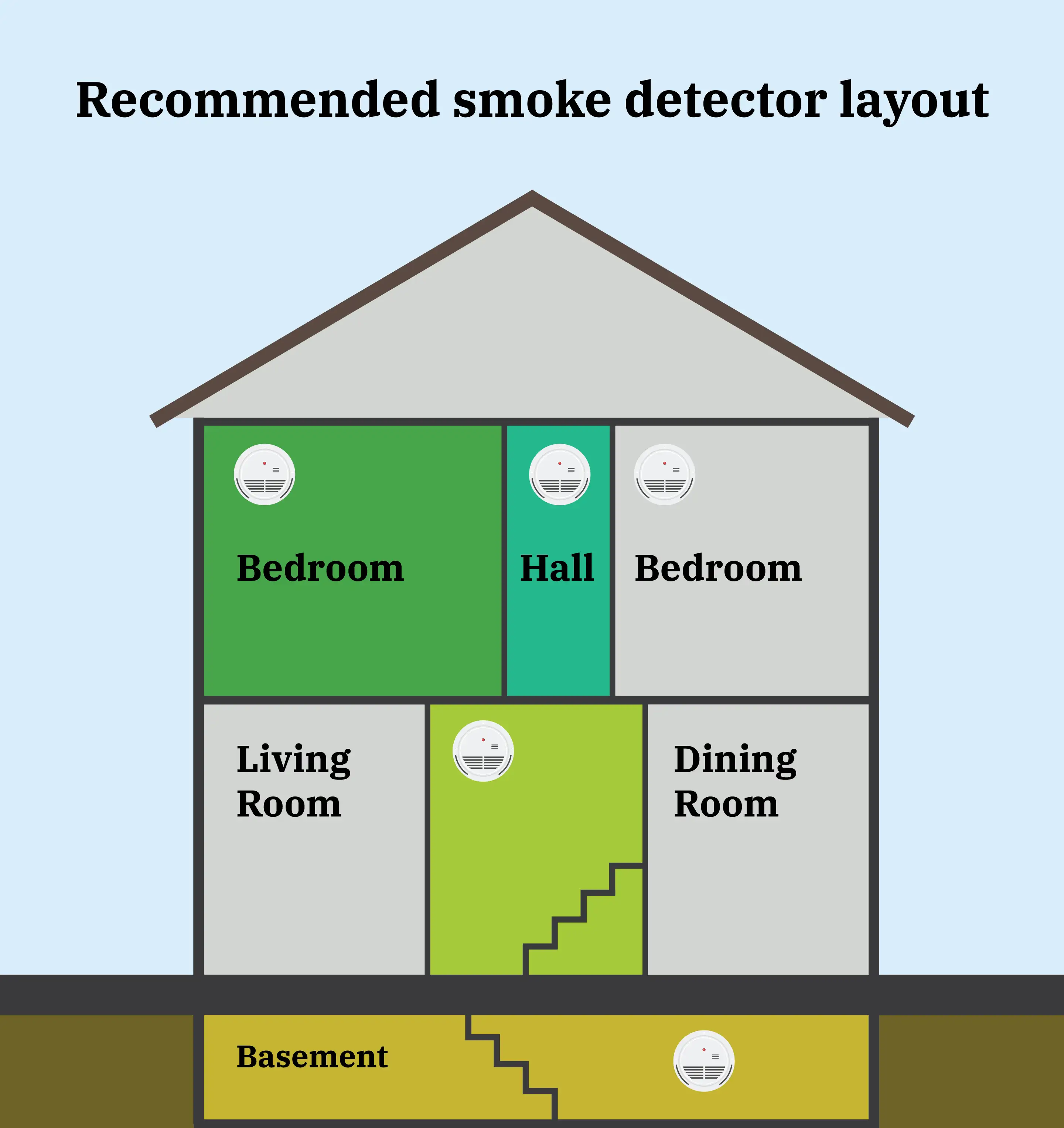
- At least one smoke detector on every floor of your home, including the basement.
- One smoke detector inside every bedroom or sleeping area.
- One smoke detector outside each separate sleeping area, such as in a hallway.
These are the minimums. Many homes need more than this to be truly safe.
Exclusive Deals
Limited-time Exclusive Deals. Check current discount on Amazon.
Check Price on Amazon As an Amazon Associate I earn from qualifying purchases.Example: Typical Two-story Home
Let’s say you have a two-story house with three bedrooms upstairs. Here’s how this would usually look:
- First floor: 1 in the living area, 1 in the basement (if you have one)
- Second floor: 1 in each bedroom (3 total), 1 in the hallway outside bedrooms
That’s at least 5 detectors (or 6 if you have a basement).
Why More Might Be Better
The “minimum” is just that—a basic starting point. Large homes, homes with extra rooms, or unique layouts often need more detectors. If you have rooms above a garage, finished attics, or a split-level design, you might need additional units.
Building Codes Vs. Best Practices
Building codes are the legal rules for home construction, including smoke alarm placement. However, these codes often set the lowest allowed standard. Safety organizations, such as NFPA, recommend going beyond the code for better protection.
Current Codes (as Of 2024)
Most US states follow the International Residential Code (IRC) or similar versions. Here’s what they generally require:
Exclusive Deals
Limited-time Exclusive Deals. Check current discount on Amazon.
Check Price on Amazon As an Amazon Associate I earn from qualifying purchases.- Smoke alarms in each bedroom
- One outside each sleeping area
- One on each level (including basements)
- Hardwired, interconnected alarms in new construction
But remember, codes change. Always check your local regulations. Some cities or states have even stricter rules.
Best Practice Recommendations
- Install interconnected smoke detectors—when one sounds, they all sound.
- Use combination smoke and carbon monoxide detectors where possible.
- Install extra alarms in large rooms or long hallways where smoke might not travel quickly.
Where To Place Smoke Detectors
Correct placement is as important as having enough alarms. Poor placement can delay detection or give false alarms.
Key Placement Tips
- Ceiling is best. If possible, mount detectors on the ceiling, at least 4 inches away from the nearest wall.
- If wall-mounted, place them 4–12 inches from the ceiling.
- Keep away from corners and air vents, which can affect smoke movement.
- Don’t install in kitchens or bathrooms, as steam and cooking fumes can cause false alarms. Place them at least 10 feet away from cooking appliances.
Common Locations
- Bedrooms: Center of the ceiling or high on a wall, away from doors and windows.
- Hallways: In the central area, especially if the hallway serves multiple bedrooms.
- Basements: On the ceiling at the bottom of the stairs.
Places To Avoid
- Garages (use heat detectors instead)
- Near windows, doors, or ducts
- Unheated spaces where temperatures can fall below 40°F or above 100°F

Home Size And Layout: How It Changes The Number
No two homes are exactly alike. Here are factors that change how many detectors you need.
Number Of Floors
- One-story: Usually needs at least 2–3 (bedrooms, hallway, living space)
- Two-story: Needs at least 4–5, plus extras for basements or finished attics
- Split-level: Each level, even small landings, should be covered
Bedrooms And Sleeping Areas
Each room where someone sleeps requires its own detector. This includes guest rooms, home offices converted to bedrooms, or any space where someone could sleep overnight.
Large Or Open-plan Homes
Open layouts allow smoke to spread, but also give it more space to rise. You may need additional detectors in large rooms, lofts, or high-ceiling areas to ensure early detection.
Special Features
- Basements: Always need their own detector
- Attics: Finished attics used as living space require detectors
- Garages: Use a heat detector, not a smoke detector, due to fumes
Table: Smoke Detector Count By Home Size
Here’s a quick reference for typical US homes:
| Home Type | # Bedrooms | # Floors | Minimum Detectors | Best Practice |
|---|---|---|---|---|
| Apartment/Condo | 1 | 1 | 2 | 3 |
| Small House | 2 | 1 | 3 | 4 |
| Medium House | 3 | 2 | 5 | 6–7 |
| Large House | 4+ | 2–3 | 6+ | 8–10 |
These numbers are for guidance. Always adjust for unique spaces in your home.
Types Of Smoke Detectors: Which Should You Choose?
Not all smoke detectors are the same. There are two main types, and each has strengths.
Ionization Smoke Detectors
- Best for: Detecting fast, flaming fires (like burning paper)
- How they work: Use a small amount of radioactive material to sense particles in the air
- Pros: Quick to respond to rapid fires
- Cons: More likely to trigger false alarms from cooking
Photoelectric Smoke Detectors
- Best for: Detecting slow, smoldering fires (like burning upholstery)
- How they work: Use a light beam that detects smoke particles
- Pros: Fewer false alarms, better for bedrooms and hallways
Combination Detectors
Many modern alarms use both technologies, or combine smoke and carbon monoxide detection. These are often the safest choice.
Table: Smoke Detector Types Compared
| Type | Best For | False Alarm Risk | Cost |
|---|---|---|---|
| Ionization | Fast, flaming fires | Higher (cooking fumes) | Low |
| Photoelectric | Slow, smoldering fires | Low | Medium |
| Combination | Both fire types | Medium | Medium/High |
Interconnected Smoke Detectors: Why They’re Safer
With interconnected smoke detectors, all alarms sound if one detects smoke. This is especially important in larger homes, where a fire in the basement might not be heard upstairs. New homes are required to have interconnected alarms, but you can retrofit older homes with wireless systems.
Power Source: Battery Vs Hardwired
Smoke alarms can be battery-powered or hardwired into your home’s electrical system.
Battery-powered
- Easy to install anywhere
- Needs battery changes every 6–12 months (unless using sealed 10-year batteries)
- Risk of someone removing the battery
Hardwired
- Connected to home power supply
- Usually have backup batteries in case of power loss
- Interconnected models are easier to set up
- More reliable but require professional installation
Table: Power Source Comparison
| Feature | Battery-Powered | Hardwired |
|---|---|---|
| Ease of Installation | Simple | Professional |
| Interconnection | Wireless (optional) | Wired |
| Reliability | Depends on battery | High |
| Battery Backup | Yes (main power) | Yes (backup only) |
Common Mistakes Homeowners Make
Even with the right number of detectors, people often make mistakes that reduce protection.
1. Not Enough Detectors
Many people install only one per floor or just one near the kitchen. This can leave sleeping areas unprotected.
2. Wrong Placement
Mounting too close to windows, doors, or bathrooms causes missed alarms or nuisance alarms.
3. Not Interconnected
In larger homes, alarms should communicate. If only one goes off, others may not hear it.
4. Ignoring Maintenance
Dead batteries and dirty sensors make alarms useless. Test each alarm monthly and replace batteries as needed.
5. Using Old Devices
Smoke detectors lose sensitivity over time. Replace every 10 years—check the date on the back.
How To Install Smoke Detectors Properly
You don’t need to be an electrician for battery-powered alarms, but follow safety steps:
- Read the instructions.
- Use the hardware provided—mounting on the ceiling or high on the wall.
- Avoid placing too close to vents, fans, or windows.
- Test after installation.
- For hardwired alarms, hire a licensed electrician.
Maintenance: Keeping Your Smoke Detectors Working
A smoke detector that doesn’t work is as dangerous as having none at all. Regular checks are essential.
Monthly Checks
- Press the test button on each alarm.
- Make sure the alarm sounds loudly.
Battery Changes
- Change batteries at least once a year (unless you have sealed, 10-year models).
- If the alarm chirps, replace the battery right away.
Cleaning
- Use a vacuum brush to remove dust from the detector’s exterior every few months.
- Never paint over a detector.
Replacement
- Replace every detector after 10 years—even if it seems fine.
Special Situations: Renters, Seniors, And People With Disabilities
Renters
Landlords are required by law to provide working smoke detectors in most US states. Still, check your lease and test detectors regularly.
Seniors
Consider alarms with strobe lights or bed shakers for those who are hard of hearing.
People With Disabilities
Look for special models with visual or vibrating alerts. You can find more info at the NFPA’s official website.
Upgrading To Smart Smoke Detectors
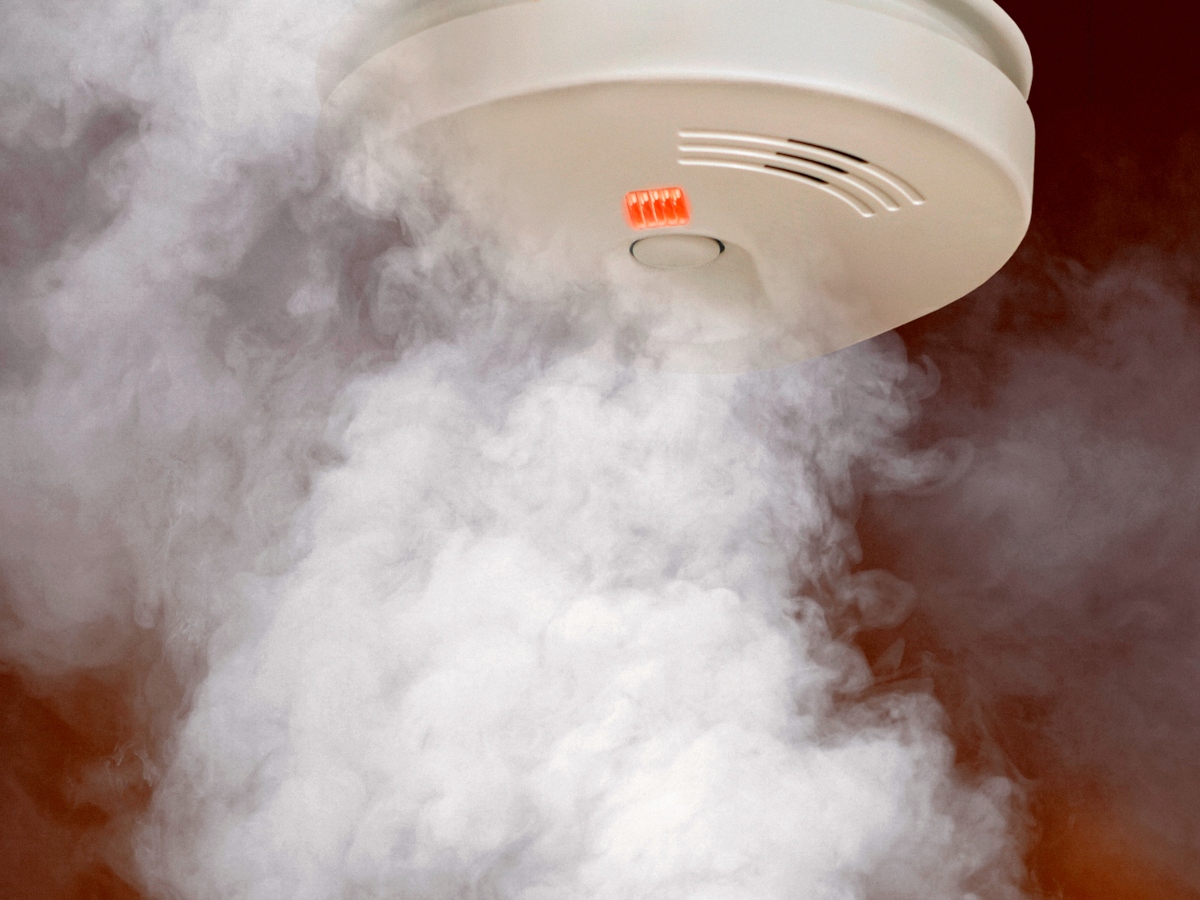
Smart alarms connect to your Wi-Fi and send alerts to your phone. They can also alert you if you’re away from home. Some models even test themselves and tell you when maintenance is needed. While more expensive, smart detectors provide extra peace of mind for tech-savvy homeowners.
Real-world Example: Upgrading A Family Home
Consider a family with a three-bedroom, two-story house and a finished basement. Following only the minimum code would mean five detectors. But by adding interconnected, combination smoke and carbon monoxide detectors in each bedroom, hallway, living area, and basement, the family improved safety and reduced the chance of missing an alarm.
When one detector sensed smoke from a faulty appliance in the basement, all alarms sounded—giving everyone enough time to get out safely.
Non-obvious Insights For Maximum Safety
Many people don’t realize that closed doors can slow smoke, buying precious escape time. However, that also means smoke may not reach hallway detectors quickly. That’s why detectors in each bedroom are so important.
Another detail: interconnected alarms can be installed wirelessly in older homes. You don’t need to rewire the house—just choose models that link via radio signals.
What To Do After Installation
Once your alarms are installed and working:
- Practice a fire escape plan with your household
- Make sure everyone can hear the alarms from their bedrooms
- Review your plan twice a year, and update as your home changes
Frequently Asked Questions
How Often Should I Test My Smoke Detectors?
Test every smoke detector once a month by pressing the test button. If it doesn’t sound, replace the battery or the entire alarm.
Can I Install Smoke Detectors Myself, Or Do I Need An Electrician?
You can install battery-powered alarms yourself. For hardwired models, it’s safest to hire a licensed electrician to avoid electrical hazards.
What Type Of Smoke Detector Is Best For Bedrooms?
Photoelectric smoke detectors are best for bedrooms because they’re less likely to trigger false alarms from cooking and are quick to detect smoldering fires.
How Do I Know If My Smoke Detector Is Too Old?
Check the manufacture date on the back of the alarm. If it’s more than 10 years old, replace it—even if it still works.
Should I Have Smoke Detectors In The Kitchen?
Do not install smoke detectors directly in the kitchen. Instead, place them at least 10 feet away from cooking appliances to reduce false alarms.
—
When it comes to fire safety, it’s better to have too many detectors than too few. By understanding your home’s needs, following expert guidelines, and keeping your alarms in top condition, you protect not just your property—but the people you care about most.