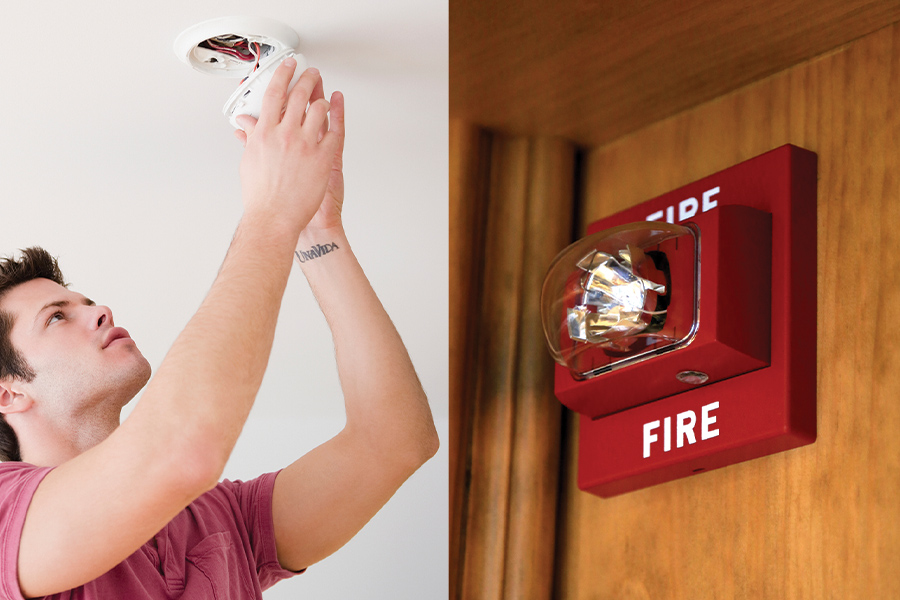
Every home, office, and public building needs protection against fire. But when you look up safety devices, you’ll often see two terms: smoke detector and fire alarm. Many people use these words as if they mean the same thing. In fact, they are not. Understanding the difference can help you make smarter choices about protecting your property and loved ones.
Let’s clear up this confusion. This article explains what smoke detectors and fire alarms are, how they work, the main differences, and why both matter. You’ll get practical advice, real-world examples, and see how these devices fit into modern safety systems.
By the end, you’ll know exactly what to look for—and why.
Exclusive Deals
Limited-time Exclusive Deals. Check current discount on Amazon.
Check Price on Amazon As an Amazon Associate I earn from qualifying purchases.What Is A Smoke Detector?
A smoke detector is a device that senses smoke—often the first sign of fire. Its main job is to detect smoke and alert people nearby with a loud sound. Smoke detectors are used in homes, hotels, schools, and many other places.
How Smoke Detectors Work
Most smoke detectors use one of these two methods:
- Ionization Sensors: These are good at sensing fast-burning fires. Inside, there are two plates with a small electrical current. Smoke particles disrupt the current, triggering the alarm.
- Photoelectric Sensors: These are better for slow, smoldering fires. A light beam shines inside the detector. When smoke enters, it scatters the light, and a sensor picks up the change.
Some advanced models combine both technologies for better accuracy.
Types Of Smoke Detectors
You’ll find different kinds:
Exclusive Deals
Limited-time Exclusive Deals. Check current discount on Amazon.
Check Price on Amazon As an Amazon Associate I earn from qualifying purchases.- Standalone Smoke Detectors: These are battery-powered or wired to your electric system. They alert only people in the room or nearby.
- Interconnected Smoke Detectors: If one goes off, all connected units sound. Useful in large homes or buildings.
- Smart Smoke Detectors: These connect to Wi-Fi and send alerts to your phone.
Where Smoke Detectors Are Used
You’ll see smoke detectors:
- In bedrooms, hallways, living rooms
- In hotels, dorms, hospitals
- Inside offices and factories
In the US, most states require smoke detectors in homes by law.
Limitations Of Smoke Detectors
Smoke detectors are very important, but they have limits:
Exclusive Deals
Limited-time Exclusive Deals. Check current discount on Amazon.
Check Price on Amazon As an Amazon Associate I earn from qualifying purchases.- They only detect smoke, not heat or flames.
- They don’t call emergency services.
- They alert only people close enough to hear.
Many people don’t realize: if you’re not home, you won’t know your smoke detector is sounding unless it’s a smart model.
What Is A Fire Alarm?
A fire alarm is a complete system designed to detect fire and alert people—and sometimes even emergency services. Fire alarms can use smoke detectors, heat sensors, flame detectors, and manual pull stations.
Components Of Fire Alarm Systems
A typical fire alarm system includes:
- Smoke Detectors: To sense smoke.
- Heat Sensors: To detect rising temperatures.
- Manual Pull Stations: People can trigger the alarm if they see fire.
- Control Panel: The “brain” of the system, connecting all devices.
- Notification Devices: Sirens, bells, strobes, or speakers to alert everyone.
- Communication Systems: Some connect to fire departments or security companies.
How Fire Alarms Work
Fire alarm systems work in steps:
- A sensor detects fire, smoke, or heat.
- The signal goes to the control panel.
- The control panel activates sirens and alerts.
- Some systems automatically contact emergency services.
Types Of Fire Alarm Systems
- Conventional Systems: Divide the building into zones. When an alarm goes off, you know which zone, not the exact spot.
- Addressable Systems: Each device has an address. The system shows exactly which detector triggered the alarm.
- Wireless Systems: Use radio signals, useful in buildings where wiring is hard.
Where Fire Alarms Are Used
You’ll see fire alarms in:
- Large buildings: Offices, schools, hospitals, factories
- Hotels and apartment complexes
- Shopping malls and airports
Many cities require fire alarms in public and commercial buildings by law.
Special Features
Some fire alarm systems:
- Automatically close fire doors
- Control elevators
- Turn off air conditioning to stop smoke spreading
- Provide voice instructions to help evacuation
Smoke Detector Vs Fire Alarm: Key Differences
Many people think smoke detectors and fire alarms are the same. They are not. Here are the main differences:
| Feature | Smoke Detector | Fire Alarm |
|---|---|---|
| Function | Detects smoke and alerts locally | Detects fire, alerts building, may contact emergency services |
| Components | Single device (sensor + buzzer) | System (multiple sensors, control panel, sirens) |
| Installation | Easy, often DIY | Professional, more complex |
| Coverage | Room or area | Entire building/zones |
| Notification | Local alarm sound | Building-wide alerts, emergency contact |
| Cost | Low | Higher |
Practical Example
Imagine you live in a house. You install a smoke detector in the hallway. If there’s smoke, the alarm sounds, but only you and people nearby will hear.
Now, imagine an office building. There’s a fire alarm system. If smoke is detected in one room, alarms sound across the entire building. The fire department may be notified automatically.
Why The Difference Matters
- Smoke detectors are perfect for small spaces and homes. They’re easy to install and affordable.
- Fire alarms are essential for bigger, public places. They help evacuate everyone and can alert emergency responders.
Many beginners miss this: a smoke detector alone does not guarantee full fire protection. For large spaces, you need a fire alarm system.
Smoke Detectors And Fire Alarms: How They Work Together
These devices often work together. In many fire alarm systems, smoke detectors are part of the system.
For example:
- A smoke detector senses smoke.
- The signal goes to the fire alarm control panel.
- The fire alarm system alerts everyone and may contact emergency services.
So, in large buildings, smoke detectors are “sub-parts” of the fire alarm system.
Choosing Between Smoke Detectors And Fire Alarms
Which one do you need? It depends on your situation.
For Homes
Most homes use smoke detectors. They’re:
- Simple to install (battery or plug-in)
- Cheap (about $10–$50 per unit)
- Easy to test and maintain
Some advanced homes use smart smoke detectors that send alerts to phones.
For Apartments And Dorms
Many apartment complexes use interconnected smoke detectors or simple fire alarm systems. This ensures everyone hears the alarm, not just the person closest.
For Offices, Schools, And Public Buildings
Here, fire alarm systems are required by law. They must:
- Cover the entire building
- Alert all occupants
- Connect to emergency services
These systems are more expensive, but they save lives in big spaces.
Cost Comparison
Here’s a quick look at typical costs:
| Device/System | Typical Cost (US) | Installation |
|---|---|---|
| Smoke Detector | $10–$50 each | DIY or simple professional |
| Fire Alarm System | $2,000–$20,000+ for a building | Professional only |
Common Mistakes When Choosing
- Using only smoke detectors in large spaces: This leaves gaps. Fire alarms are needed in big buildings.
- Ignoring maintenance: Batteries die, sensors get dirty. Test devices every month.
- Wrong placement: Putting a smoke detector near a kitchen can cause false alarms.
- Not following local codes: Many cities have strict rules for fire safety.
A non-obvious insight: Modern fire alarm systems can be tailored for special risks, like chemical fires or high-rise evacuation.
Installation And Maintenance
Installing Smoke Detectors
- Place detectors outside bedrooms, in hallways, and on every floor.
- Avoid putting them near bathrooms or kitchens to reduce false alarms.
- Use screws or adhesive pads for mounting.
- Test after installation.
Installing Fire Alarms
- Requires professionals.
- Design system for building layout and risk factors.
- Ensure all sensors and alarms are connected properly.
- Test system after setup.
Maintenance Tips
- Test every device monthly.
- Change batteries once a year.
- Clean sensors with a vacuum or soft cloth.
- Replace old detectors every 8–10 years.
Many beginners forget: dust and insects can block sensors, causing failure or false alarms.
Regulations And Standards
In the US, fire safety is controlled by codes and standards:
- NFPA 72: National Fire Alarm and Signaling Code
- International Building Code
- Local city and state rules
These codes specify where detectors and alarms must be placed, how often they must be tested, and what types of devices are allowed.
Compliance Matters
- Non-compliance can lead to fines.
- Insurance may not cover fire damage if rules aren’t followed.
- Lives can be lost due to poor systems.
Always check local regulations before buying or installing fire safety devices.
The Role Of Technology
Fire safety devices are getting smarter. Here are some innovations:
- Smart Smoke Detectors: Connect to smartphones, send alerts even when you’re away.
- Integrated Fire Alarms: Link with security systems, sprinklers, and emergency lighting.
- Voice Alerts: Some systems use voice instructions to guide people during evacuation.
- Wireless Systems: Easy installation in older buildings.
One insight many miss: new fire alarm systems can track which rooms are occupied and tailor evacuation instructions in real time.
Real-world Data And Fire Safety
Fire is a leading cause of property damage and injury. Here are some statistics:
- In the US, home fires cause 2,500 deaths and 12,000 injuries every year (NFPA).
- Homes with smoke detectors are 50% less likely to have fatal fires.
- In commercial buildings, fire alarm systems reduce fire-related injuries by over 70%.
These numbers show why both smoke detectors and fire alarms are critical.
Example Scenarios
Scenario 1: Small Home
Jane lives in a single-story house. She installs three smoke detectors—one in the hallway, one near the kitchen (but not too close), and one in the bedroom. If smoke is detected, the alarm sounds, and Jane can respond quickly.
Scenario 2: High-rise Apartment
A large apartment building uses a fire alarm system. Smoke detectors are placed in hallways and apartments. If smoke is detected anywhere, the central control panel activates alarms throughout the building, and the fire department is notified.
Scenario 3: School
A school installs a fire alarm system with smoke detectors, heat sensors, manual pull stations, and voice alert speakers. During a fire drill, the system guides students to exits and ensures everyone is evacuated.
Smoke Detector And Fire Alarm Comparison Table
Here’s another look at the main differences and similarities:
| Aspect | Smoke Detector | Fire Alarm |
|---|---|---|
| Main Purpose | Detect smoke and alert locally | Detect fire, alert everyone, coordinate response |
| Typical Use | Homes, small spaces | Large buildings, public spaces |
| Emergency Contact | No | Often yes |
| Maintenance | Easy, user can do | More complex, professional needed |
| Integration | Standalone or part of fire alarm | Integrated system |
When Both Are Needed
Some places use both devices:
- Hotels: Smoke detectors in rooms, fire alarms in corridors and public areas.
- Factories: Smoke detectors in specific zones, fire alarms across the building.
- Hospitals: Smoke detectors in patient rooms, fire alarm systems for whole facility.
This layered approach boosts safety and meets regulations.

How To Test Your Devices
Testing is simple but often neglected.
- Smoke Detectors: Press the test button until alarm sounds.
- Fire Alarms: Professional inspection involves checking all sensors, sirens, and communication systems.
Some smart devices send monthly test reminders.
What Happens If Devices Fail?
Failure can be deadly. In many fatal fires, the smoke detector had no battery or was broken.
- Check devices often.
- Replace dead batteries right away.
- Don’t ignore false alarms—they may signal a problem.
Upgrading And Modernizing
Many older buildings lack modern fire alarm systems. Upgrading is important:
- New systems offer faster response and better coordination.
- Smart devices can alert you even when you’re away.
- Wireless solutions make installation easier.
Check your current system. If it’s old or incomplete, consider an upgrade.
Where To Learn More
For more details on fire safety codes and devices, see the National Fire Protection Association. They offer guides, statistics, and advice.

Frequently Asked Questions
What Is The Main Purpose Of A Smoke Detector?
A smoke detector’s main purpose is to sense smoke and alert people nearby. It helps warn you early so you can escape before fire spreads.
How Does A Fire Alarm System Alert Emergency Services?
Many fire alarm systems are connected to monitoring centers or directly to the fire department. When an alarm is triggered, the system sends a signal to emergency services, speeding up response.
Are Smoke Detectors Required In Every Home?
In the US and many other countries, smoke detectors are required by law in homes. They must be placed in bedrooms, hallways, and on every floor.
Can I Install A Fire Alarm System Myself?
No, fire alarm systems are complex and require professional installation. The system must meet legal codes and work reliably across the building.
How Often Should I Test And Maintain My Smoke Detector?
Test your smoke detector monthly by pressing the test button. Change batteries every year, and replace the detector every 8–10 years for best safety.
Fire safety is not just about having devices—it’s about understanding how they work, choosing the right ones, and maintaining them well. Smoke detectors and fire alarms are both vital, but they serve different roles. Knowing the difference can save lives and property.
Make sure your home or workplace is protected, and stay informed for the safest possible future.