Wyze is better value for features; Blink is simpler and excels at battery life and wireless setups.
I have worked with and tested both systems. This Wyze vs Blink guide draws on hands-on experience and current specs to help you choose the right home camera system. I will compare cameras, video quality, storage, smart home support, pricing, ease of use, and real-world reliability. Read on for clear recommendations, setup tips, and trade-offs so you can pick the best option for your home.

Source: wyze.com
Exclusive Deals
Limited-time Exclusive Deals. Check current discount on Amazon.
Check Price on Amazon As an Amazon Associate I earn from qualifying purchases.Quick comparison: Wyze vs Blink
Wyze vs Blink both aim to protect your home. Wyze focuses on feature-rich cameras at low cost. Blink focuses on long battery life and simple wireless setups. I tested both indoors and outdoors. Wyze often wins on features. Blink wins on battery and simplicity.
Key quick points:
- Wyze offers local microSD storage and many smart features.
- Blink uses AA batteries for months of life in many cases.
- Both have cloud plans for extended recording and features.
Source: amazon.com
Design, build, and installation
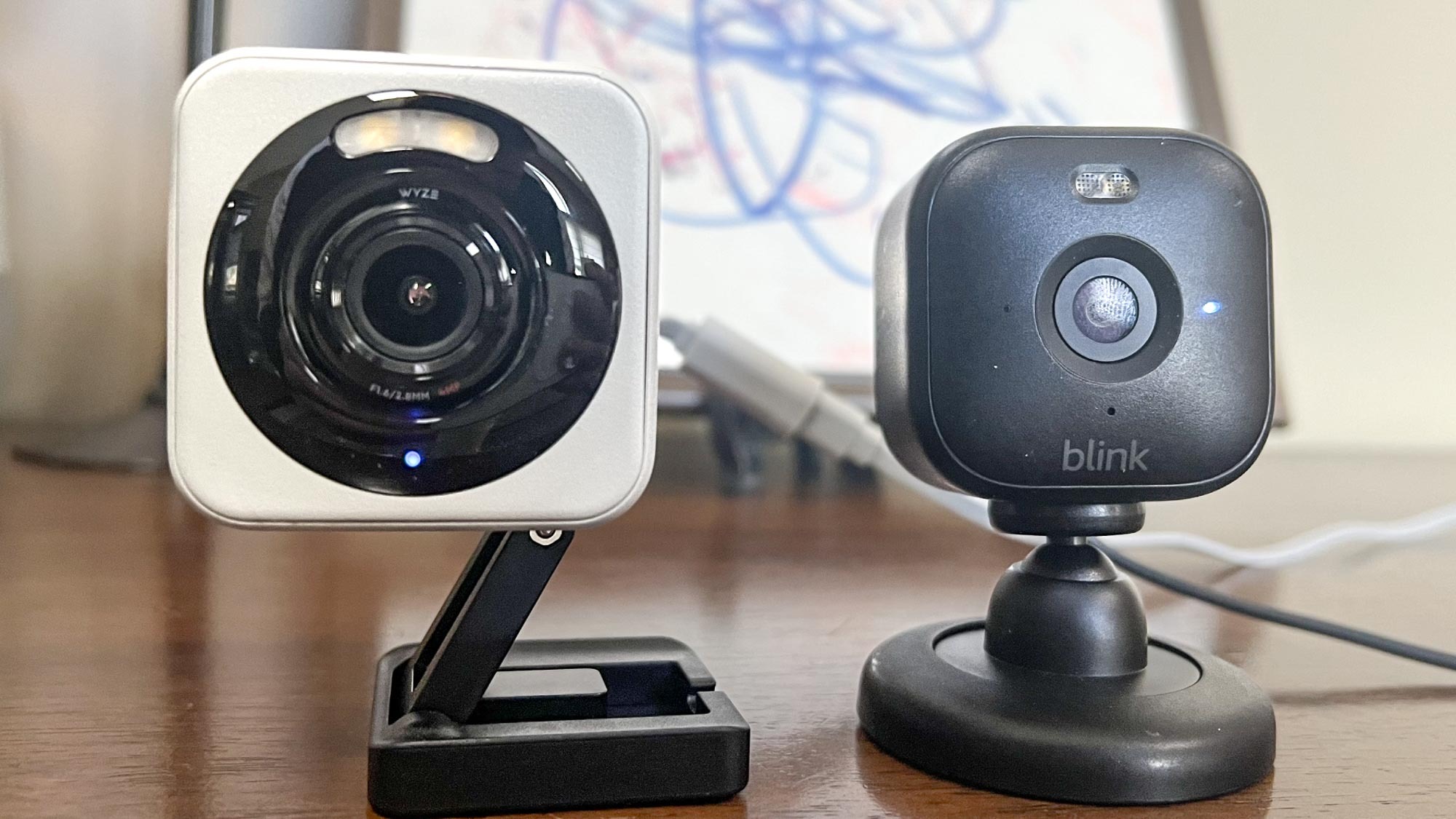
Wyze vs Blink designs differ by use case. Wyze cameras often look small and plug-in. Blink cameras focus on battery use and mountable forms. Build quality is solid for price on both brands.
Exclusive Deals
Limited-time Exclusive Deals. Check current discount on Amazon.
Check Price on Amazon As an Amazon Associate I earn from qualifying purchases.Installation notes from my tests:
- Wyze often needs power. It uses USB power or adapters for indoor and outdoor models.
- Blink models often run on two or more AA batteries. That makes them great for spots without power.
- Mounting hardware is simple on both. Blink mounts feel lighter. Wyze mounts feel more stable for outdoor use.

Source: wyze.com
Video quality and performance
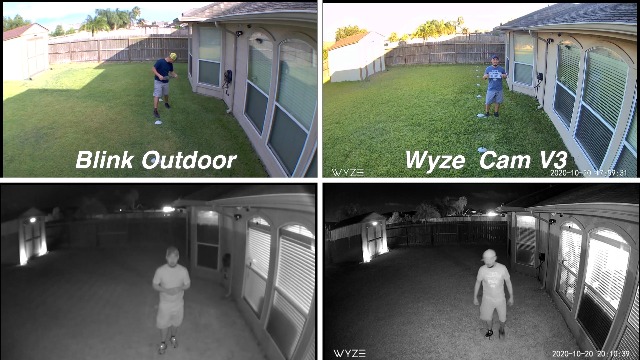
Wyze vs Blink video differs in low-light and detail. Wyze models usually offer better night vision and clearer low-light images. Blink cameras deliver good daytime video but can struggle at night compared to Wyze.
Exclusive Deals
Limited-time Exclusive Deals. Check current discount on Amazon.
Check Price on Amazon As an Amazon Associate I earn from qualifying purchases.What I observed:
- Wyze cameras commonly record at 1080p with stronger color and night clarity.
- Blink cameras also record at 1080p on many models but focus on efficient processing to save battery.
- Motion detection can vary. Wyze has more motion tuning options. Blink keeps detection simpler to save power.
Real-life tip: If you need crisp night video for a porch or yard, Wyze often performs better. If you need a camera you can place anywhere without power, Blink’s battery design is a big win.

Source: wyze.com
Storage, cloud, and subscription
Wyze vs Blink handle storage differently. Both offer cloud options and local storage choices. The trade-off is cost versus convenience.
Storage differences:
- Wyze supports local microSD cards for continuous or event recording on many models.
- Blink supports local storage via a Sync Module with a USB drive on compatible kits.
- Both companies offer cloud subscriptions for longer video retention and advanced features. Free cloud clips are often limited in length or availability.
Subscription notes:
- Wyze’s optional plan unlocks continuous recording and more smart features.
- Blink’s subscriptions cover cloud backups and more extended video storage.
- Check the current plan features and prices before buying. Plans change over time.

Source: wyze.com
Smart home integration and features
Wyze vs Blink integrate with smart homes in different ways. Wyze tends to add more features. Blink keeps things simple and reliable with core integrations.
Integration highlights:
- Wyze works with many smart home systems, including voice assistants. It also offers local automations.
- Blink integrates with major voice assistants and some smart hubs. It focuses on easy, reliable triggers.
- Wyze often adds firmware features and labs. Blink emphasizes stable, low-power operation.
Feature trade-offs:
- Wyze gives features like person detection, package alerts, and flexible rules.
- Blink keeps battery life long by limiting constant processing on-device.

Source: youtube.com
Pricing, value, and which to choose
Wyze vs Blink pricing often drives the decision. Wyze is usually cheaper for feature-heavy cameras. Blink can cost more per camera if you add Sync Modules and storage, but it can save money with fewer power needs.
Value tips:
- Choose Wyze if you want the most features per dollar and local storage without extra modules.
- Choose Blink if battery life and simple wireless placement are top priorities.
- For multi-camera setups, factor in subscription costs and any extra hubs or modules.
Personal pick: For most budget-conscious users who want features, I recommend Wyze. For renters or people who need zero-wiring installs, Blink is my pick.

Source: synced.sg
Setup tips, common issues, and real-life notes
Wyze vs Blink each have common setup quirks. I have set up both in apartments and homes, so here are practical tips.
Setup tips I use:
- For Wyze, prepare a reliable USB power source and an outdoor-rated case for exterior use.
- For Blink, check battery health and placement. Strong Wi-Fi at the camera location is crucial.
- Use local storage when possible to reduce cloud costs and keep longer records.
Common issues and fixes:
- Wi-Fi drops cause missed events. Move routers or add extenders for both Wyze and Blink.
- Battery life can drop in cold weather for Blink. Keep battery packs warm or use wired power if available for critical spots.
Source: tomsguide.com
Frequently Asked Questions of Wyze vs Blink
Which system records better at night, Wyze or Blink?
Wyze generally records better at night thanks to stronger low-light performance and improved infrared. Blink performs well in daytime but has softer night images on many models.
Can I use local storage with both Wyze and Blink?
Yes. Wyze supports microSD cards for local recording on many cameras, while Blink supports local storage through a Sync Module with a USB drive on compatible kits.
Which is cheaper to run long term, Wyze vs Blink?
Wyze can be cheaper if you rely on local storage and avoid subscriptions. Blink can save money on power costs but may need subscriptions for full cloud backups depending on your needs.
Is battery life better on Blink than Wyze?
Yes. Blink is designed for long battery life and often lasts months to years on AA batteries. Wyze battery models exist, but Blink is known for superior battery efficiency.
Are Wyze and Blink compatible with voice assistants?
Both systems work with major voice assistants. Wyze often has more advanced automations, while Blink focuses on simple voice commands and integrations.
Conclusion
Choosing between Wyze vs Blink comes down to what you value most. Pick Wyze for feature depth, better night video, and flexible local storage. Pick Blink for long battery life, easy wireless placement, and straightforward operation. I use Wyze for cameras near power and Blink for battery-only spots. Try one camera of each type first if you can. That lets you learn what fits your home and habits.
Take action: test a single camera from each brand in the spot you care about most, compare the footage, and then expand the system that matches your needs. Leave a comment with your setup questions or subscribe for more hands-on guides.