Are Trigger Locks Safe For Firearms Storage
Firearm safety is a serious responsibility for every gun owner. The way you store your guns can mean the difference between a safe home and a tragic accident. Among the many options for securing firearms, trigger locks are one of the most talked-about solutions. But are trigger locks really safe for firearm storage? Are they enough by themselves, or do they only offer a false sense of security? This article takes a deep look into trigger locks—how they work, their strengths and weaknesses, and when they can be part of a safe storage plan.
Understanding Trigger Locks
A trigger lock is a device designed to prevent a gun’s trigger from being pulled. It usually clamps over or through the trigger guard, blocking access to the trigger itself. These locks come in several forms:
- Keyed trigger locks: Opened with a physical key.
- Combination trigger locks: Require a numbered code.
- Cable-style locks: A flexible cable threads through the action and out the ejection port, making the gun hard to operate.
These devices are cheap, widely available, and often included for free when you buy a new gun. But their simplicity makes many people wonder: do they really keep your gun safe?
Exclusive Deals
Limited-time Exclusive Deals. Check current discount on Amazon.
Check Price on Amazon As an Amazon Associate I earn from qualifying purchases.How Trigger Locks Work
Trigger locks are meant to stop someone from firing your gun by blocking access to the trigger. Most models are two-piece devices that snap or screw together around the trigger guard. When locked, the trigger cannot move backward and the gun cannot fire—at least not easily.
Cable-style locks go a step further by running a cable through the firearm’s action, which can prevent the gun from being loaded or closed. Many police departments and gun stores give these away as part of safety programs.
Trigger locks are not permanent. They are designed to be easy to remove by the owner, but hard for children or unauthorized users to defeat quickly.
Benefits Of Using Trigger Locks
Trigger locks have several clear benefits, especially when used correctly:
Exclusive Deals
Limited-time Exclusive Deals. Check current discount on Amazon.
Check Price on Amazon As an Amazon Associate I earn from qualifying purchases.- Low cost: Most trigger locks cost less than $20, with many priced under $10. This makes them affordable for almost every gun owner.
- Easy to install: No special tools or skills are needed. Most locks take just a few seconds to attach or remove.
- Prevents unintentional discharge: If a curious child finds your gun, a trigger lock makes it much harder for them to fire it accidentally.
- Portable: Trigger locks are small and light, so you can use them at home, on the road, or at the shooting range.
- Legal compliance: In some states, laws require guns to be stored with a trigger lock, especially if children live in the home.
For people who cannot afford a gun safe or need a quick, temporary solution, trigger locks offer a basic level of protection.
Common Misconceptions About Trigger Locks
Many gun owners believe trigger locks offer complete security. This is a dangerous myth. It’s important to understand what trigger locks do—and what they don’t do.
- They don’t stop theft: A trigger lock can be cut off with the right tools. If a thief wants your gun, a lock won’t stop them for long.
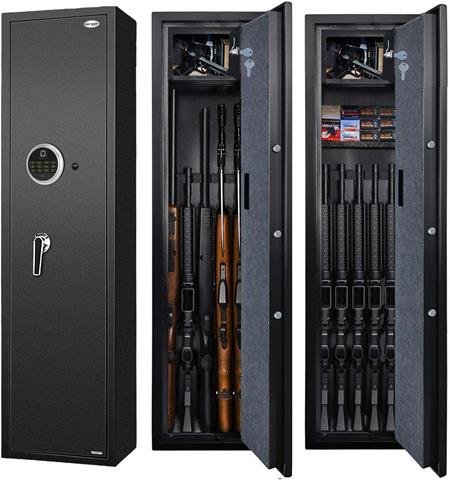
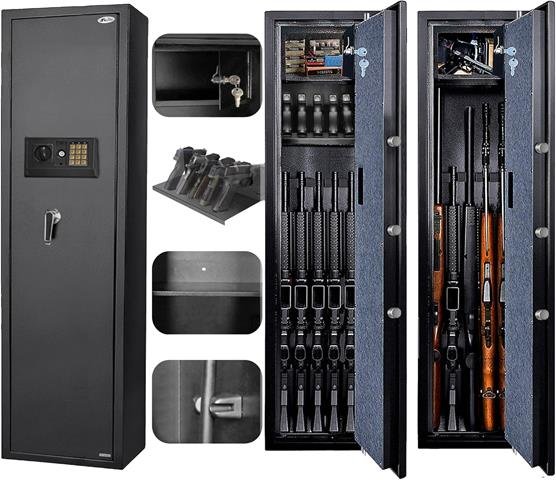
- Not a substitute for a safe: Trigger locks do not provide the same level of security as a locked gun safe or strongbox.
- Not always childproof: Some children, especially older ones, can figure out how to remove or defeat cheap locks.
- Do not prevent all accidents: If a loaded gun is dropped or mishandled, a trigger lock may not prevent all types of accidental discharges.
Thinking a trigger lock alone is enough can lead to unsafe storage practices.
Exclusive Deals
Limited-time Exclusive Deals. Check current discount on Amazon.
Check Price on Amazon As an Amazon Associate I earn from qualifying purchases.When Are Trigger Locks Safe For Firearm Storage?
Trigger locks are safest when used as part of a layered approach to gun storage. Experts recommend considering the following:
- Store guns unloaded: A trigger lock should only be placed on an unloaded firearm. Locking a loaded gun can be risky, as manipulating the lock may accidentally pull the trigger.
- Combine with other security: Use trigger locks together with a locked safe, lockbox, or secure cabinet. The more layers, the safer your storage.
- Keep keys/codes separate: Store the key or combination in a different, hidden location—never with the gun itself.
- Educate your family: Teach everyone in your home not to touch guns without supervision, even if they appear “locked.”
- Use quality locks: Cheap locks can break or be picked. Invest in a well-made lock from a trusted brand.
Trigger locks are best for people who need basic protection against accidents, not for those looking to stop theft or determined tampering.
Limitations And Risks Of Trigger Locks
No gun lock is perfect. Trigger locks have several important weaknesses:
- Can be removed with tools: Many locks can be defeated with basic items like screwdrivers, pliers, or hacksaws. Videos online show how even cheap plastic locks can be snapped off in seconds.
- May damage some guns: If a lock is too tight, it can scratch or dent the trigger guard, especially on collectible firearms.
- Potential for unsafe handling: Placing or removing a trigger lock on a loaded gun can actually cause it to fire if the trigger is bumped.
- Lost keys or forgotten combinations: This can leave you unable to use your own gun in an emergency.
- False sense of security: Relying only on a trigger lock can make you less careful about where you store your firearm.
A lock is only as strong as its weakest point. If your goal is to stop children from firing your gun, a trigger lock is better than nothing—but not as good as a safe.
Trigger Locks Vs. Other Firearm Storage Solutions
To better understand where trigger locks fit, let’s compare them with other common gun storage options.
| Storage Method | Cost | Child Protection | Theft Protection | Speed of Access |
|---|---|---|---|---|
| Trigger Lock | Low | Basic | Poor | Moderate |
| Gun Safe | High | Strong | Strong | Slower |
| Lockbox | Medium | Good | Moderate | Fast |
| Cable Lock | Low | Basic | Poor | Moderate |
As you can see, trigger locks are not strong enough to stand alone. They work best as a first line of defense—but should always be backed up by more secure storage if possible.
Practical Scenarios: When To Use Trigger Locks
- Traveling with a gun: Laws often require guns to be locked and unloaded during transport. Trigger locks are small and meet these legal standards in many states.
- At the shooting range: When not actively shooting, locking your gun prevents accidents or unauthorized use.
- Temporary visitors: If children or visitors are in your home, a trigger lock adds a quick extra layer of security.
- Budget limitations: If you can’t afford a safe right now, a trigger lock is a cheap way to reduce risk while you save for better storage.
However, if you have children, teens, or guests who might try to tamper with your firearms, you should view trigger locks as a minimum requirement, not a complete solution.
How Effective Are Trigger Locks? Data And Research
The effectiveness of trigger locks is supported by several studies:
- A report from the Centers for Disease Control and Prevention (CDC) found that homes that use locking devices on all firearms saw a 78% lower risk of unintentional gun deaths among children.
- The Harvard School of Public Health states that over 4.6 million children in the U.S. live in homes with loaded, unlocked guns. Use of trigger locks can help reduce this risk.
- After Massachusetts passed a law requiring all guns to be locked or disabled, the state’s gun death rate for children fell to the lowest in the country.
But it’s important to note: these studies show all locking devices work—not just trigger locks. Safes and lockboxes are included in these numbers, and they offer more protection than trigger locks alone.
Expert Opinions On Trigger Lock Safety
Most gun safety experts agree on a few key points:
- Trigger locks are better than nothing. They can prevent some accidents, especially with young children.
- They are not enough by themselves. For real security, combine a trigger lock with a locked storage container.
- Education is critical. Even the best lock cannot replace teaching family members about gun safety.
According to the National Shooting Sports Foundation (NSSF), “A trigger lock is a good first step, but it should not be your only step.” The American Academy of Pediatrics also recommends storing all guns locked, unloaded, and with ammunition stored separately.
How To Choose A Safe Trigger Lock
Not all trigger locks are created equal. Here’s what to look for:
- Strong construction: Choose steel over plastic for better durability.
- Tamper resistance: Look for models tested against picking, prying, or cutting.
- Fits your gun: Some locks do not fit all trigger guards, especially on revolvers or non-standard firearms.
- Easy to use (but not too easy): If the lock is too simple, it may not stop a determined child.
- Certified products: Look for locks that meet standards such as those from the California Department of Justice.
Here’s a comparison of popular trigger lock types:
| Type | Operation | Pros | Cons |
|---|---|---|---|
| Keyed Lock | Uses a key | Simple, cheap | Keys can be lost or copied |
| Combination Lock | Enter a code | No key needed | Codes can be guessed |
| Cable Lock | Threaded cable | Blocks action, fits most guns | Can be cut, may not fit all models |
Common Mistakes When Using Trigger Locks
Many accidents happen because of poor use of trigger locks, not the lock itself. Here are mistakes to avoid:
- Locking a loaded gun: Always unload your firearm before attaching a trigger lock. Failing to do so is a major safety hazard.
- Leaving keys nearby: If your child finds both the gun and the key, the lock serves no purpose.
- Forgetting about the lock: In an emergency, you might forget your gun is locked and waste precious seconds looking for the key.
- Using cheap or damaged locks: Old or flimsy locks may break or not engage properly.
- Not checking fit: Some trigger locks do not fit all guns. Test the lock before relying on it.
If you want real peace of mind, combine a trigger lock with other security steps.
Trigger Locks And Legal Requirements
Trigger lock laws vary widely across the United States. Some states and cities require guns to be stored with a locking device, especially if there are children in the home. Others only require locks to be sold with new guns, but not actually used.
States with stricter storage laws (like Massachusetts and California) tend to have lower rates of gun accidents involving children. Failing to follow local laws can lead to fines, criminal charges, or loss of your right to own guns.
Always check your state and city rules before relying on a trigger lock. For more information, see the Bureau of Alcohol, Tobacco, Firearms and Explosives.
Are Trigger Locks Enough For Home Defense Guns?
Many gun owners worry that locking their firearm will slow them down in an emergency. It’s true—unlocking a trigger lock takes time, especially under stress. If your gun is for home defense, consider:
- Storing the firearm in a quick-access safe instead of using only a trigger lock.
- Practicing unlocking your gun until it becomes automatic.
- Weighing the risk of fast access vs. accidental discharge or theft.
No solution is perfect. You must balance safety, speed, and legal responsibility.
Trigger Locks For Different Types Of Firearms
Trigger locks are not universal. Here’s how they work with different gun types:
- Revolvers: Some locks won’t fit around the curved trigger guard.
- Shotguns: Long trigger guards may prevent a tight fit.
- Semi-automatic pistols: Most locks fit well, but test before relying on them.
- Rifles: Some hunting rifles have thick or oddly shaped guards.
Always test a trigger lock on your gun before you trust it. If the fit is loose, it won’t stop a determined person.
Real-life Stories: When Trigger Locks Helped (and When They Failed)
There are many news stories of children finding unlocked guns, with tragic results. In some cases, a simple trigger lock prevented disaster. In others, a poorly used or cheap lock failed.
- In 2019, a child in Texas found a loaded handgun under a bed. Because it had a trigger lock, the child could not fire it.
- In another case, a teenager found a gun with a plastic lock and broke it off with pliers. The result was an unintentional shooting.
These stories show that while trigger locks can save lives, they are not fail-proof.
Important Non-obvious Insights
Many beginners don’t realize:
- Trigger locks are not meant for loaded guns. Using one on a loaded firearm increases the risk of accidental discharge. Always unload before locking.
- Locks can wear out or fail over time. Springs, keys, and combinations can all break or become unreliable. Replace old locks regularly.
Also, some insurance policies require proof of safe storage. A trigger lock alone may not meet all requirements. Always check your policy.
Best Practices For Safe Firearm Storage
For the safest home possible:
- Unload all firearms before storage.
- Use a quality trigger lock as an extra layer, not the only one.
- Store guns in a locked safe or lockbox if possible.
- Keep ammunition stored separately.
- Educate your family on gun safety and what to do if they find a firearm.
- Regularly check that locks and safes are functioning properly.
This multi-layered approach offers the best protection against both accidents and theft.
Final Thoughts
Trigger locks play an important role in gun safety, especially for families with children. They are simple, low-cost tools that can help prevent accidents. But they are not a magic solution. On their own, trigger locks are not safe enough for all storage needs—they should be part of a bigger safety plan that includes education, secure storage, and responsible handling.
Use trigger locks as a first line of defense, not your only one. Invest in a quality gun safe if you can, and always keep your firearms unloaded and separate from ammunition. Remember, real gun safety depends not just on locks, but on the choices you make every day.
Frequently Asked Questions
What Is The Main Purpose Of A Trigger Lock?
The main purpose of a trigger lock is to prevent someone from accidentally or easily pulling the trigger of a gun. It is a simple device to reduce the risk of unintentional shooting, especially by children or untrained people.
Can A Trigger Lock Be Used On A Loaded Gun?
It is not recommended to use a trigger lock on a loaded gun. Attaching or removing the lock can put pressure on the trigger, which may cause the gun to fire. Always unload your firearm before locking it.
Are Trigger Locks Enough To Prevent Gun Theft?
No, trigger locks do not prevent theft. They are designed to stop the gun from being fired, not to secure it from being stolen. For theft prevention, use a locked safe or strongbox.
Do Trigger Locks Fit All Types Of Guns?
Most trigger locks fit common handguns and rifles, but not all firearms. Some guns have unusual trigger guards or shapes that don’t match standard locks. Always test the lock on your gun before relying on it.
Are There Laws Requiring Trigger Locks?
Yes, some states and cities require trigger locks for firearm storage, especially if children live in the home. Always check your local laws to ensure you are storing your guns legally and safely.