Choosing the right smoke detector for your home can be the difference between safety and disaster. With fires spreading faster than ever in modern homes, early warning is critical. But when you start shopping, you’ll quickly realize there’s no single “best” smoke detector for everyone.
The ideal choice depends on your home’s layout, your lifestyle, and even who lives with you. This guide will help you understand the main types of smoke detectors, their strengths and weaknesses, and how to make a confident, informed decision for your family’s safety.
Why Home Smoke Detectors Matter
Every year, house fires cause thousands of injuries and deaths in the United States. According to the National Fire Protection Association, about three out of five fire deaths happen in homes with no smoke alarms or non-working alarms. Most deadly fires happen at night, when people are sleeping and unaware of danger.
Exclusive Deals
Limited-time Exclusive Deals. Check current discount on Amazon.
Check Price on Amazon As an Amazon Associate I earn from qualifying purchases.A smoke detector’s main job is simple: warn you early so you have time to escape. But not all smoke detectors work in the same way, and choosing the wrong type can mean missing the earliest signs of fire. Some detectors are better at sensing slow, smoldering fires, while others are faster with fast-burning, flaming fires. Understanding these differences is key to choosing the right protection.
Types Of Smoke Detectors
There are three main types of smoke detectors commonly used in homes. Each uses a different technology to sense smoke, and each has unique strengths.
1. Ionization Smoke Detectors
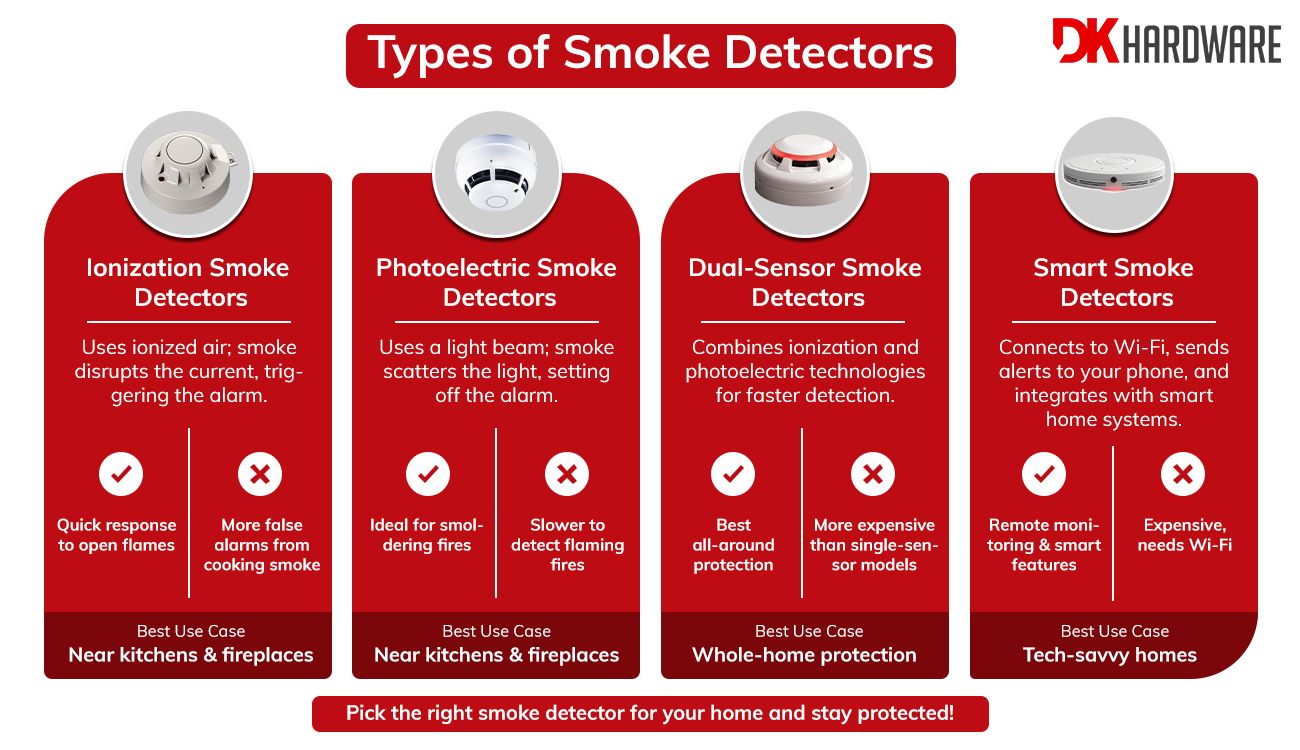
Ionization detectors are the most common type found in homes. They have a small amount of radioactive material between two plates. This creates a small electric current. When smoke enters, it disrupts the current and triggers the alarm.
Strengths:
Exclusive Deals
Limited-time Exclusive Deals. Check current discount on Amazon.
Check Price on Amazon As an Amazon Associate I earn from qualifying purchases.- React quickly to fast, flaming fires (like a burning kitchen pan or trash can).
- Usually less expensive and widely available.
Limitations:
- Less sensitive to slow, smoldering fires (like a cigarette on a couch).
- More prone to false alarms from cooking or steam.
Where they work best: Areas where fast fires are likely, but not right next to kitchens or bathrooms.
2. Photoelectric Smoke Detectors
Photoelectric detectors use a light beam and a sensor. When smoke enters the chamber, it scatters the light, which hits the sensor and triggers the alarm.
Exclusive Deals
Limited-time Exclusive Deals. Check current discount on Amazon.
Check Price on Amazon As an Amazon Associate I earn from qualifying purchases.Strengths:
- Quickly detect slow, smoldering fires (such as an electrical short or a fire starting in bedding).
- Fewer false alarms from cooking.
Limitations:
- Slightly slower to react to fast, flaming fires compared to ionization detectors.
- Often cost a bit more than ionization models.
Where they work best: Near kitchens, in living rooms, or close to bedrooms—places where smoldering fires are more likely.
3. Dual-sensor (combination) Smoke Detectors
Dual-sensor detectors combine both ionization and photoelectric technologies in one unit.
Strengths:
- Fast response to both smoldering and flaming fires.
- Recommended by many safety experts as the best overall protection.
Limitations:
- More expensive than single-technology alarms.
- Still can have false alarms if placed too close to kitchens or bathrooms.
Where they work best: Central areas, hallways, or any place where you want all-around protection.
Other Types: Special-purpose Detectors
Some newer smoke detectors include extra features or use different sensing methods, such as:
- Smart smoke detectors: Connect to Wi-Fi, send alerts to your phone, and can be silenced remotely.
- Combination alarms: Detect both smoke and carbon monoxide (CO).
- Heat detectors: Used in garages or attics, where smoke alarms might give false alerts.
While these can be helpful, they are not substitutes for basic smoke detection. Use them to add extra safety, not to replace standard units.
How Each Type Performs: Real-world Comparison
To choose the right smoke detector, it helps to see how each type responds to different fires. Here’s a simplified comparison:
| Type | Best at Detecting | Slower at Detecting | Typical Price Range |
|---|---|---|---|
| Ionization | Flaming fires | Smoldering fires | $10–$20 |
| Photoelectric | Smoldering fires | Flaming fires | $15–$30 |
| Dual-sensor | Both types | — | $25–$50 |
| Smart/Combo | Both types + CO | — | $40–$120 |
Key insight: No single technology covers every risk perfectly. That’s why many fire experts recommend using both photoelectric and ionization detectors, or dual-sensor models, for best coverage.
Common Mistakes When Choosing Smoke Detectors
Many homeowners make simple but serious errors when selecting smoke detectors. Avoiding these can make your home much safer.
- Buying only one type: Some people install only ionization alarms because they are cheap and common. This leaves them less protected against slow, smoldering fires.
- Ignoring placement: Putting detectors too close to kitchens or bathrooms causes false alarms, leading people to take out batteries or ignore alerts.
- Not checking for battery life: Many buyers forget to ask how long batteries last. Some units need yearly changes; others use sealed 10-year batteries.
- Overlooking interconnection: Not all alarms can communicate with each other. If you want all alarms to sound together, choose interconnected models.
- Skipping combo units: For homes with fuel-burning appliances (furnaces, stoves, fireplaces), a smoke and carbon monoxide detector is essential.
How To Choose The Best Smoke Detector For Your Home
Choosing the “best” smoke detector depends on your home’s layout, your budget, and your family’s needs. Here are the most important factors to consider:
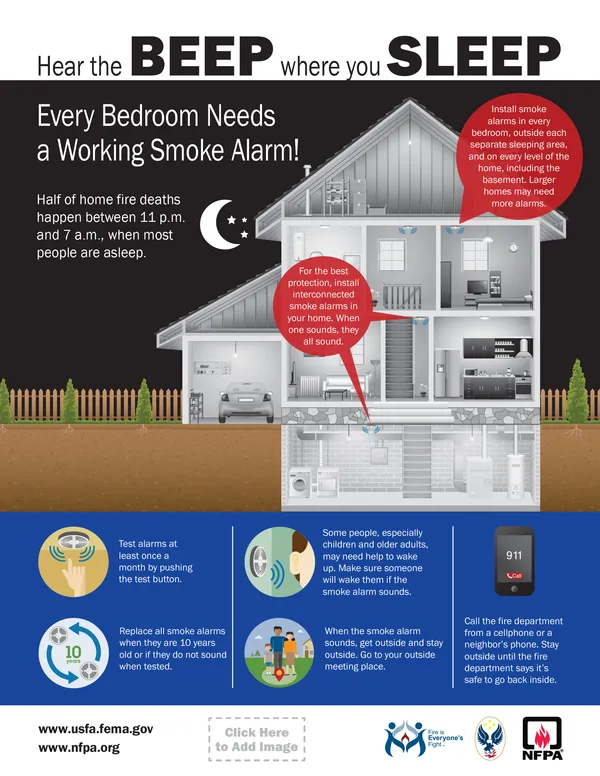
1. Coverage And Placement
The National Fire Protection Association recommends:
- One smoke detector inside every bedroom
- One outside every sleeping area (like a hallway)
- One on each level of the home, including the basement
Bonus tip: If you have a large house, consider interconnected alarms. When one sounds, all will alert, giving everyone more time to escape.
2. Detector Type
- Best overall: Dual-sensor or a mix of ionization and photoelectric units.
- Kitchens or near bathrooms: Use photoelectric to reduce false alarms.
- Bedrooms and living rooms: Both types, or dual-sensor, for maximum coverage.
- Basement/garage: Consider combination smoke/CO detectors if you use fuel-burning appliances.
3. Power Source
You can buy smoke detectors powered by:
- Replaceable batteries: Must be changed at least once a year.
- Sealed 10-year batteries: No battery changes needed; replace the whole unit after 10 years.
- Hardwired: Connected to your home’s electrical system, often with battery backup.
Insight: Hardwired alarms are more reliable, but battery-powered units are easier to install and work during power outages. Many homes use a mix of both.
4. Special Features
Modern smoke alarms may include:
- Interconnectivity: Wired or wireless, so all units sound together.
- Smart features: Mobile alerts, voice alarms, self-testing.
- Silence (hush) button: Lets you quickly silence nuisance alarms.
For families with children, elderly, or heavy sleepers, voice alarms may be more effective than beeping sounds.
5. Certification
Always look for UL (Underwriters Laboratories) or ETL marks. These show the alarm meets safety standards.
Ionization Vs Photoelectric: Which Is Better?
This is one of the most debated questions in home fire safety. The answer depends on the type of fire you’re most concerned about.
- Ionization detectors are faster at catching “flaming” fires—fires that grow quickly with visible flames, like a kitchen grease fire.
- Photoelectric detectors are faster at detecting “smoldering” fires—slow-burning fires that produce more smoke and less flame, such as a cigarette igniting a couch.
Most deadly home fires start as slow, smoldering fires while people are sleeping. In these cases, photoelectric detectors give earlier warning.
But ionization detectors can save lives in fast-moving fires, especially in kitchens or near flammable liquids.
Key recommendation: Use both types, or a dual-sensor alarm, for the best protection.
Smart Smoke Detectors: Are They Worth It?
Smart smoke detectors connect to your Wi-Fi and send alerts to your phone, even if you’re not at home. Some can also test themselves, give voice alerts, or let you silence false alarms from your phone.
Benefits:
- Alerts you to danger when you’re away.
- Easier to test and silence.
- Some models combine smoke and carbon monoxide detection.
Drawbacks:
- More expensive (often $80–$120 each).
- Require Wi-Fi and sometimes a smartphone app.
- If Wi-Fi goes down, some features may not work.
If you travel often, have pets at home, or want the latest technology, smart detectors can be worth the investment. For basic protection, traditional alarms still work well.
Interconnected Smoke Alarms: Why They Matter
If your home is large, or bedrooms are far apart, one alarm may not be enough. Interconnected smoke alarms are linked, so when one sounds, all alarms in the house go off.
- Wired interconnected alarms are connected by electrical wiring (common in newer homes).
- Wireless interconnected alarms connect using radio signals—easy to add in older homes.
Advantage: Interconnected alarms give everyone in the house more time to escape, especially at night.
Practical tip: Many new wireless models can be added to your system without rewiring.
How Long Do Smoke Detectors Last?
Most people don’t realize that smoke detectors expire. The sensors inside become less sensitive over time, even if the alarm still “beeps” when you test it.
- Replace all smoke detectors every 10 years.
- Write the installation date on the alarm with a marker.
Interesting fact: After 10 years, smoke detectors may not sense smoke fast enough to give you a safe warning.
Maintenance: Getting The Most From Your Smoke Detector
A smoke detector only protects you if it works. Simple maintenance keeps your alarms ready.
- Test each alarm monthly. Press the test button to make sure it sounds.
- Change batteries at least once a year (unless you have a sealed 10-year battery).
- Vacuum the detector gently every six months to remove dust.
- Never paint over a smoke detector—paint can block sensors.
Hidden danger: Many fires happen after people remove batteries to stop nuisance alarms and forget to replace them. Always fix the cause (like moving the alarm) instead of disabling it.
Real-life Example: How Proper Detectors Save Lives
A family in Ohio was asleep when a smoldering fire started in their living room couch. Their photoelectric smoke alarm sounded, waking them up just in time to escape. The fire department later said a standard ionization alarm would have sounded minutes later—a delay that could have cost lives.
This example shows why detector type and placement matter more than most people realize.
Cost Vs Value: How Much Should You Spend?
Basic ionization or photoelectric smoke detectors can cost as little as $10–$30 each. Dual-sensor and smart alarms can cost $25–$120 per unit.
Are expensive alarms worth it? The answer depends on your needs:
- For renters or small apartments, a few basic alarms may be enough.
- For families, large homes, or those with children/elderly, it’s wise to invest in dual-sensor or interconnected alarms for better protection.
Pro tip: You don’t have to upgrade your whole house at once. Start with sleeping areas, then add more over time.
Comparing Top-rated Smoke Detector Features
Here’s a quick look at the key features you’ll find in today’s most popular smoke detectors:
| Feature | Ionization | Photoelectric | Dual-Sensor | Smart/Combo |
|---|---|---|---|---|
| Detects flaming fires fast | Yes | No | Yes | Yes |
| Detects smoldering fires fast | No | Yes | Yes | Yes |
| Prone to false alarms | More | Less | Depends | Less |
| Can be interconnected | Yes | Yes | Yes | Yes |
| Mobile alerts | No | No | No | Yes |
| Price | Low | Medium | Medium-High | High |
Non-obvious tip: Even if you choose smart or dual-sensor alarms, you should still test and replace them just like basic models.
Practical Recommendations For Different Homes
For Apartments Or Small Homes
- At least one smoke alarm per sleeping area.
- Photoelectric alarms are preferred if the kitchen is nearby.
- Battery-powered models are usually enough.
For Families With Children Or Elderly
- Dual-sensor or a mix of ionization and photoelectric alarms.
- Interconnected alarms for faster alerts.
- Consider voice alarms for heavy sleepers.
For Larger Homes
- Multiple alarms: One in each bedroom, hallway, and each level.
- Interconnected alarms (wired or wireless).
- Combination smoke/CO detectors near sleeping areas and fuel-burning appliances.
For People With Hearing Impairment
- Special alarms with strobe lights or bed shakers are available.
- Some smart detectors offer visual and vibrating alerts.
For Renters
- Basic battery-powered alarms are easy to install and remove.
- Check with your landlord—by law, landlords must provide working smoke alarms.

Where To Install Smoke Detectors For Maximum Safety
Correct placement is as important as choosing the right type. Follow these guidelines:
- On ceilings (preferred), at least 4 inches from the wall.
- On walls, place alarms 4–12 inches from the ceiling.
- Avoid installing near windows, doors, or ducts, where drafts might interfere.
- Not in kitchens or bathrooms—place at least 10 feet away to avoid nuisance alarms.
Special consideration: In homes with high ceilings or open stairways, smoke rises and spreads quickly. Consider additional alarms in these areas.
What The Experts Say
The National Fire Protection Association and US Fire Administration both recommend having a mix of photoelectric and ionization alarms, or dual-sensor models, for the best protection. Smart and interconnected alarms add extra safety, but are not a substitute for correct placement and regular maintenance.
For more details on fire safety standards, see the NFPA’s home fire safety resources.
Frequently Asked Questions
How Often Should I Test My Smoke Detectors?
Test your smoke detectors once a month by pressing the test button. This ensures the alarm and battery are working. Also, replace batteries at least once a year unless you have a sealed 10-year battery.
Can I Install A Smoke Detector Myself, Or Should I Hire A Professional?
Most battery-powered smoke detectors are easy to install with just a screwdriver. For hardwired or interconnected alarms, it’s best to hire a licensed electrician to ensure safe wiring.
What Should I Do If My Smoke Detector Goes Off While Cooking?
Don’t remove the battery. Instead, open windows or turn on a fan to clear smoke. If false alarms are common, move the detector farther from the kitchen or switch to a photoelectric model.
Are Smart Smoke Detectors More Reliable Than Basic Models?
Smart detectors offer extra features like mobile alerts and voice alarms, but their core smoke sensing is similar to regular detectors. Their main advantage is convenience, not better detection.
How Do I Know When To Replace My Smoke Detector?
Check the manufacturing date on the back of the unit. Replace all smoke detectors every 10 years, even if they still beep during testing. Sensors lose sensitivity over time.
—
Choosing the best smoke detector for your home isn’t just about price or technology—it’s about understanding your unique needs and risks. By mixing different types of detectors, placing them in the right spots, and keeping them maintained, you give your family the strongest line of defense against fire.
Remember, a few smart choices today can save lives tomorrow. Stay safe!